
Vietnamese banh mi pork
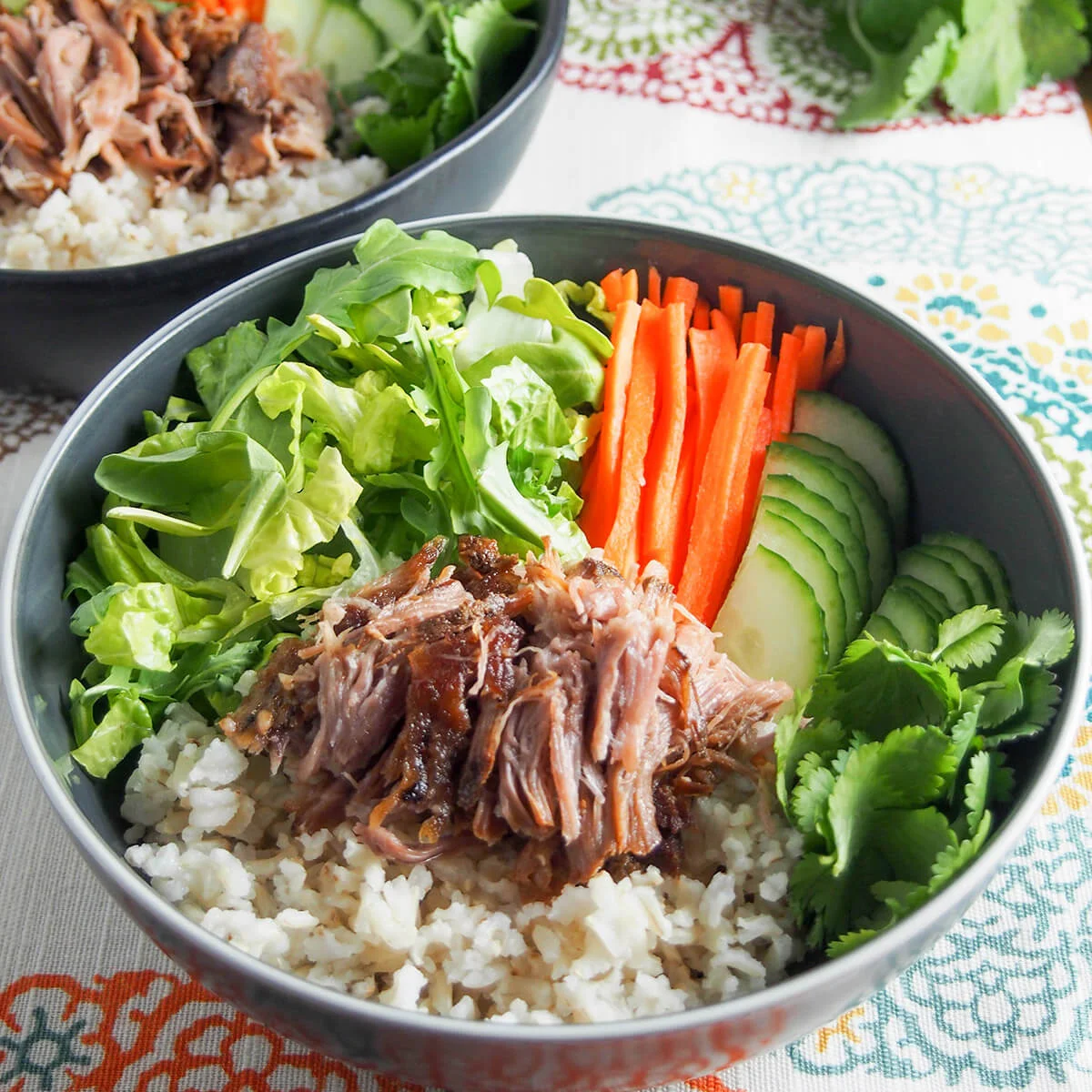
This Vietnamese-inspired banh mi pork is seasoned with a sweet, tangy and savoury slow-cooker sauce, then cooked until tender enough to pull apart. Make it for banh mi sandwiches or use the pork in bowls and other meals.
Ingredients
- 50 g (1/4 cup; 4 tbsp)brown sugar
- 60 ml (1/4 cup)rice vinegar
- 60 ml (1/4 cup)soy sauce
- 60 ml (1/4 cup)fish sauce
- 7.5 ml (1/2 tbsp)minced lemongrass
- 7.5 ml (1/2 tbsp)minced or grated ginger
- 2 clovesminced or grated garlic
- 60 ml (1/4 cup)water
- 907 g (2 lb), approximatelypork shoulder
Instructions
- 1
Mix the sauce
Add the brown sugar, rice vinegar, soy sauce, fish sauce, lemongrass, ginger, garlic and water to the bottom of a slow cooker, ideally one with a similar width to the pork. Stir to combine and help dissolve the sugar.
- 2
Add the pork
Put the pork in the slow cooker and turn it so some sauce coats the top. Cook on low for 6–8 hours, until the meat is tender enough to fall apart.
What is banh mi pork?
Banh mi refers to the Vietnamese sandwich tradition, often pairing bread with savoury fillings and crisp, tangy accompaniments. This slow-cooked pork is a practical filling inspired by those sweet, savoury and aromatic flavours.
The recipe uses pork shoulder and a simple sauce rather than requiring the meat to be cooked separately. Long, gentle cooking makes the pork easy to pull apart and use in different dishes.
Nutrition and macros by portion
The nutrition label shows one serving as written: 277 calories, 29g protein, 15g carbs, 9g fat.
| Portion | Adjustment | kcal | Protein | Carbs | Fat |
|---|---|---|---|---|---|
| Lighter | More vegetables, less pork | 194 kcal | 20g | 11g | 6g |
| This serving | As written | 277 kcal | 29g | 15g | 9g |
| Hungry | Larger pork portion | 416 kcal | 44g | 23g | 14g |
The pork provides most of the protein, while the brown sugar contributes carbohydrates and the pork shoulder supplies much of the fat. Serve it with vegetables and a suitable bread or rice portion to make a balanced meal.
The sauce ingredients
Sweet and sharp: brown sugar softens the acidity of rice vinegar, while soy sauce and fish sauce bring savoury depth. Stir the mixture before adding the pork so the sugar starts to dissolve.
Aromatics: lemongrass, ginger and garlic give the cooking liquid its fragrant character. Mince or grate them finely so they distribute through the sauce.
Choosing the pork
Pork shoulder suits this method because it becomes tender during a long cook. The recipe gives an approximate weight, so choose a piece that fits comfortably in your slow cooker.
A cooker with a similar width to the pork helps the meat sit in the sauce. Turn the joint once when adding it so some of the liquid coats the top.
Slow-cooker timing
Low heat gives the pork time to become tender without demanding much attention. The stated cooking window is 6–8 hours; begin checking towards the earlier end, as cookers and pieces of meat can vary.
The key cue is texture, not just the clock: the pork should pull apart easily. If it still feels firm, continue cooking until tender.
How to use the pork
For a banh mi-style meal, serve the pork in bread with crisp, fresh accompaniments. You can also spoon it over rice or add it to a bowl with vegetables.
The pork is rich and savoury, so something fresh and sharp alongside it helps balance the plate. Keep any extra sauce to spoon over the meat as desired.
Serving and texture
Once cooked, pull the pork apart while it is tender and mix it with some of the cooking liquid. This helps keep the strands moist and carries the sauce through the meat.
If you prefer a less saucy filling, add the liquid gradually rather than pouring it all over at once. Taste the pork with the sauce before assembling your meal.
Recipe notes & tips
- Choose a slow cooker in which the pork fits without being tightly wedged.
- Stir the sauce well before adding the meat to help distribute the sugar.
- Turn the pork so the sauce coats its upper surface before cooking.
- Check that the meat pulls apart easily before taking it out of the cooker.
- Mix the pulled pork with cooking liquid a little at a time to control how saucy it is.
Variations
- Add chilli: include fresh or dried chilli in the sauce for a hotter result.
- Use pork loin: swap in loin for a leaner cut, but check it earlier as it may cook more quickly.
- Add extra ginger: increase the ginger for a more pronounced aromatic note.
- Serve in bowls: pair the pork with rice and vegetables instead of bread.
- Make it tangier: serve with extra pickled vegetables for a sharper contrast.
Common mistakes to avoid
- Skipping the stir: unmixed sugar can sit at the bottom; stir the sauce before adding the pork.
- Using a very large cooker: the pork may sit less closely in the sauce; choose a cooker similar in width to the joint.
- Stopping too soon: firm meat is not ready to pull apart; continue cooking until tender.
- Adding all the liquid at once: the meat can become overly wet; mix in the cooking sauce gradually.
- Relying only on the clock: cookers vary; check the pork's tenderness within the stated 6–8-hour window.
How to store
Refrigerate leftover pork with some cooking liquid in a covered container and use within 3 days. Reheat until piping hot, adding a splash of water if it seems dry. Freeze for up to 3 months and defrost in the fridge before reheating.
Frequently asked questions
Can I cook the pork on high?
The method specifies cooking on low for 6–8 hours. It does not provide a high setting or an equivalent cooking time.
How do I know when the pork is ready?
It is ready when it is tender enough to pull apart easily. If it remains firm, let it cook for longer.
Can I use a different cut of pork?
Pork shoulder is the cut specified and is well suited to the long cooking time. Another cut may cook differently, so check its texture earlier.
What can I serve with the pork?
Use it in a banh mi-style sandwich, or serve it with rice and vegetables. Fresh, sharp accompaniments provide a useful contrast to the savoury meat.
Can I make it ahead?
Yes. Refrigerate the cooked pork with some of its sauce, then reheat until piping hot before serving.
Cook it from the original
This recipe comes from carolinescooking.com. Their page has the author’s own photos, notes and tips — the best place to cook it from.
Open the recipe on carolinescooking.com