
Apricot stuffed pork tenderloin
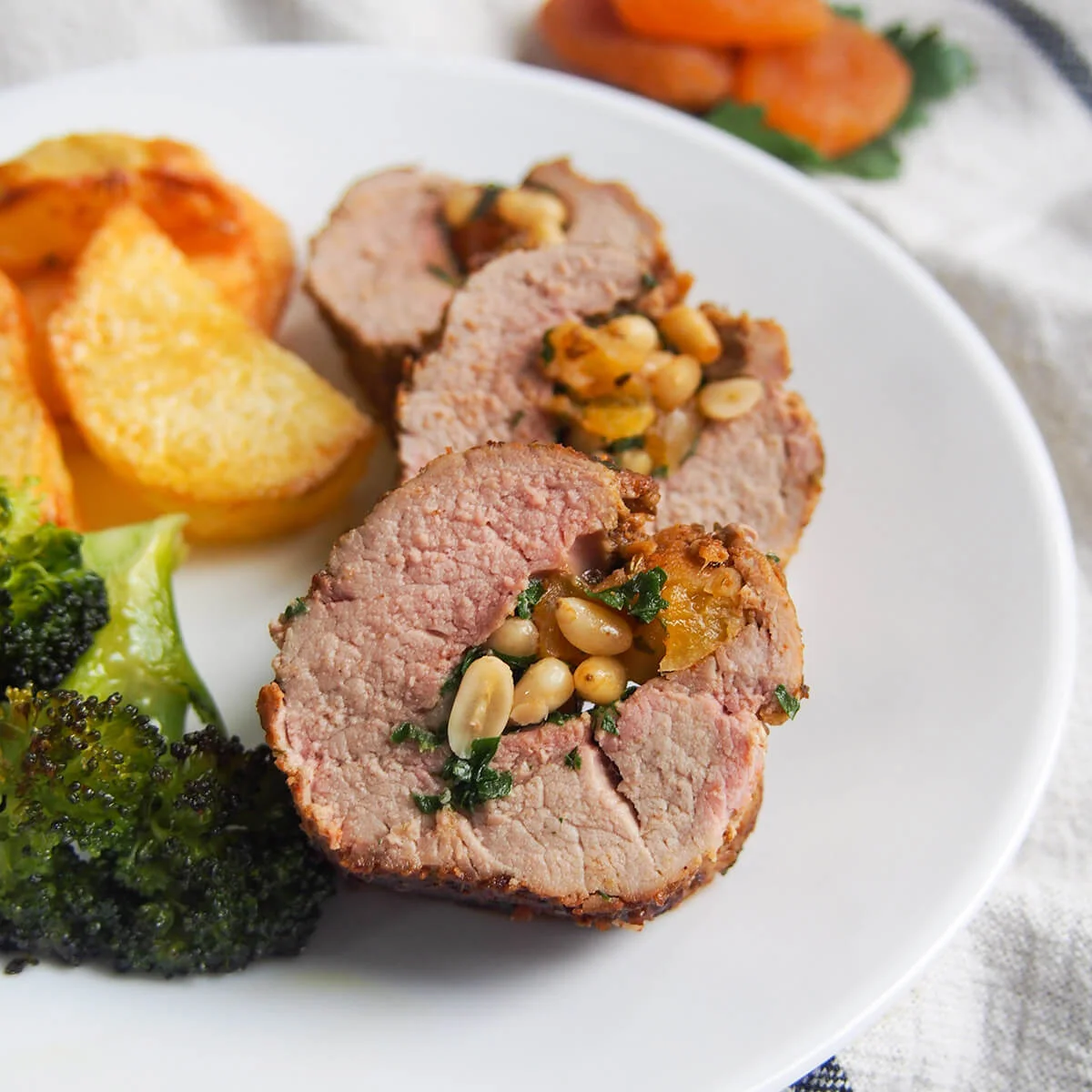
Apricot stuffed pork tenderloin pairs a warmly spiced pork fillet with a sweet, fruity filling and toasted-tasting pine nuts. It looks special enough for a dinner for two or three, while the preparation is straightforward if you tie and chill it ahead.
Ingredients
- 3 tbspdried apricots, chopped
- 2 tbspparsley, chopped
- 2 tbsppine nuts
- 340 g (12 oz)pork tenderloin (pork fillet; one small-medium fillet, or up to 450 g)
- ½ tbspolive oil, for searing
- 2 clovesgarlic
- ⅛ tspsalt
- 1 tspdried oregano
- 1 tspfennel seeds, crushed or finely chopped
- 1 tsppaprika
- 1 tspcumin
- 1 tbspolive oil
Instructions
- 1
Mix the stuffing
In a small bowl, combine the chopped apricots, parsley, pine nuts and oregano. Set the mixture aside.
- 2
Make the spice paste
Roughly chop the garlic, sprinkle it with the salt and crush them together with the flat side of a knife. Crush the fennel seeds in a pestle and mortar or chop them finely, then mix with the garlic, paprika, cumin and olive oil to make a paste.
- 3
Prepare the pork
Trim away excess fat and sinew. Carefully cut lengthways along one side of the pork, without cutting all the way through, so it opens out flat. If the fillet is short and thick, flatten it slightly; turn it so the cut side faces down.
- 4
Add the filling
Rub the spice paste over the outside of the pork, then turn it cut-side up again. Spread the stuffing down the middle, leaving a small gap at either end.
- 5
Tie the fillet
Tie string around one end to hold the filling in place. Loop it around the fillet at intervals of about 2.5 cm, tightening carefully as you go so it rests firmly against the meat without squeezing out the stuffing. Tie a knot at the other end to secure it.
- 6
Chill overnight
Cover the pork and leave it to marinate in the refrigerator overnight.
- 7
Heat the oven
The next day, heat the oven to 200°C and take the pork out of the refrigerator.
- 8
Sear the pork
If possible, use an ovenproof pot or frying pan so you can transfer it straight to the oven. Warm it over a medium-high heat, add about ½ tbsp olive oil and sear the pork on all sides until lightly browned.
- 9
Roast until cooked
Roast the pork for about 20 minutes. If the fillet is particularly thick, cook it for a further 5–10 minutes at most, aiming for an internal temperature of at least 65°C.
- 10
Rest and slice
Leave the pork to rest for a couple of minutes, then remove the string and cut it into slices to serve.
What is apricot stuffed pork tenderloin?
Pork tenderloin, also called pork fillet, is a lean, tender cut that cooks relatively quickly. This version brings together fruit, herbs and spices in a fusion-style filling rather than following one particular regional tradition.
Apricots add a sweet, chewy contrast to savoury pork, while pine nuts bring a little richness. Searing the seasoned meat before roasting builds colour without making the method complicated.
Nutrition and macros by portion
The nutrition label shows one serving as written: 291 calories, 25g protein, 12g carbs, 16g fat.
| Portion | Adjustment | kcal | Protein | Carbs | Fat |
|---|---|---|---|---|---|
| Lighter | More vegetables, less oil | 204 kcal | 18g | 8g | 11g |
| This serving | As written | 291 kcal | 25g | 12g | 16g |
| Hungry | Larger pork portion | 437 kcal | 38g | 18g | 24g |
The pork supplies most of the protein, while the apricots contribute carbohydrates and the olive oil and pine nuts provide much of the fat. Pair a slice portion with plenty of vegetables and a suitable serving of potatoes or another starchy side to round out the plate.
The filling and seasoning
Fruity centre: Chop the dried apricots small enough to spread evenly down the fillet, and combine them with parsley and pine nuts. The oregano goes into this mixture, so it seasons the filling as well as complementing the pork.
Spice paste: Crushing the garlic with salt helps it form a paste, while crushed fennel releases its distinctive aniseed aroma. Cumin and paprika round out the seasoning, and olive oil makes it easy to rub over the meat.
How to open the pork
Lengthways cut: Slice into one side of the tenderloin from end to end, stopping before the knife reaches the other side. The goal is to open the fillet like a book so there is a broad surface for the filling.
Even thickness: If one section is notably thicker, flatten it slightly before seasoning. Keeping the meat reasonably even helps it cook at a steadier pace.
Tying and chilling
Neat bundle: Start with a knot at one end, then loop the string at roughly 2.5 cm intervals. Keep it snug against the meat, not so tight that the stuffing is forced out.
Make ahead: The overnight rest gives the seasoning time to sit against the pork and makes the recipe easier to schedule for serving. Allow for this chilling time in addition to the stated 45 minutes of active cooking and preparation.
Searing and roasting
Good browning: Use a medium-high heat and turn the pork so all sides become lightly browned. An ovenproof pan avoids having to move the fillet after searing.
Check the centre: The recipe aims for an internal temperature of at least 65°C, with about 20 minutes of roasting as a guide. A thicker fillet may need another 5–10 minutes, but avoid cooking it longer than needed.
Resting and serving
Before slicing: Rest the cooked pork for a couple of minutes, then remove all the string. Slice carefully so the filling stays tucked inside each portion.
On the plate: Serve with vegetables and potatoes, or choose a crisp salad and bread for a lighter-style accompaniment. A simple side lets the apricot and spice flavours remain the focus.
Recipe notes & tips
- Chop the apricots finely so they are easier to spread and less likely to fall out.
- Keep the knife tip close to the board when opening the fillet to avoid cutting all the way through.
- Have the kitchen string ready before adding the stuffing.
- Use an ovenproof pan if you have one to avoid transferring the seared pork.
- Check the thickest part of the meat with a thermometer rather than relying only on the cooking time.
- Remove the string before cutting the pork into serving slices.
Variations
- Add lemon zest: Mix a little finely grated zest into the stuffing for a brighter flavour.
- Use hazelnuts: Swap the pine nuts for chopped hazelnuts for a different nutty texture.
- Try fresh herbs: Replace some of the parsley with chopped fresh thyme.
- Adjust the spice: Reduce the cumin for a gentler seasoning or add more paprika for extra warmth.
- Serve with greens: Pair the pork with steamed green beans or a leafy salad.
Common mistakes to avoid
- Cutting all the way through: Stop before reaching the far side so the fillet opens out as one piece.
- Overfilling the pork: Leave a small gap at both ends so the stuffing is easier to contain.
- Tying too tightly: Keep the string snug but do not press the filling out of the meat.
- Skipping the sear: Brown all sides lightly before roasting to follow the method and colour the outside.
- Guessing doneness: Check that the centre reaches at least 65°C, allowing a little extra time for a thicker fillet.
- Slicing straight away: Rest the meat for a couple of minutes before removing the string and slicing.
How to store
Refrigerate leftover pork in a covered container and eat within 2–3 days. Reheat gently until hot throughout, taking care not to overcook the lean meat.
Frequently asked questions
Can I make this ahead?
Yes. The recipe calls for the tied, stuffed pork to be covered and chilled overnight before cooking.
Can I use a larger pork fillet?
Yes, the ingredient note allows a fillet of about 450 g. A thicker piece may need an extra 5–10 minutes in the oven; check the internal temperature rather than relying on time alone.
Do I need an ovenproof frying pan?
It is ideal because the pork can go from the hob straight into the oven. If you do not have one, use a suitable pot or pan for searing and transfer the pork to an oven dish.
How do I stop the filling escaping?
Leave a little space at either end and tie the string firmly around the pork at intervals of about 2.5 cm. Avoid pulling it so tight that the filling is pushed out.
How do I know when the pork is done?
Aim for an internal temperature of at least 65°C in the thickest part. The recipe gives about 20 minutes as a guide, with up to 5–10 extra minutes for a thicker fillet.
Cook it from the original
This recipe comes from carolinescooking.com. Their page has the author’s own photos, notes and tips — the best place to cook it from.
Open the recipe on carolinescooking.com