
Mango and Sticky Rice
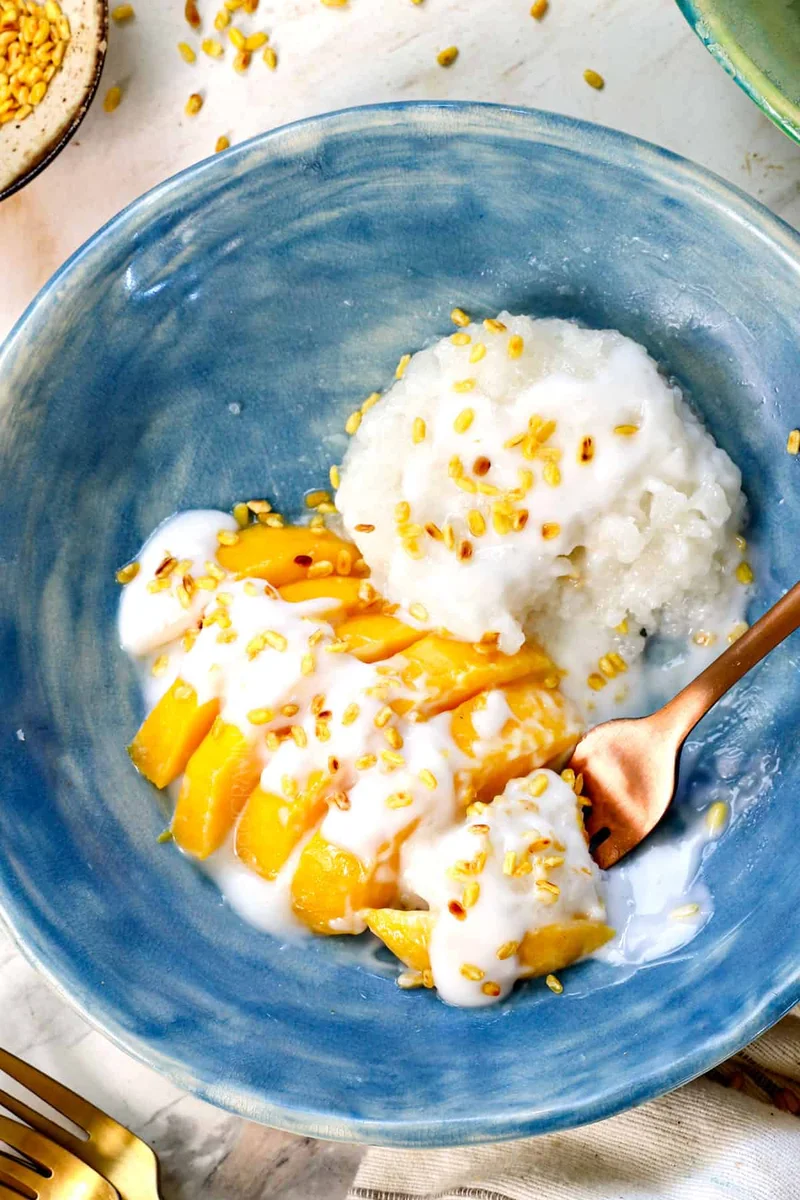
Mango and sticky rice pairs tender Thai glutinous rice with ripe mango, sweet coconut milk and a crisp mung bean topping. It takes time to soak and steam the rice, but the steps are simple and much of the work can be done ahead.
Ingredients
- 190 g (1 cup)uncooked white Thai sticky rice (sweet rice)
- 24 g (2 tablespoons)split yellow mung beans
- 3sweet, ripe mangoes, preferably Ataulfo, Honey or Champagne
- 180 ml (¾ cup)full-fat unsweetened coconut milk
- ½ teaspoontable salt
- 83 g (⅓ cup plus 1 tablespoon)granulated sugar
- 180 ml (¾ cup)full-fat unsweetened coconut milk
- 25 g (2 tablespoons)granulated sugar
- 4 g (1½ teaspoons)cornflour
- ¼ teaspoontable salt
Instructions
- 1
Rinse and soak
Rinse the rice in a fine-mesh sieve until the water is mostly clear. Put it in a bowl, cover with water and refrigerate for at least 6 hours or overnight.
- 2
Steam the rice
Bring water to the boil in the bottom of a steamer pot. Line the basket with damp cheesecloth or a thin tea towel, drain the rice well, then spread it evenly on the cloth and fold the edges over it. Cover and steam over high heat for 18–22 minutes, until fully cooked. A few minutes before it is ready, make the coconut syrup.
- 3
Make the syrup
Combine the syrup ingredients in a small saucepan over medium heat. Stir until the mixture boils, then take it off the heat and cover.
- 4
Soak the rice
Transfer the cooked rice to a heatproof bowl and pour over the coconut syrup. Stir to combine, cover with cling film and leave for 20 minutes. Fold or stir the rice, cover again and leave for another 20 minutes, or until serving, for up to 2 hours at room temperature.
- 5
Rehydrate beans
Put the mung beans in a small saucepan and cover with 2.5 cm of cold water. Bring to a simmer over medium heat, remove from the heat, cover and leave for 10 minutes—no longer. Drain in a sieve, rinse with cold water and pat dry with a tea towel.
- 6
Toast the beans
Lightly grease a large frying pan with neutral oil and heat it over medium-high heat. Add the beans and toast, stirring frequently, until golden; this takes several minutes. Transfer them to a plate to cool and crisp. Store in an airtight container for up to 1 month.
- 7
Thicken the sauce
Put the sauce ingredients in a small saucepan and whisk until the cornflour dissolves. Bring to a simmer over medium heat, stirring constantly, until thick but still pourable, like caramel sauce. If it gets too thick, stir in a little water.
- 8
Assemble plates
Divide the coconut sticky rice between plates and add the peeled, sliced mangoes. Spoon over the coconut sauce and finish with the crispy mung beans.
What is mango and sticky rice?
This Thai dessert brings together glutinous rice, ripe mango and sweetened coconut milk. It is often called khao niao mamuang in Thai, and is enjoyed as a dessert or snack.
Here, the rice is steamed rather than boiled, then left to absorb a warm coconut syrup. A second coconut sauce and toasted mung beans add a creamy finish and a crisp contrast.
Nutrition and macros by portion
The nutrition label shows one serving as written: 710 calories, 11g protein, 119g carbs, 24g fat.
| Portion | Adjustment | kcal | Protein | Carbs | Fat |
|---|---|---|---|---|---|
| Lighter | Less coconut sauce | 497 kcal | 8g | 83g | 17g |
| This serving | As written | 710 kcal | 11g | 119g | 24g |
| Hungry | Larger rice portion | 1065 kcal | 17g | 179g | 36g |
Most of the carbohydrates come from the sticky rice, sugar and mango, while the full-fat coconut milk supplies much of the fat. The rice and mung beans contribute some protein, though neither is a major source. To balance the plate, serve a smaller portion of rice alongside extra fresh mango.
Choose the right rice
Glutinous rice: Thai sticky rice, also sold as sweet rice, is what gives the dish its characteristic soft, clingy texture. Ordinary long-grain rice will not behave the same way.
Soaking: Rinsing until the water is mostly clear and soaking for at least 6 hours helps the grains steam evenly. Drain thoroughly before putting the rice in the steamer.
Steam and season
Steam setup: A steamer basket lined with damp cloth keeps the rice contained while allowing steam to circulate. Spread the drained rice in an even layer and cover it well.
Coconut syrup: Stir the syrup ingredients as they heat, then pour them over the rice while it is hot. The covered resting periods give the grains time to take up the liquid and flavour.
Get the texture right
Rice doneness: The grains should be tender throughout, not hard in the centre. If they need more time after 22 minutes, continue steaming until fully cooked.
Sauce consistency: Keep stirring the sauce as it simmers so the cornflour thickens smoothly. Aim for thick but pourable; loosen it with a little water if needed.
Make the topping crisp
Mung beans: Give them only 10 minutes in the hot water, then rinse and dry them well. Excess moisture can slow down browning in the pan.
Toasting: Stir the beans often over medium-high heat so they colour evenly. They may not seem fully crisp in the pan; they firm up as they cool.
Plan the timing
The rice needs at least 6 hours of soaking, so begin the day before or early on the day you plan to serve it. The rest of the preparation can be done while the rice steams or rests.
The syrup-soaked rice can sit covered at room temperature for up to 2 hours before serving. Toasted mung beans can be prepared ahead and kept in an airtight container.
Serve with ripe mango
Mango: Choose fruit that gives slightly when pressed and smells fragrant. Peel and slice it shortly before serving for the freshest flavour and appearance.
On the plate: Serve the rice and mango together, with coconut sauce spooned over the top and mung beans scattered on last. The crisp topping is especially good when added just before eating.
Recipe notes & tips
- Use a damp cloth to line the steamer basket so the rice does not fall through.
- Drain the soaked rice well before steaming to avoid excess water collecting in the cloth.
- Stir the coconut syrup until it boils so the sugar and salt dissolve evenly.
- Dry the rinsed mung beans thoroughly before toasting for better browning.
- Add the toasted beans just before serving to preserve their crunch.
- Make the coconut sauce shortly before serving so it is easy to pour.
Variations
- Use another mango: Choose any ripe, fragrant mango if Ataulfo, Honey or Champagne varieties are unavailable.
- Add pandan: Infuse the coconut syrup with a pandan leaf while it heats, then remove the leaf before pouring.
- Skip the topping: Leave out the mung beans for a smooth finish without the crisp contrast.
- Serve warm: Plate the rice while it is still warm, with cool mango for a contrast in temperature.
- Make smaller plates: Divide the rice and mango into more portions for a lighter dessert serving.
Common mistakes to avoid
- Skipping the soak: The rice may cook unevenly; soak it for at least 6 hours or overnight.
- Using ordinary rice: It will not give the same sticky texture; choose Thai glutinous or sweet rice.
- Overcooking the mung beans in water: They can become too soft to toast; remove them after exactly 10 minutes.
- Leaving the beans damp: They may take longer to colour; pat them dry before adding them to the pan.
- Stopping the rice rest early: The coconut may not absorb evenly; allow both 20-minute resting periods.
- Letting the sauce thicken too far: It becomes difficult to drizzle; stir in a little water to loosen it.
How to store
Keep leftover rice and mango covered in the refrigerator and eat within 2 days; store the sauce separately and refrigerate it as well. Reheat the rice gently, covered, with a small splash of water, and serve with the mango and sauce. Keep toasted mung beans in an airtight container at room temperature for up to 1 month.
Frequently asked questions
Can I soak the rice overnight?
Yes. The rice can soak in the refrigerator overnight, which fits well with preparing the dish ahead.
Can I cook the sticky rice without a steamer?
The method relies on steaming in a basket lined with cloth. A pasta pot with a steamer insert can work as long as the rice sits above the boiling water.
How do I know the sticky rice is cooked?
Steam it for 18–22 minutes, then check that the grains are tender all the way through. Continue steaming if any grains still have a firm centre.
Can I make the mung beans ahead?
Yes. After toasting and cooling, keep them in an airtight container for up to 1 month. Sprinkle them over the dessert just before serving.
Why is my coconut sauce too thick?
It may have simmered until too much liquid evaporated or thickened further as it cooled. Stir in a little water to make it pourable again.
Can I assemble mango sticky rice in advance?
You can make the rice and sauce ahead, but keep the mango and crispy mung beans separate until serving. The rice can rest covered at room temperature for up to 2 hours after the syrup is added.
Cook it from the original
This recipe comes from carlsbadcravings.com. Their page has the author’s own photos, notes and tips — the best place to cook it from.
Open the recipe on carlsbadcravings.com