
Spicy Salmon Poke
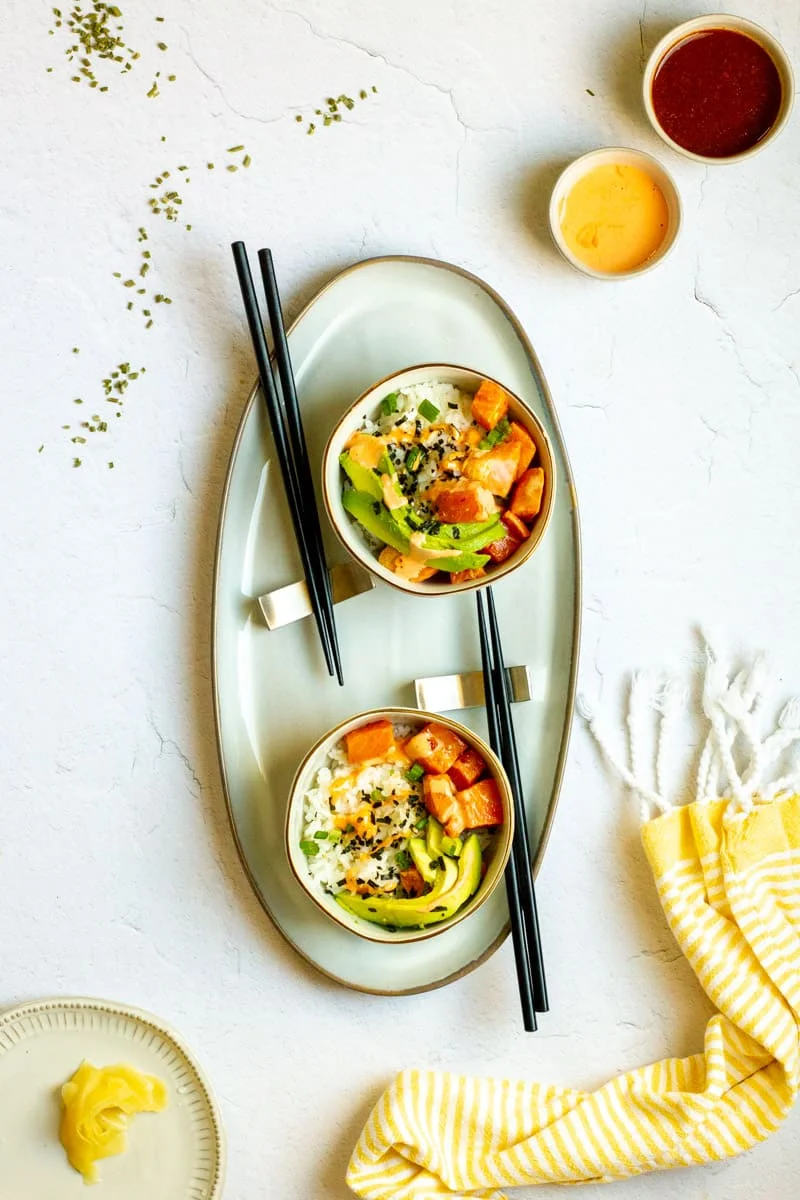
These spicy salmon poke bowls pair seasoned sushi rice with marinated salmon, avocado and a creamy chilli-mayo drizzle. They make a colourful lunch or dinner, with the rice and toppings easy to assemble while the fish marinates.
Ingredients
- 190 g (1 cup)medium-grain sushi rice
- 355 ml (1½ cups)water
- 2.5 g (½ teaspoon)sea salt
- 30 ml (2 tablespoons)rice vinegar
- 227 g (8 ounces)salmon (use commercially frozen fish; thaw before marinating)
- 60 ml (¼ cup)soy sauce or tamari (use gluten-free certified sauce if needed; low-sodium sauce is optional)
- 60 ml (¼ cup)rice vinegar
- 12.5 g (1 tablespoon)sugar (white or brown)
- 15 ml (1 tablespoon)sambal oelek (red chilli paste; or use 2 teaspoons red chilli flakes, which are much hotter, or Gochugaru pepper flakes)
- 1 teaspoongarlic powder
- ½ teaspooncayenne pepper (optional)
- 30 ml (2 tablespoons)mayonnaise
- 10 ml (2 teaspoons), or more to tasteSriracha
- ½ teaspoonfurikake seasoning (or a few pieces of thinly sliced roasted nori)
- 1avocado, thinly sliced
- 1spring onion, thinly sliced (green top only)
- 6 slices, or to tastepickled sushi ginger
- To taste (optional)wasabi
- To tasteextra soy sauce or tamari (use gluten-free certified sauce if needed)
Instructions
- 1
Rinse the rice
Put the rice in a mesh sieve and rinse it until the water runs clear.
- 2
Cook the rice
For the stovetop method, put the rice, water and salt in a small saucepan. Bring to the boil over a medium-high heat, cover and turn the heat to low. Cook for 20 minutes, then take the pan off the heat and leave it covered for another 10 minutes. You can instead use a rice cooker or Instant Pot, following its directions for sushi rice; if using short-grain rice, follow the packet instructions. Keep the rice covered until needed, then stir in the rice vinegar just before serving.
- 3
Prepare the salmon
For raw salmon, if the fish has skin, set it skin-side up on a chopping board. With a sharp knife, ideally a filleting knife, cut off the skin while keeping the blade parallel to the fish’s natural grain.
- 4
Marinate the fish
Cut the salmon into small cubes, or thinly slice it, and place it in a shallow dish. Whisk together the soy sauce, rice vinegar, sugar, sambal oelek, garlic powder and cayenne, if using. Pour the mixture over the fish and refrigerate for at least 15 minutes.
- 5
Thicken the marinade
Once the salmon has marinated, pour the marinade into a small saucepan. Bring it to the boil, then simmer for about 3 minutes, until thickened. Set it aside.
- 6
Assemble the bowls
Mix the mayonnaise and Sriracha, taste and add more hot sauce if you like. Divide the rice between bowls, allowing for some leftover, and sprinkle over the furikake; if using nori, arrange it on the rice instead. Add the fish and drizzle over as much of the marinade as you want, then add the avocado and spring onion. Drizzle the spicy mayo over the toppings, allowing for possible leftovers.
- 7
Serve straight away
Serve the bowls immediately, with pickled ginger, wasabi and extra soy sauce on the side. Offer any leftover marinade or spicy mayo alongside.
What is salmon poke?
Poke is a Hawaiian dish of seasoned fish, often served with rice and other toppings. This American-style bowl brings together salmon, sushi rice and a spicy mayo sauce, with avocado and pickled ginger adding contrasting flavours.
The components each have a clear role: the rice makes a tender base, the marinade seasons the fish, and the toppings bring freshness and richness. Cooking the leftover marinade separately gives you a sauce to drizzle over the finished bowls.
Nutrition and macros by portion
The nutrition label shows one serving as written: 767 calories, 35g protein, 98g carbs, 26g fat.
| Portion | Adjustment | kcal | Protein | Carbs | Fat |
|---|---|---|---|---|---|
| Lighter | Less rice, more vegetables | 537 kcal | 25g | 69g | 18g |
| This serving | As written | 767 kcal | 35g | 98g | 26g |
| Hungry | Larger portion of rice | 1151 kcal | 53g | 147g | 39g |
Most of the carbohydrates come from the sushi rice, while the salmon contributes protein and the avocado, mayonnaise and salmon contribute much of the fat. For a more balanced plate, serve the bowl with extra non-starchy vegetables, such as cucumber or leafy greens.
Choose the salmon carefully
Use commercially frozen fish, as specified in the recipe, and thaw it before marinating. If it has skin, remove it with a sharp knife held close and parallel to the flesh.
Small cubes pick up the marinade on several sides and are easy to eat with rice. Thin slices are another option if you prefer a different shape.
Get the rice texture right
Rinse the rice until the water runs clear to remove loose surface starch. Keep the pan covered throughout cooking and during the 10-minute rest so the rice can finish steaming.
Stir in the rice vinegar just before serving. This seasons the rice without adding the vinegar too early in the cooking process.
Balance the marinade
Sweetness: sugar rounds out the salty soy sauce and tangy vinegar. Sambal oelek brings chilli flavour, while cayenne is optional for extra heat.
Heat: the spicy mayo is easy to adjust after mixing. Taste it before serving, then add more Sriracha if you want a stronger chilli kick.
Watch the marinating time
Give the salmon at least 15 minutes in the refrigerator so the marinade has time to flavour it. Keep the fish chilled during this step.
After marinating, the recipe brings the marinade to a boil and simmers it for about 3 minutes, until thickened. Set it aside before drizzling it over the bowls.
Finish with contrasting toppings
Avocado adds a soft, creamy element, while spring onion gives the bowls a fresh finish. Furikake seasons the rice; thinly sliced nori can stand in for it.
Pickled ginger, wasabi and extra soy sauce are served on the side, so each person can adjust the sharpness, heat and saltiness to taste.
Serve while the rice is warm
Assemble the bowls just before eating, with the rice still warm and the salmon and toppings freshly arranged. The recipe notes that you may have extra rice, marinade or spicy mayo.
Serve them as a complete lunch or dinner, or add a simple side of vegetables if you want something extra alongside.
Recipe notes & tips
- Rinse the rice thoroughly before cooking for a cleaner texture.
- Keep the rice covered during its 10-minute rest.
- Use a sharp knife to cut the salmon cleanly into cubes or slices.
- Start with the listed amount of Sriracha, then add more after tasting the mayo.
- Drizzle on the marinade gradually, since you may not need all of it.
- Put the ginger, wasabi and extra soy sauce on the table for serving.
Variations
- Use tamari: swap it for the soy sauce, choosing a gluten-free certified version if needed.
- Switch the chilli: use Gochugaru pepper flakes instead of sambal oelek.
- Increase the heat: add more Sriracha to the mayonnaise to taste.
- Use nori: replace the furikake with a few pieces of thinly sliced roasted seaweed.
- Adjust the salmon shape: thinly slice the fish instead of cutting it into cubes.
- Add more ginger: serve extra pickled sushi ginger alongside the bowls.
Common mistakes to avoid
- Skipping the rice rinse: rinse until the water runs clear before cooking.
- Lifting the lid too soon: keep the pan covered during cooking and the 10-minute rest.
- Marinating at room temperature: leave the salmon in the refrigerator for at least 15 minutes.
- Using the marinade without cooking it: boil it, then simmer for about 3 minutes until thickened.
- Adding too much chilli at once: taste the mayo before adding more Sriracha.
- Pouring on all the sauce: drizzle gradually because you may have some left over.
How to store
Refrigerate leftovers promptly in an airtight container and use within 1 day, keeping any extra sauces separate if possible. The rice may firm up when cold; reheat it until steaming hot, then assemble with the chilled toppings. Do not reheat the salmon if you are serving it raw.
Frequently asked questions
Can I cook the rice in a rice cooker?
Yes. Follow the rice cooker’s directions for sushi rice, as the recipe allows. If using short-grain rice, use the packet instructions.
How long should the salmon marinate?
Refrigerate it for at least 15 minutes. Keep it chilled while it marinates.
Can I use salmon with the skin on?
Yes, but remove the skin before cubing or slicing the fish. Use a sharp knife and keep its blade parallel to the fish.
Is the cayenne essential?
No, it is optional. Leave it out for less heat, or adjust the Sriracha in the mayo to suit your taste.
Can I make the marinade ahead?
You can mix the marinade ingredients ahead, but refrigerate the fish while it marinates. Cook the marinade after removing the salmon, as directed.
What can I use instead of furikake?
Use a few pieces of thinly sliced roasted nori, arranged over the rice.
Cook it from the original
This recipe comes from champagne-tastes.com. Their page has the author’s own photos, notes and tips — the best place to cook it from.
Open the recipe on champagne-tastes.com