
No-Knead French Bread (No Knead Baguette)
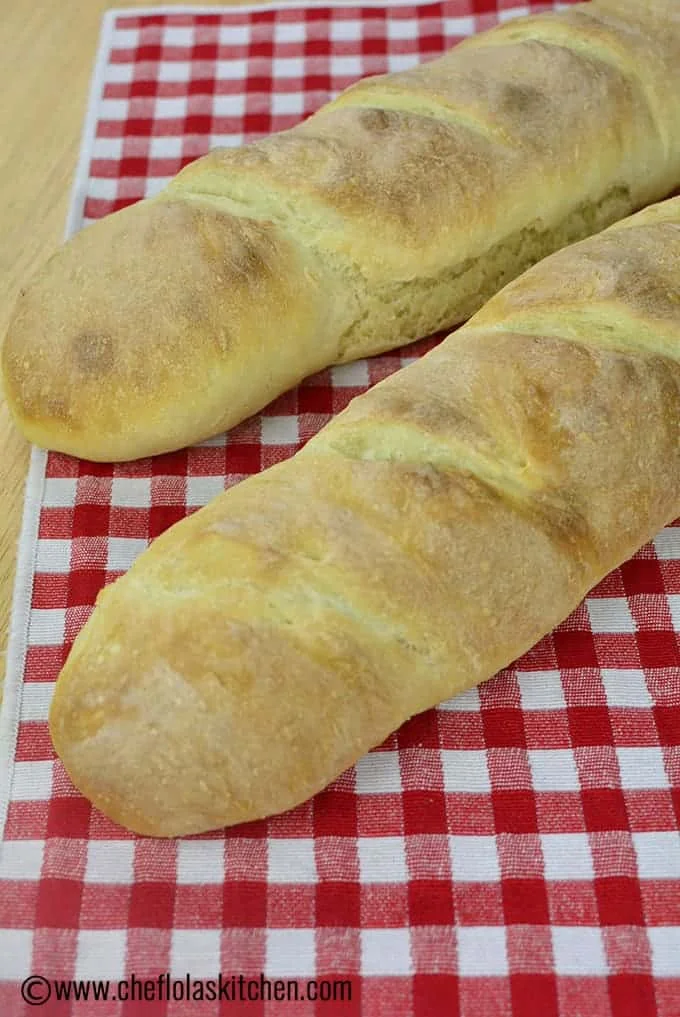
This French-style no-knead bread uses a simple yeast dough to make two crisp, golden loaves without hand-kneading. It is a straightforward way to put freshly baked bread on the table, though the rising time means the full process takes longer than the stated 35 minutes.
Ingredients
- 500 g (4 cups)flour
- 12.5 g (1 tbsp)sugar
- 7.5 g (1½ tsp)salt
- about 5 g (½ tbsp)yeast
- 15 ml (1 tbsp)olive oil
- 355 ml (1½ cups)water
Instructions
- 1
Mix the yeast
In a large bowl, combine the water, sugar, salt and yeast.
- 2
Add the flour
Stir in the flour until the water is absorbed and a shaggy dough forms.
- 3
Leave to rise
Rub olive oil over the dough. Cover the bowl with a tight-fitting lid or plastic wrap and leave it in a warm place for 2 hours.
- 4
Divide the dough
Punch down the dough, turn it out onto a floured work surface, flatten it and divide it into two portions.
- 5
Shape the loaves
Flatten each portion into a roughly square shape, then roll it tightly like a mat. Place the loaves on a baking tray lined with parchment.
- 6
Rise again
Cover the loaves with a damp towel and leave them to rise for 30 minutes to 1 hour.
- 7
Slash the tops
With a sharp knife, make about four deep, diagonal slashes across each loaf.
- 8
Spray and bake
Spray the surface of the loaves with warm water. Bake in an oven preheated to 200°C (400°F) for 20–25 minutes.
What is no-knead French bread?
This is a simple French-style loaf made from flour, water, yeast, salt and a little sugar and oil. Its no-knead approach relies on time and rising rather than the usual hands-on kneading.
The recipe takes inspiration from French baguettes, but shapes the dough into two home-style loaves. A second rise and diagonal cuts help the loaves expand as they bake.
Nutrition and macros by portion
The nutrition label shows one serving as written: 942 calories, 26g protein, 197g carbs, 3g fat.
| Portion | Adjustment | kcal | Protein | Carbs | Fat |
|---|---|---|---|---|---|
| Lighter | Serve a smaller slice | 659 kcal | 18g | 138g | 2g |
| This serving | As written | 942 kcal | 26g | 197g | 3g |
| Hungry | Add another slice | 1413 kcal | 39g | 296g | 5g |
Most of the carbohydrates come from the flour, while the flour also supplies some protein. Olive oil contributes most of the fat, though the recipe uses only a small amount. Pair a portion with vegetables and a protein-rich dish for a more balanced plate.
The simple dough
Flour: add it after mixing the water, sugar, salt and yeast, and stir until no loose water remains. The dough is meant to look shaggy rather than smooth.
Yeast: it gives the dough its rise, while the sugar is mixed in at the start. The recipe does not specify a yeast type, so use the kind you have and follow its usual handling guidance.
Two rises matter
First rise: cover the oiled dough and leave it in a warm place for 2 hours. A snug cover helps keep the surface from drying out.
Second rise: after shaping, cover the loaves with a damp towel for 30 minutes to 1 hour. Allow enough room on the tray for them to rise without touching.
Shape without overworking
Divide: after punching down the dough, split it into two portions on a floured surface. Flatten each portion into a rough square; it does not need to be perfectly even.
Roll: roll each square tightly, as you would a mat, and set it seam-side down on the parchment-lined tray. This gives each loaf a defined shape without kneading.
Look for a crisp finish
Slashes: make about four diagonal cuts with a sharp knife just before baking. Deep, clean cuts give the dough space to open in the oven.
Water: spray the loaf surfaces with warm water before they go into the oven. Bake at 200°C for 20–25 minutes, until the crust is golden and firm.
Serving the bread
Serve the loaves warm or at room temperature, sliced alongside soup, salad or a main meal. They also work well with olive oil for dipping.
For a simple meal, pair the bread with a protein-rich topping or dish and vegetables. Its mild flavour suits both savoury spreads and soup.
Recipe notes & tips
- Use a large bowl so the dough has space to rise.
- Flour the work surface lightly to make shaping easier.
- Keep the cover snug during the first rise so the dough surface does not dry out.
- Use a sharp knife for clean diagonal slashes.
- Leave space between the two loaves on the tray.
- Check the loaves at 20 minutes and bake longer if they need more colour.
Variations
- Herb loaf: mix dried herbs into the flour before adding it to the wet ingredients.
- Garlic topping: brush the baked loaves lightly with garlic-infused oil.
- Seeded crust: scatter seeds over the loaves after spraying them with water.
- Wholemeal blend: replace part of the flour with wholemeal flour, keeping in mind the dough may feel different.
- Smaller rolls: divide the dough into more portions and watch for them to bake sooner.
Common mistakes to avoid
- Adding flour too quickly: stir until the water is absorbed and stop when a shaggy dough forms.
- Skipping the first rise: give the covered dough the full 2 hours in a warm place.
- Letting the surface dry: keep the dough covered during both rises.
- Rolling loosely: roll each portion tightly to help it hold its shape.
- Cutting shallow slashes: make the diagonal cuts deep enough to open as the bread bakes.
- Baking by time alone: check the crust for a golden, firm finish within the 20–25-minute range.
How to store
Once completely cool, store the bread in a bread bag or wrapped in a clean cloth at room temperature and eat within 2 days for the best texture. Rewarm briefly in the oven to refresh the crust. Freeze well-wrapped portions for longer storage and thaw before reheating.
Frequently asked questions
How long does this bread take to make?
The recipe lists 35 minutes total, but its method also includes a 2-hour first rise and a 30-minute to 1-hour second rise. Allow for those rising periods as well as shaping and baking.
Do I need to knead the dough?
No. Stir the ingredients until a shaggy dough forms, then let the rising time do the work.
What kind of yeast should I use?
The recipe does not specify a type. Use your preferred yeast and follow the handling instructions on its packaging.
Can I make the dough ahead?
The method is written for rising the dough at room temperature, and does not give instructions for an overnight rise. For best results, follow the stated rise times.
How can I tell when the bread is baked?
Bake for 20–25 minutes at 200°C and look for a golden, firm crust. If it is still pale at 20 minutes, continue baking and check again.
Can I freeze the loaves?
Yes. Cool them completely, wrap them well and freeze. Thaw before warming in the oven.
Cook it from the original
This recipe comes from cheflolaskitchen.com. Their page has the author’s own photos, notes and tips — the best place to cook it from.
Open the recipe on cheflolaskitchen.com