
Bacon Wrapped Filet Mignon
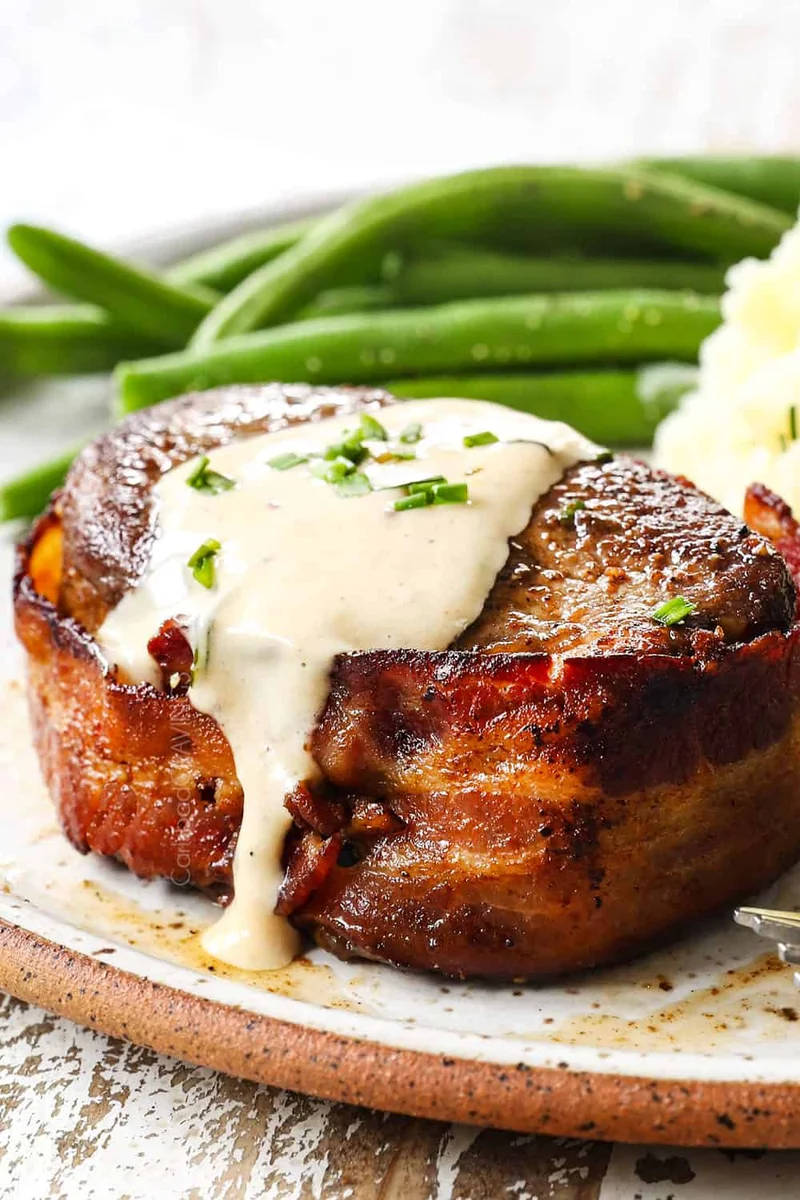
Bacon-wrapped filet mignon is seared in garlic and rosemary butter, then finished in the oven and served with a creamy balsamic-chive pan sauce. It makes an impressive steak dinner with straightforward preparation and a short stint at the stove.
Ingredients
- 4 (227–283 g each), 1½–2 inches thickfilet mignon steaks
- 2 teaspoonskosher salt
- 1 teaspoonfreshly cracked black pepper
- ½ teaspoon eachgarlic powder, onion powder, paprika and chilli powder
- 8 slicesthin- or regular-cut bacon
- 1½ tablespoonsvegetable oil
- 3 tablespoonsunsalted butter
- 3 clovesgarlic, smashed
- 2 large sprigsrosemary
- 80 mllow-sodium chicken stock
- 120 mldouble cream
- 1 tablespoonbalsamic vinegar
- 1 teaspoonDijon mustard
- 1½ tablespoonsfresh chives, chopped
- A pinch, optionalcayenne pepper
- To tastesalt and freshly cracked black pepper
- As neededbutcher’s twine
- 1cast-iron frying pan
- To serve, optionalhorseradish cream sauce
- To serve, optionalherb butter
Instructions
- 1
Bring steaks to room temperature
Take the steaks out of the fridge 60 minutes before cooking. Trim away any white membrane or excess fat if needed.
- 2
Season the steaks
Mix the kosher salt, pepper, garlic powder, onion powder, paprika and chilli powder in a small bowl. Pat the steaks dry, press the seasoning over all sides and set them aside. Ideally, season them straight away and let them rest for at least 40 minutes; if you cannot do that, season them just before cooking.
- 3
Part-cook the bacon
Heat the oven to 218°C. Arrange the bacon strips separately on a foil-lined baking tray and bake for 6–10 minutes, until just beginning to turn golden but still flexible. Drain on kitchen paper and leave the oven on.
- 4
Wrap the steaks
Wrap each steak with two bacon strips, covering the sides, and secure with butcher’s twine or toothpicks. Twine is less likely to tear the bacon.
- 5
Sear in butter
Heat the vegetable oil in a large cast-iron frying pan until smoking. Add the steaks and sear without moving for 2 minutes. Turn them with tongs, then add the butter, garlic and rosemary. Cook for another 2 minutes, tilting the pan carefully with an oven mitt and spooning the melted butter over the steaks.
- 6
Finish in oven
If you have an oven-safe digital thermometer, insert it into the thickest part of a steak, then transfer the pan to the oven. Cook at 218°C for about 4–9 minutes, until the centre reaches 49°C for rare, 54°C for medium-rare or 60°C for medium. The temperature will rise by about another 3°C as the steaks rest. Transfer them straight to a plate and leave for 5–10 minutes before slicing.
- 7
Reduce the stock
While the steaks rest, pour off all but 1 tablespoon of fat and juices from the pan, leaving the rosemary and garlic. Add the chicken stock, scrape up the browned bits and simmer, stirring occasionally, for 3 minutes.
- 8
Finish the sauce
Stir in the cream, balsamic vinegar and Dijon mustard. Simmer for about 2 minutes, until slightly thickened; add more cream if you want more sauce.
- 9
Season and serve
Take the pan off the heat and remove the rosemary and garlic with a slotted spoon. Stir in the chives, season generously with salt and pepper, and add cayenne if desired. Spoon the sauce over the steaks or serve it alongside.
What is bacon-wrapped filet mignon?
Filet mignon is a French-style name for a tender cut of beef taken from the tenderloin. Wrapping it in bacon adds savoury richness, while searing and oven-finishing help cook the thick steaks evenly.
This version draws on classic steakhouse techniques: a seasoned crust, butter-basting with garlic and rosemary, and a quick pan sauce made from the browned bits.
Nutrition and macros by portion
The nutrition label shows one serving as written: 820 calories, 57g protein, 4g carbs, 62g fat.
| Portion | Adjustment | kcal | Protein | Carbs | Fat |
|---|---|---|---|---|---|
| Lighter | Use less cream sauce | 574 kcal | 40g | 3g | 43g |
| This serving | As written | 820 kcal | 57g | 4g | 62g |
| Hungry | Add a larger steak | 1230 kcal | 86g | 6g | 93g |
Beef provides most of the protein, while the bacon, butter, oil and cream contribute much of the fat. The steak seasoning and sauce add very few carbohydrates; potatoes or other starchy sides will contribute most of the meal’s carbs. Pair a steak with a generous serving of green vegetables and choose a moderate portion of potatoes to balance the plate.
Choose and season the steaks
Steak thickness: The recipe is designed for steaks 1½–2 inches thick. Similar thickness helps the steaks finish at roughly the same time.
Seasoning: Pat the meat dry before adding the spice mix so it adheres well and the surfaces can brown. Season well ahead and rest for at least 40 minutes, or apply the seasoning just before cooking.
Prepare the bacon for wrapping
Part-cooking: The brief oven bake starts rendering the bacon while keeping it pliable enough to wrap around the steaks. Drain it on kitchen paper before using.
Securing: Use two strips per steak and tie them with butcher’s twine. Keep the bacon snug against the sides so it stays in place during searing.
Sear, baste and finish
Hot pan: Wait until the oil is smoking before adding the steaks, then leave them undisturbed for the first 2 minutes to develop a browned surface.
Butter-basting: After turning the steaks, tilt the pan carefully and spoon the garlic-rosemary butter over them for 2 minutes. Use an oven mitt to hold the hot pan.
Judge doneness and rest
Temperature: Check the thickest part of a steak with an oven-safe thermometer. Remove the steaks at 49°C for rare, 54°C for medium-rare or 60°C for medium, allowing for a further rise of about 3°C as they rest.
Resting: Set the steaks on a plate for 5–10 minutes before slicing. This also gives you time to finish the sauce in the pan.
Make the pan sauce
Browned bits: Leave 1 tablespoon of fat and juices in the pan and scrape up the browned pieces with the stock. Simmer for 3 minutes to reduce the liquid before adding the cream.
Finishing touches: The cream, balsamic vinegar and Dijon thicken into a tangy, savoury sauce. Add chives off the heat and season to taste; serve it over the steak or on the side.
What to serve alongside
Potatoes: Twice-baked potatoes make a hearty partner for the steak and its sauce. Roasted or mashed potatoes also work well.
Vegetables: Add a green vegetable such as green beans or broccoli to balance the rich bacon, butter and cream. Keep the sides simple so the steak remains the focus.
Recipe notes & tips
- Use a meat thermometer to check the centre of the thickest steak.
- Dry the steaks thoroughly before seasoning for better browning.
- Part-cook the bacon only until flexible; crisp bacon is harder to wrap.
- Use butcher’s twine to secure the bacon without puncturing it.
- Rest the steaks for 5–10 minutes before slicing.
- Make the sauce while the steaks rest, and use an oven mitt when tilting the hot pan.
Variations
- Add horseradish: Serve with horseradish cream sauce for a sharp, savoury contrast.
- Use herb butter: Add herb butter at the table for another way to finish the steaks.
- Adjust the heat: Add the optional pinch of cayenne to the sauce for a gentle kick.
- Change the herbs: Use thyme in place of rosemary for a different aromatic note.
- Serve extra sauce: Increase the cream if you would like a more generous amount for serving.
Common mistakes to avoid
- Seasoning too early without a rest: If the steaks cannot rest for at least 40 minutes, season them just before cooking.
- Wet steak surfaces: Pat the steaks dry before seasoning so they brown instead of steaming.
- Overcooking the bacon: Take it out while still pliable so it can wrap around the steaks.
- Moving steaks too soon: Leave them untouched for the first 2 minutes of searing to brown properly.
- Skipping the thermometer: Check the centre of the thickest part and remove the steaks at the chosen temperature.
- Cutting immediately: Rest the steaks for 5–10 minutes before slicing.
How to store
Refrigerate leftover steak and sauce in separate airtight containers within 2 hours; use within 3 days. Reheat gently in a covered pan over low heat until warmed through, adding a splash of stock or cream to loosen the sauce; avoid prolonged heating, which can overcook the steak.
Frequently asked questions
Can I make this without a cast-iron pan?
Use another oven-safe, heavy-based frying pan that can go from the hob to the oven. If your pan is not oven-safe, transfer the seared steaks to an oven-safe dish for the finishing step.
Do I have to part-cook the bacon first?
Yes, the recipe calls for baking it briefly so it is beginning to turn golden but remains flexible. That makes it easier to wrap around the steaks.
How do I know when the steaks are done?
Use a thermometer in the thickest part and remove the steaks at 49°C for rare, 54°C for medium-rare or 60°C for medium. The temperature will rise by about 3°C while they rest.
Can I prepare the steaks ahead?
You can season them ahead and let them rest for at least 40 minutes before cooking. If you cannot leave that resting time, season them just before they go into the pan.
What can I use instead of butcher’s twine?
Toothpicks can secure the bacon, though they may tear it. Butcher’s twine is the preferred option in this recipe.
What goes well with bacon-wrapped filet mignon?
Twice-baked potatoes are suggested, and green vegetables such as green beans or broccoli make a good accompaniment. Horseradish cream sauce or herb butter can also be served with the steaks.
Cook it from the original
This recipe comes from carlsbadcravings.com. Their page has the author’s own photos, notes and tips — the best place to cook it from.
Open the recipe on carlsbadcravings.com