
American Pancakes
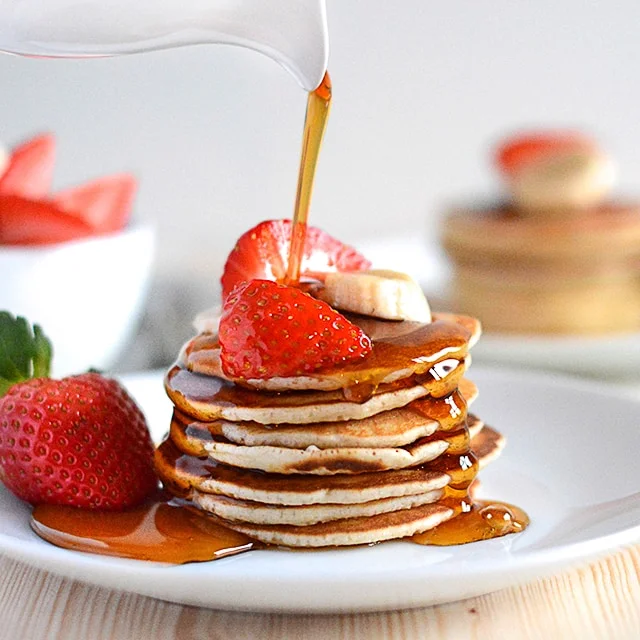
These American pancakes are light, fluffy and quick to make, with a simple batter of self-raising flour, sugar, milk and eggs. Cook them in a frying pan for a golden breakfast or brunch that serves four.
Ingredients
- 200 gself-raising flour
- 50 gcaster sugar
- 250 mlmilk
- 2eggs
Instructions
- 1
Sift the flour
Sift 200 g of self-raising flour into a large bowl.
- 2
Add the sugar
Stir 50 g of caster sugar into the flour.
- 3
Beat the eggs
In a separate bowl, beat the 2 eggs.
- 4
Mix the batter
Add the beaten eggs and 250 ml of milk to the flour and sugar. Whisk until the batter is smooth.
- 5
Heat the pan
Warm a large frying pan over a medium heat, then add the pancake mix.
- 6
Cook and flip
Cook until bubbles start to form on the top, then flip the pancakes. Cook for another minute, until golden brown.
What are American pancakes?
American pancakes are small, thick pancakes cooked on a frying pan or griddle and commonly served for breakfast. This version keeps the batter simple, using self-raising flour for lift and whisking the ingredients together until smooth.
The recipe gives a quick, straightforward route to a fluffy pancake stack. Watch for bubbles on the surface to help judge when each pancake is ready to turn.
Nutrition and macros by portion
The nutrition label shows one serving as written: 298 calories, 10g protein, 51g carbs, 4g fat.
| Portion | Adjustment | kcal | Protein | Carbs | Fat |
|---|---|---|---|---|---|
| Lighter | Use skimmed milk | 209 kcal | 7g | 36g | 3g |
| This serving | As written | 298 kcal | 10g | 51g | 4g |
| Hungry | Serve a larger stack | 447 kcal | 15g | 77g | 6g |
The flour and caster sugar provide most of the carbohydrate, while the eggs and milk contribute protein; the eggs and milk also provide some of the fat. Balance a serving with fresh fruit, and choose toppings to suit the rest of the meal.
Why self-raising flour matters
Self-raising flour: it provides the raising agent, so the recipe does not call for a separate one. Sifting it into the bowl helps break up any lumps before the wet ingredients go in.
Caster sugar: its fine texture blends readily into the flour. Keep to the stated amount for the recipe's intended sweetness.
Getting a smooth batter
Separate bowls: beating the eggs first makes them easier to incorporate with the milk and dry ingredients. Add both to the flour and sugar, then whisk until no obvious lumps remain.
Mixing: stop once the batter is smooth rather than continuing to whisk for a long time. This keeps preparation simple and avoids adding unnecessary air through prolonged mixing.
Reading the cooking cues
First side: cook over medium heat and look for bubbles beginning to form on top. This surface change is the recipe's cue to flip.
Second side: give the pancakes another minute after turning, checking for a golden-brown finish. Pan heat can vary, so use the colour and the stated cues alongside the timing.
Working in batches
Pan space: use a large frying pan and leave enough room to turn the pancakes without them touching. If the pan cannot hold them comfortably, cook in batches.
Heat: let the pan reach medium heat before adding the mix. If the pancakes colour too quickly before bubbles appear, lower the heat slightly for the next batch.
What to serve alongside
Fruit: serve the pancakes with berries or sliced banana for a fresh contrast. Add fruit just before serving so it stays distinct from the warm pancakes.
Toppings: a small amount of yoghurt or syrup can be added at the table. Keep toppings separate if you want everyone to choose their own.
Recipe notes & tips
- Sift the flour directly into a large bowl to make combining easier.
- Beat the eggs in a separate bowl before adding them to the dry ingredients.
- Whisk the batter until smooth, then stop mixing.
- Wait for bubbles to start forming on top before flipping.
- Cook over medium heat and check the colour as the pancakes finish.
Variations
- Add berries: fold a few berries into the batter just before cooking.
- Use cinnamon: add a little ground cinnamon to the flour and sugar.
- Add vanilla: stir a small splash of vanilla extract into the milk and eggs.
- Serve with banana: add sliced banana on top of the cooked pancakes.
- Choose another milk: use a different milk in place of the skimmed milk.
Common mistakes to avoid
- Skipping the sift: sift the flour first to help avoid lumps in the dry ingredients.
- Overmixing: stop whisking once the batter is smooth.
- Flipping too soon: wait until bubbles start to form on the top.
- Using high heat: keep the pan at medium so the pancakes have time to cook before browning too much.
- Crowding the pan: cook in batches if there is not enough room to flip each pancake.
How to store
Cool leftover pancakes, then store them in an airtight container in the fridge for up to 2 days. Reheat in a frying pan over a low heat or in the microwave until warmed through.
Frequently asked questions
How do I know when to flip the pancakes?
Flip when bubbles start to form on the top. Cook the other side for another minute, until golden brown.
Can I use skimmed milk?
Yes. The recipe uses skimmed milk, but says that any milk is fine.
Why are my pancakes not fluffy?
Check that you used self-raising flour and that it has not been overmixed. Whisk only until the batter is smooth.
Can I make the batter ahead?
The method is designed to mix and cook the batter straight away. For the fluffiest result, cook it soon after mixing.
Can I freeze cooked pancakes?
Yes. Let them cool, separate them with baking paper and freeze in a sealed container. Reheat from frozen until hot throughout.
Cook it from the original
This recipe comes from charlotteslivelykitchen.com. Their page has the author’s own photos, notes and tips — the best place to cook it from.
Open the recipe on charlotteslivelykitchen.com