
Stovetop Pineapple Pork Tenderloin
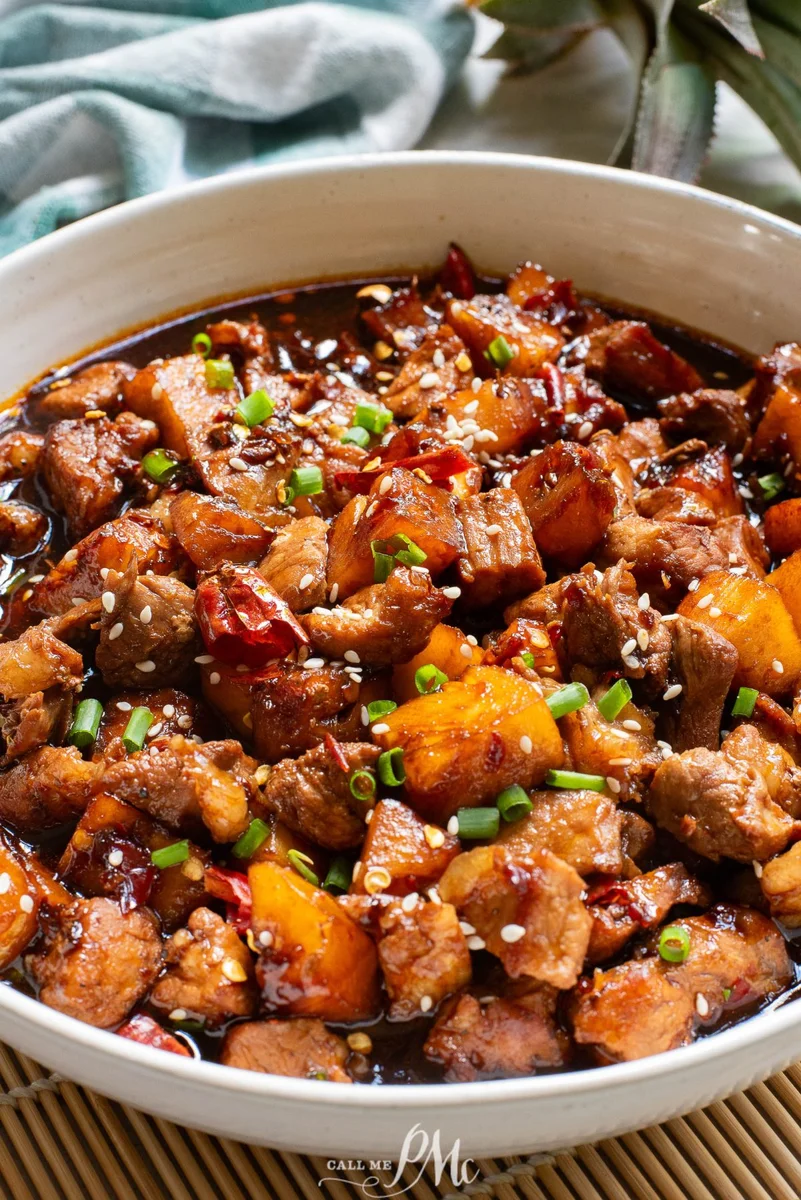
This stovetop pork tenderloin pairs bite-sized pieces of pork with pineapple and a sweet, savoury, gently spicy sauce. It cooks quickly in one pan and makes a takeout-inspired dinner to serve with rice.
Ingredients
- 454 g (1 pound)pork tenderloin, cut into bite-sized pieces
- 1.25 ml (1/4 teaspoon)sea salt
- 1.25 ml (1/4 teaspoon)black pepper
- 15 ml (1 tablespoon)vegetable oil
- 170 g (1 cup; 6 oz)pineapple, diced
- 80 ml (1/3 cup; 2.70 oz)low-sodium soy sauce
- 5 ml (1 teaspoon)fresh ginger, minced
- 30 ml (2 tablespoons)brown sugar
- 15 ml (1 tablespoon)chilli paste
Instructions
- 1
Heat the skillet
Place a large skillet over medium-high heat.
- 2
Season the pork
Season the pork pieces with the salt and black pepper.
- 3
Stir-fry the pork
Heat the oil in a non-stick skillet. Add the pork and stir-fry for 2 minutes.
- 4
Cook the pineapple
Add the diced pineapple and cook for 1 minute.
- 5
Mix the sauce
In a bowl, stir together the soy sauce, ginger, brown sugar and chilli paste until the sugar dissolves.
- 6
Simmer together
Pour the sauce over the pork and pineapple. Bring it to a simmer and cook for 3 minutes.
- 7
Garnish and serve
Remove from the heat, garnish and serve with rice.
What is stovetop pineapple pork?
This is a quick American-style, takeout-inspired skillet dinner rather than a traditional regional dish. Tender pork cooks with pineapple, then simmers briefly in a sweet, savoury sauce with ginger and chilli.
The short cooking time suits pork tenderloin, while the fruit and sauce bring contrasting sweet and savoury flavours. Serving it with rice makes an easy weeknight meal.
Nutrition and macros by portion
The nutrition label shows one serving as written: 196 calories, 26g protein, 14g carbs, 4g fat.
| Portion | Adjustment | kcal | Protein | Carbs | Fat |
|---|---|---|---|---|---|
| Lighter | More vegetables, less rice | 137 kcal | 18g | 10g | 3g |
| This serving | As written | 196 kcal | 26g | 14g | 4g |
| Hungry | Larger portion with rice | 294 kcal | 39g | 21g | 6g |
The pork provides most of the protein, while the pineapple and brown sugar contribute carbohydrates. The vegetable oil supplies most of the listed fat; serving it with rice adds more carbohydrates. For balance, pair a measured portion with vegetables alongside.
Choosing the pork and pineapple
Pork tenderloin: Cut it into pieces of a similar size so they cook at roughly the same rate. Trim away any visible silver skin before cutting if needed.
Pineapple: Dice it into bite-sized pieces so it warms through in the brief cooking time. Fresh or canned pineapple can be used, though canned fruit should be drained before adding.
Build the sauce before adding it
Sauce mixture: Stir the soy sauce, ginger, brown sugar and chilli paste together in a bowl until the sugar dissolves. This helps the ingredients combine evenly when poured into the hot pan.
Seasoning: The recipe uses low-sodium soy sauce, but it still brings saltiness. Taste the finished sauce before adding any extra salt.
Keep the pork tender
Pan heat: The method starts with a large skillet over medium-high heat, then cooks the pork in a non-stick skillet with oil. Give the pieces room to make contact with the pan rather than crowding them.
Doneness: The stated timings are 2 minutes for the pork, followed by 1 minute with the pineapple and 3 minutes at a simmer. Check that the pork is cooked through before serving; the sauce should be bubbling gently, not rapidly boiling.
Timing and sauce texture
Fast cooking: Have the pineapple and sauce mixture ready before the pork goes into the pan. The cooking stages are brief, so preparing as you go can make it harder to keep track of the timings.
Sauce consistency: A short simmer warms the ingredients together and coats the pork and pineapple. The recipe does not call for a separate thickener, so expect a pourable sauce.
What to serve with it
Rice: Serve the pork and sauce over rice, as suggested in the method, so the grains can soak up the sweet and savoury juices.
On the side: Steamed vegetables or a simple salad make fresh accompaniments. Keep any extra seasoning separate until you have tasted the dish.
Recipe notes & tips
- Cut the pork into evenly sized pieces for more consistent cooking.
- Mix the sauce ingredients before you start cooking the pork.
- Use a large skillet so the pork pieces have room in the pan.
- Drain canned pineapple before adding it to the skillet.
- Taste the sauce before serving, since soy sauce and chilli paste vary in saltiness and heat.
- Serve as soon as the pork is cooked through so it does not spend extra time simmering.
Variations
- Adjust the heat: Use less chilli paste for a milder sauce.
- Use fresh pineapple: Dice it small enough to warm through quickly.
- Add vegetables: Serve with steamed vegetables on the side.
- Swap the rice: Serve with another cooked grain if preferred.
- Make it sweeter: Keep the listed brown sugar amount, then taste before serving rather than adding more automatically.
Common mistakes to avoid
- Crowding the skillet: The pork may cook unevenly; use a large pan and leave space around the pieces.
- Cutting uneven pieces: Smaller pieces can cook faster than larger ones; aim for similar sizes.
- Overcooking the pork: Follow the brief timings and check that it is cooked through before serving.
- Boiling the sauce hard: Keep it at a simmer for the stated 3 minutes so it coats the ingredients without reducing too quickly.
- Adding extra salt too soon: Taste the sauce first because soy sauce already contributes saltiness.
How to store
Refrigerate leftovers in a covered container within 2 hours and use within 3–4 days. Reheat until steaming hot, adding a small splash of water if the sauce has thickened.
Frequently asked questions
Can I use canned pineapple?
Yes. Drain it before adding so excess juice does not dilute the sauce.
Can I make this without chilli paste?
Yes. Leave it out for a milder dish; the sauce will lose some of its heat.
How do I know when the pork is done?
Check that the pieces are cooked through after the simmer. A food thermometer can help confirm doneness.
Can I prepare the sauce ahead?
Yes. Mix the soy sauce, ginger, brown sugar and chilli paste ahead of time, then stir it again before pouring it into the pan.
What can I serve with pineapple pork?
Rice is the suggested accompaniment. Steamed vegetables or a simple salad also work well alongside it.
Cook it from the original
This recipe comes from callmepmc.com. Their page has the author’s own photos, notes and tips — the best place to cook it from.
Open the recipe on callmepmc.com