
Lemon Cacio E Pepe
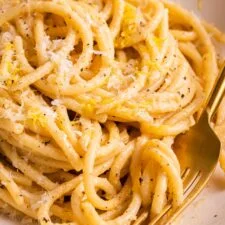
Lemon cacio e pepe pairs bucatini with Pecorino Romano, black pepper and butter for a creamy, savoury pasta with a bright citrus note. It comes together quickly, making it a good choice for a simple weeknight dinner.
Ingredients
- 227 g (8 oz)dried bucatini or spaghetti
- 57 g (4 tablespoons)unsalted butter, cubed
- 7.5 ml (1 1/2 teaspoons)freshly cracked black pepper
- About 50 g (1/2 cup), plus more for garnishfreshly grated Pecorino Romano, grated on a microplane or the smallest holes of a box grater
- Zest of 1 small lemonlemon
- 15–30 ml (1–2 tablespoons)freshly squeezed lemon juice
Instructions
- 1
Cook the pasta
Fill a large pot about halfway with water and bring it to a rolling boil over medium-high heat. Season the water generously with salt, add the pasta and cook, stirring occasionally, for about 7–9 minutes, until al dente. Reserve 240 ml (1 cup) of the pasta water, then drain the pasta in a colander. Turn the hob to its lowest setting.
- 2
Toss with sauce
Return the empty pot to the hob. Put the butter in first, then add the cooked pasta. Add the black pepper, half of the Pecorino Romano, lemon zest, lemon juice and 120 ml (1/2 cup) of the reserved pasta water. Toss until the butter melts and the ingredients are briefly combined. Add the remaining cheese and a little more pasta water as needed, continuing to toss or stir until the cheese melts into a smooth, glossy sauce that coats the pasta.
- 3
Serve straight away
Take the pasta off the heat and serve immediately in shallow pasta bowls. Add more grated Pecorino Romano on top if you like.
What is cacio e pepe?
Cacio e pepe means “cheese and pepper” in Italian and refers to a Roman pasta dish built around those two ingredients. This version keeps that savoury pairing and adds lemon zest and juice for a fresh, tangy edge.
Bucatini gives the sauce plenty of pasta to cling to, while butter and starchy cooking water help bring the cheese together into a creamy coating.
Nutrition and macros by portion
The nutrition label shows one serving as written: 700 calories, 26g protein, 80g carbs, 32g fat.
| Portion | Adjustment | kcal | Protein | Carbs | Fat |
|---|---|---|---|---|---|
| Lighter | Use less butter | 490 kcal | 18g | 56g | 22g |
| This serving | As written | 700 kcal | 26g | 80g | 32g |
| Hungry | Add another portion | 1050 kcal | 39g | 120g | 48g |
Most of the carbohydrates come from the dried pasta, while butter and Pecorino provide much of the fat; the cheese also supplies most of the protein. Pair a portion with a green salad or vegetables for a more balanced plate.
Choose the pasta and cheese
Pasta shape: Bucatini is thick and hollow, but spaghetti works too. Whichever you use, cook it until just al dente so it can be tossed in the sauce without turning soft.
Fine cheese: Grate the Pecorino very finely. Small, even shavings melt more readily than thick strands and help create a smoother sauce.
Make the sauce gently
Low heat: The pot goes back on the hob at its lowest setting before the butter and pasta are added. Keep the heat gentle as you toss so the cheese melts rather than clumping.
Starchy water: Start with 120 ml (1/2 cup), then add a little more only if needed. The pasta water helps loosen the cheese and butter into a sauce that clings to the strands.
Balance the lemon and pepper
Lemon: Zest brings fragrant citrus flavour, while the juice adds a sharper tang. The recipe allows 15–30 ml, so begin with the smaller amount if you prefer a subtler lemon note.
Pepper: Freshly cracked black pepper gives the dish its characteristic warmth. Crack it just before using for a more pronounced aroma.
Look for a glossy coating
The sauce is ready when the butter and cheese have melted into a smooth, glossy mixture that coats the pasta. If it looks too thick, toss in a small splash of reserved pasta water.
Serve promptly while the sauce is warm and fluid, with extra Pecorino at the table if desired.
Serve it as a meal
This pasta is rich and satisfying on its own. A crisp green salad or simply cooked vegetables make a fresh contrast without competing with the lemon and cheese.
If serving it as part of a larger meal, keep other dishes light and offer extra grated cheese separately.
Recipe notes & tips
- Grate the Pecorino finely before you start cooking so it is ready to add.
- Reserve the pasta water before draining; it is essential for adjusting the sauce.
- Start with 15 ml of lemon juice and add more to taste.
- Keep the pot on its lowest heat when melting the cheese.
- Toss continuously as you add the remaining cheese and pasta water.
- Serve as soon as the sauce turns glossy and coats the pasta.
Variations
- Use spaghetti: Swap in spaghetti if you do not have bucatini.
- Adjust the lemon: Use the lower amount of juice for a gentler citrus flavour.
- Add more pepper: Crack extra black pepper over the finished pasta for a stronger peppery finish.
- Finish with extra cheese: Offer more grated Pecorino at the table.
- Add greens on the side: Serve with simply cooked greens for a fresh contrast.
Common mistakes to avoid
- Overcooking the pasta: Stop at al dente so it holds its shape when tossed.
- Forgetting the pasta water: Reserve 240 ml before draining to help make the sauce.
- Adding all the cheese at once: Add it in two stages as directed to help it melt smoothly.
- Using high heat: Keep the hob on its lowest setting to reduce the risk of clumpy cheese.
- Adding too much pasta water: Pour in small amounts as needed so the sauce stays coating rather than watery.
- Letting it stand: Serve immediately, before the creamy sauce cools and thickens.
How to store
For the best texture, serve this pasta straight away. If you have leftovers, refrigerate them in a covered container for up to 2 days; reheat gently in a pan with a splash of water, stirring until warmed through.
Frequently asked questions
Can I use spaghetti instead of bucatini?
Yes. The recipe works with either bucatini or spaghetti.
How much lemon juice should I use?
Use 15–30 ml (1–2 tablespoons), depending on how pronounced you want the citrus flavour. You can start with 15 ml and adjust as you toss.
Why reserve pasta water?
Its starch helps loosen the cheese and butter into a sauce that coats the pasta. Add it gradually so the sauce does not become too thin.
How do I keep the cheese sauce smooth?
Grate the cheese finely, keep the hob on its lowest setting and toss continuously while adding the cheese and pasta water.
Can I make this ahead?
It is best made just before serving, since the sauce is at its creamiest straight after tossing. Reheated leftovers are possible, but may need a splash of water to loosen.
What can I serve with lemon cacio e pepe?
A green salad or simply cooked vegetables make a fresh accompaniment to the rich, peppery pasta.
Cook it from the original
This recipe comes from butterbeready.com. Their page has the author’s own photos, notes and tips — the best place to cook it from.
Open the recipe on butterbeready.com