
Basque Cheesecake Recipe
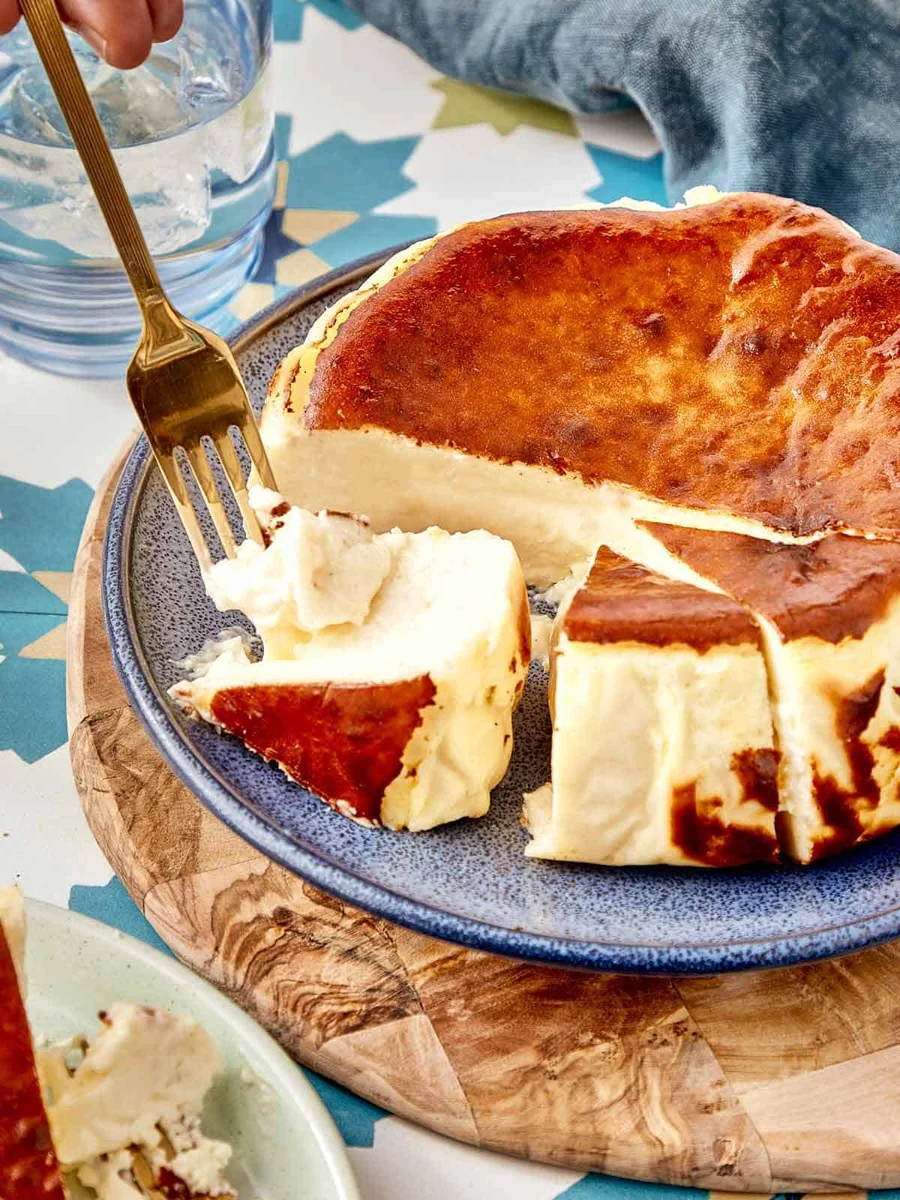
This Basque cheesecake is baked at high heat for a deeply golden top and a soft, creamy centre. Vanilla and lemon zest brighten the rich filling, while chilling gives it time to set into neat slices.
Ingredients
- 383 g (13.5 oz)softened cream cheese
- 100 g (1/2 cup)caster sugar
- 0.75 g (1/8 tsp)salt
- 2.5 ml (1/2 tsp)vanilla paste or extract
- 3large eggs
- 16 g (2 tbsp)cornflour
- 200 ml (6.8 fl oz)double or whipping cream
- 1 tbsp (about the zest of 1 small lemon)lemon zest
Instructions
- 1
Prepare the tin
Heat the oven to 230°C (445°F). Line a 15 cm (6-inch) round springform tin with baking paper, letting it rise at least 5 cm (2 inches) above the rim.
- 2
Smooth the cheese
Put the softened cream cheese in a large mixing bowl and work it with a spatula until smooth and free of lumps.
- 3
Add flavourings
Add the caster sugar, salt, vanilla and lemon zest. Whisk until the mixture is smooth and evenly combined.
- 4
Incorporate eggs
Whisk in the eggs one at a time, making sure each is fully incorporated before adding the next.
- 5
Mix in cornflour
Sift in the cornflour and whisk just until combined.
- 6
Add the cream
Pour in the cream and whisk until the mixture is smooth.
- 7
Bake the cheesecake
Put the cheesecake in the oven and immediately lower the heat to 220°C (430°F). Bake for about 25 minutes, until the top is golden brown and the centre still jiggles slightly.
- 8
Cool and chill
Leave the cheesecake in its tin on a wire rack until it reaches room temperature. Refrigerate it uncovered for at least 4 hours to set.
- 9
Release the cake
Gently remove the cheesecake from the tin and peel back the baking paper.
What is Basque cheesecake?
Basque cheesecake is a crustless baked cheesecake associated with the Basque Country in northern Spain. Its characteristic look comes from baking the filling at a high temperature until the top turns a deep golden brown.
This version keeps the mixture simple, with cream cheese and cream for richness, plus vanilla and lemon zest for a fresh aromatic note. A softly wobbly centre is part of the intended texture, not a sign that the bake has failed.
Nutrition and macros by portion
The nutrition label shows one serving as written: 218 calories, 7g protein, 8g carbs, 18g fat.
| Portion | Adjustment | kcal | Protein | Carbs | Fat |
|---|---|---|---|---|---|
| Lighter | Serve a smaller slice | 153 kcal | 5g | 6g | 13g |
| This serving | As written | 218 kcal | 7g | 8g | 18g |
| Hungry | Serve a larger slice | 327 kcal | 11g | 12g | 27g |
The cream cheese and cream provide most of the fat, while the eggs contribute protein and some fat. Sugar and cornflour account for much of the carbohydrate. For a more balanced plate, serve a slice with fresh fruit rather than adding another rich accompaniment.
The ingredients that matter
Cream cheese: softened cheese is easier to mix smooth, helping avoid lumps in the finished filling. Use a full-fat version for the intended rich texture.
Eggs and cream: eggs give the cheesecake structure as it bakes, while cream helps keep the centre smooth and yielding.
Lemon and vanilla: zest adds fragrant citrus without extra liquid, and vanilla rounds out the tang of the cheese.
Mixing a smooth filling
Start by smoothing the cream cheese before adding the other ingredients. Scrape the sides and base of the bowl as needed so no dense patches remain.
Add the eggs one at a time and mix each in before moving on. Once the cornflour goes in, whisk only until it disappears into the mixture rather than beating for longer than necessary.
Getting the bake right
Hot oven: the initial heat helps colour the surface quickly, while lowering the temperature to 220°C immediately after putting the cake in follows the recipe's baking method.
Doneness: look for a golden-brown top and a centre that still moves slightly when the tin is gently nudged. The centre will become firmer as the cheesecake cools and chills.
Why the paper rises above the tin
The filling can rise as it bakes, so the baking paper should extend at least 5 cm above the rim of the 15 cm tin. Press it into the tin, allowing folds rather than trying to make the paper perfectly smooth.
The paper also makes it easier to lift and release the cheesecake after chilling. Peel it back gently to avoid pulling at the browned sides.
Cooling and chilling
Let the cheesecake cool in its tin on a wire rack until it reaches room temperature. This gives it time to settle before it goes into the fridge.
Chill it uncovered for at least 4 hours so the centre can set. The total time is about 290 minutes, including the cooling and chilling period.
Serving the cheesecake
Serve the cheesecake chilled or let it stand briefly at room temperature if you prefer a softer texture. Cut it with a clean knife, wiping the blade between slices for neater portions.
Its rich, creamy filling pairs well with fresh berries or sliced fruit. Keep accompaniments simple so the caramelised top and lemon-vanilla flavour remain prominent.
Recipe notes & tips
- Bring the cream cheese to room temperature so it smooths out more easily.
- Use baking paper that extends at least 5 cm above the tin to contain the rising filling.
- Add the eggs individually to help them blend evenly into the cheese mixture.
- Stop whisking the cornflour as soon as it is incorporated.
- Use the slight wobble in the centre, rather than a firm middle, as the bake's doneness cue.
- Allow the cheesecake to cool fully before chilling it for at least 4 hours.
Variations
- Citrus swap: use finely grated orange zest in place of the lemon zest.
- Vanilla choice: use vanilla extract instead of vanilla paste, as allowed in the recipe.
- Berry serving: add fresh berries alongside each chilled slice.
- Plain finish: leave off toppings to highlight the browned top and creamy centre.
Common mistakes to avoid
- Cold cream cheese: soften it before mixing so the filling is less likely to contain lumps.
- Low baking paper: let the paper rise at least 5 cm above the tin rim to contain the filling.
- Adding eggs together: whisk them in one at a time so each can be incorporated evenly.
- Overmixing the cornflour: whisk only until combined to avoid unnecessary mixing.
- Baking until firm: take the cheesecake out when the top is golden and the centre still jiggles slightly.
- Skipping the chill: refrigerate for at least 4 hours so the cheesecake has time to set.
How to store
Keep the cheesecake covered in the fridge once it has set, and eat it within 3 days. Serve it chilled; reheating is not needed and may soften the set centre.
Frequently asked questions
Can I use vanilla extract instead of vanilla paste?
Yes. The recipe allows either vanilla paste or extract; use 1/2 tsp.
How do I know when the cheesecake is baked?
The top should be golden brown, while the centre should still jiggle slightly when the tin is moved. It firms as it cools and chills.
Why does the baking paper need to extend above the tin?
The filling may rise during baking, so the taller paper helps contain it. It also makes it easier to release the cheesecake later.
Can I chill the cheesecake for less than 4 hours?
The recipe calls for at least 4 hours of uncovered chilling so the centre can set. A shorter chill may leave it softer and harder to slice.
Should I remove the cheesecake from the tin while it is warm?
No. Cool it in the tin to room temperature, then chill it for at least 4 hours before gently releasing it.
Can I make it ahead?
Yes. Its required cooling and chilling time makes it convenient to prepare in advance; keep it refrigerated until serving.
Cook it from the original
This recipe comes from cafedelites.com. Their page has the author’s own photos, notes and tips — the best place to cook it from.
Open the recipe on cafedelites.com