
Best Prime Rib in Garlic Butter
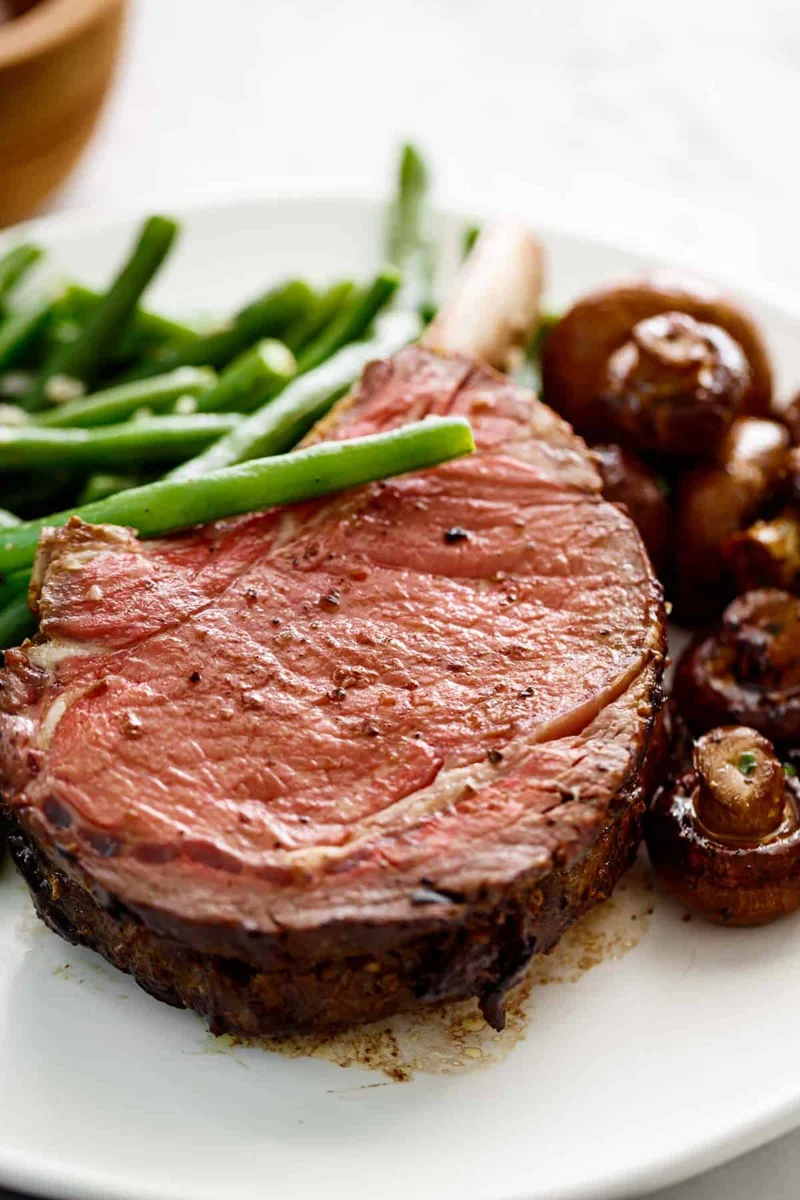
This American-style standing rib roast is coated with garlic butter, roasted until browned and then cooked more gently with pan juices. A red wine jus made in the roasting pan gives you a savoury sauce to serve alongside the slices.
Ingredients
- 3 kg (6.6 lb)standing rib roast (4-bone rib roast)
- 2 headsgarlic, unpeeled and halved horizontally
- 113 g (½ cup)unsalted butter
- 5 clovesgarlic, minced
- 1 tablespooncoarse salt
- 1 teaspoonblack pepper
- 710 ml (3 cups)low-sodium beef stock or broth
- 475 ml (2 cups)red wine
- 1 tablespooncornflour, optional, for a thicker sauce
Instructions
- 1
Bring to room temperature
Take the rib roast out of the fridge 2–3 hours before cooking. Pat it dry all over with kitchen paper.
- 2
Preheat the oven
Heat a conventional oven to 240°C or a fan oven to 220°C.
- 3
Mix garlic butter
In a small bowl, combine the butter, minced garlic and ½ tablespoon of the salt.
- 4
Prepare the roasting pan
Arrange the garlic halves in a heavy-based roasting pan or cast-iron skillet. Coat the underside of the beef, on the bone side, with 2 tablespoons of garlic butter. Set the roast bone-side down on top of the garlic halves. Spread another 2–3 tablespoons of garlic butter over the top and sides, rubbing it into the meat. Season with the remaining salt and the pepper.
- 5
Brown the roast
Roast for 20–30 minutes, or until the meat is nicely browned.
- 6
Add remaining butter
Carefully take the roast out of the oven and spread the remaining garlic butter over it.
- 7
Lower the heat
Reduce a conventional oven to 120°C or a fan oven to 100°C.
- 8
Slow-roast the beef
Cover with foil and continue roasting for 1–1½ hours, basting with the pan juices every 20–30 minutes, until it reaches your preferred doneness. For medium-rare, the stated internal temperature is 48°C. Start checking after 45 minutes of roasting and check again with each baste to avoid overcooking.
- 9
Allow it to settle
Once cooked to your liking, leave the roast to rest for 20 minutes. The recipe notes that the meat will continue cooking as its juices settle, bringing the internal temperature to 55°C for medium-rare.
- 10
Rest the roast
Transfer the roast to a serving plate, tent it loosely with foil and rest for 20–30 minutes. The recipe also gives 52°C as the expected temperature for medium-rare after resting.
- 11
Slice and serve
Carve the roast and serve it with the red wine jus or sauce.
- 12
Reduce the wine
Set the pan with its juices and cooked garlic halves over high heat on the hob. Stir in 590 ml (2½ cups) of the beef stock and all the wine. Bring to a fast simmer and cook for 10 minutes, until the liquid has reduced by roughly half.
- 13
Thicken the jus
Turn the heat down to medium. Whisk the cornflour into the remaining beef stock, then whisk half of this mixture into the jus. Add the rest if you want a thicker sauce. Strain the jus into a bowl, pressing the garlic to release its juices, then pour it into a serving jug.
What is prime rib?
Prime rib is a large roast cut from the beef rib section, often cooked with the bones attached. It is a familiar celebratory roast in the United States, where it is commonly carved at the table.
Here, the bones sit beneath the meat as it roasts over halved garlic, while garlic butter coats the outside. A final red wine jus uses the browned pan juices, so the sauce takes on flavour from the roast itself.
Nutrition and macros by portion
The nutrition label shows one serving as written: 641 calories, 53g protein, 7g carbs, 39g fat.
| Portion | Adjustment | kcal | Protein | Carbs | Fat |
|---|---|---|---|---|---|
| Lighter | Trim visible fat | 449 kcal | 37g | 5g | 27g |
| This serving | As written | 641 kcal | 53g | 7g | 39g |
| Hungry | Add a larger slice | 962 kcal | 80g | 11g | 59g |
The beef supplies most of the protein, while the butter and the fat in the roast contribute much of the fat. The small amount of carbohydrate comes mainly from the garlic and cornflour in the sauce; serve the roast with vegetables alongside to round out the plate.
The roast and the bones
Four-bone roast: The recipe calls for a 3 kg standing rib roast. Its size means timing is only a guide, so use the internal-temperature checks in the method to judge doneness.
Bone-side down: Setting the meat on its bones places it above the garlic halves in the pan. The bones act as a natural roasting rack, as the recipe describes.
Garlic butter coating
Butter and garlic: Mix the minced garlic with butter and some of the salt before rubbing it over the beef. Coating both the underside and the top and sides spreads the seasoning across the roast.
Unpeeled halves: The halved garlic heads go beneath the roast, and their skins help the cloves stay together during cooking. They also remain in the pan for the jus.
Two-stage roasting
Initial heat: The roast starts in a much hotter oven for 20–30 minutes, until the outside has browned. Then the oven temperature is lowered for the longer, gentler stage.
Basting: During the slow roast, spoon the pan juices over the meat every 20–30 minutes. Begin checking the centre after 45 minutes of this stage, then check again as you baste.
Checking doneness and resting
Temperature: Insert a thermometer into the thickest part of the meat, avoiding the bone. The recipe gives 48°C as its medium-rare target before resting, but its two resting notes list different final temperatures, so follow your preferred doneness and thermometer readings.
Resting: Transfer the cooked roast to a plate and tent it loosely with foil for 20–30 minutes. Resting gives the juices time to settle before carving.
Making the red wine jus
Pan juices: Simmer the wine with 590 ml of the stock and the juices left in the roasting pan for 10 minutes, reducing the liquid by roughly half. Scrape in the cooked garlic halves as directed so their flavour goes into the sauce.
Cornflour: Whisk it into the remaining stock before adding it to the jus. Start with half the mixture and add more if you prefer a thicker consistency, then strain and press the garlic through the sieve.
Serving the roast
Carve the rested meat into slices and serve the red wine jus alongside or over the top. Roast potatoes and green vegetables make straightforward sides that balance a rich main course.
Recipe notes & tips
- Let the roast stand out of the fridge for the full 2–3 hours stated in the method before cooking.
- Pat the beef dry before adding the garlic butter to help the outside brown.
- Use a meat thermometer and begin checking after 45 minutes of slow roasting.
- Baste every 20–30 minutes as directed, and check the temperature each time.
- Add the cornflour mixture gradually so you can stop when the jus reaches your preferred thickness.
- Rest the roast loosely covered before carving.
Variations
- Thicker jus: Add the second half of the cornflour mixture if you want a more substantial sauce.
- No cornflour: Leave it out for a thinner jus.
- Stock swap: Use beef broth instead of stock, as the ingredient list allows.
- Different red wine: Use another red wine you would be happy to serve with the roast.
- Simpler sides: Pair the beef and jus with steamed vegetables for a less rich plate.
Common mistakes to avoid
- Skipping the temperature checks: The roast can overcook; start checking after 45 minutes of slow roasting and repeat with each baste.
- Carving straight away: The juices may run out; rest the meat for 20–30 minutes before slicing.
- Adding all the thickener at once: The jus may become thicker than you want; whisk in half first and assess it.
- Forgetting to baste: The recipe relies on regular pan-juice basting; baste every 20–30 minutes during the slow-roast stage.
- Using the wrong oven setting: Check whether your oven is conventional or fan and use the matching temperatures in the method.
How to store
Refrigerate leftover beef and jus in separate airtight containers and use within 3 days. Reheat gently until hot, adding a little jus to the beef to help keep it moist.
Frequently asked questions
How long should the roast sit out before cooking?
The method says to take it out of the fridge 2–3 hours before cooking. Pat it dry before seasoning and roasting.
When should I start checking the internal temperature?
Start checking after 45 minutes of slow roasting, then check again with each baste. The time is a guide; the thermometer helps you judge when it has reached your preferred doneness.
What temperature does the recipe give for medium-rare?
It gives 48°C before resting, but its resting instructions mention both 55°C and 52°C afterwards. Check the roast as it cooks and use your preferred doneness as your guide.
Can I make the jus without cornflour?
Yes. Cornflour is optional; leaving it out gives you a thinner sauce. For a thicker jus, whisk it into the remaining stock and add the mixture gradually.
Why are there two resting instructions?
The method first says to rest the roast for 20 minutes, then gives a separate instruction to rest it for 20–30 minutes. Transfer it to a plate and tent it loosely with foil for the stated 20–30 minutes before carving.
Can I use beef broth instead of stock?
Yes. The ingredient list allows low-sodium beef broth as an alternative to beef stock.
Cook it from the original
This recipe comes from cafedelites.com. Their page has the author’s own photos, notes and tips — the best place to cook it from.
Open the recipe on cafedelites.com