
Creamy Pasta Carbonara Recipe
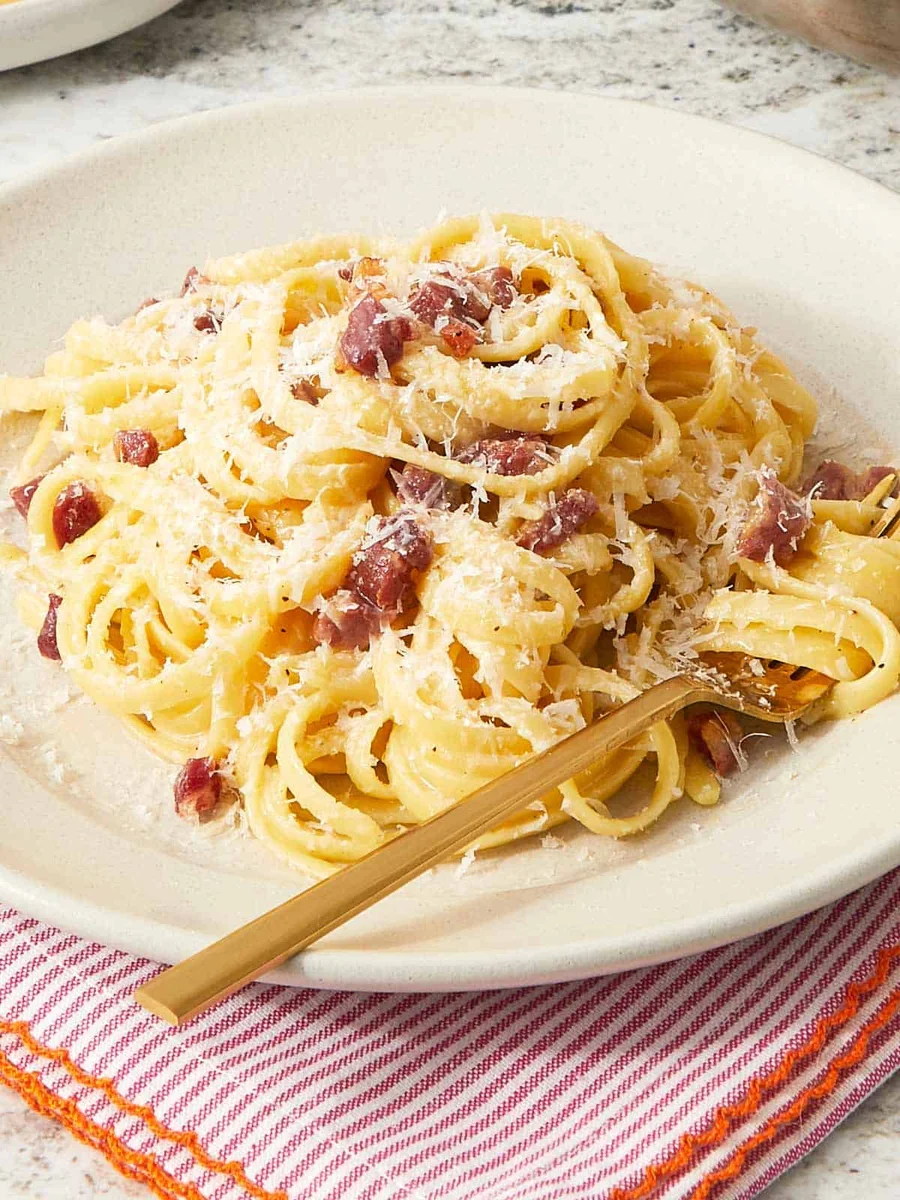
This Roman-style carbonara combines al dente linguine with crisp pancetta and a silky sauce made from egg yolks and Pecorino Romano. It is a quick, satisfying meal where careful heat control lets a few ingredients do the work.
Ingredients
- 3 slicespancetta (or guanciale or bacon)
- 255 g (9 oz)linguine
- 4 largeegg yolks
- About 100 g (1 cup)finely grated Pecorino Romano
- 1 tspground black pepper
- 120 ml (½ cup), dividedpasta cooking water
Instructions
- 1
Crisp the pancetta
Cut the pancetta into small squares and place it in a pan over very low heat. Cook slowly until the fat renders and the meat is crisp.
- 2
Reserve the fat
Take the cooked pancetta out of the pan and set it aside. Leave all the rendered fat in the pan.
- 3
Cook the pasta
Bring a pot of salted water to the boil. Add the linguine and cook according to the packet instructions until al dente.
- 4
Mix the sauce
As the pasta cooks, combine the egg yolks, grated Pecorino Romano and black pepper in a bowl, then beat until smooth. Gradually whisk in about 50 ml of hot pasta cooking water, whisking quickly to temper the yolks and make a creamy sauce.
- 5
Coat the pasta
Drain the pasta and transfer it straight to the pan with the reserved pancetta fat over very low heat. Toss gently, then add the egg and cheese mixture and another 50 ml of reserved pasta water. Stir constantly until the sauce thickens and coats the pasta; keep the heat low enough to prevent the eggs from scrambling.
- 6
Serve the carbonara
Divide the pasta between plates. Top with the reserved crispy pancetta and extra grated or shaved Pecorino Romano.
What is carbonara?
Carbonara is a Roman pasta dish traditionally built around cured pork, eggs, hard cheese and black pepper. Its sauce gets its creamy texture from the eggs and cheese rather than cream.
This version uses pancetta and linguine. The key is to combine the egg mixture with hot pasta and a little cooking water without letting the eggs overheat.
Nutrition and macros by portion
The nutrition label shows one serving as written: 650 calories, 32g protein, 65g carbs, 28g fat.
| Portion | Adjustment | kcal | Protein | Carbs | Fat |
|---|---|---|---|---|---|
| Lighter | Use less pancetta | 455 kcal | 22g | 46g | 20g |
| This serving | As written | 650 kcal | 32g | 65g | 28g |
| Hungry | Add more linguine | 975 kcal | 48g | 98g | 42g |
The linguine supplies most of the carbohydrates, while the pancetta and egg yolks contribute much of the fat. Egg yolks and Pecorino Romano provide protein, with the cheese also adding richness. Serve with a green salad or vegetables to balance the plate with something fresh.
Choosing the ingredients
Pancetta: Cut it into small pieces so it renders evenly and gives each portion crisp, savoury bites. Guanciale or bacon can be used in its place, as noted in the recipe.
Pecorino Romano: Finely grated cheese blends more readily into the egg yolks. Keep some aside to finish the plates.
Linguine: Its long strands are easy to toss with the sauce. Cook it just until al dente so it keeps some bite after it goes into the pan.
Render the pancetta gently
Low heat gives the pancetta time to release its fat as it crisps. Stir or turn the pieces as needed so they brown without scorching.
Keep the rendered fat in the pan for coating the pasta. Set the crisp pancetta aside so it stays distinct rather than softening in the sauce.
Temper the egg mixture
Whisking hot pasta water into the yolks and cheese gradually warms the mixture. Add it while whisking briskly, rather than pouring in all the water at once.
The mixture should be smooth before it meets the pasta. The water also helps loosen the cheese and yolks into a sauce that can cling to the strands.
Get a silky finish
Toss the drained pasta with the pancetta fat over very low heat, then stir in the egg and cheese mixture. Keep everything moving so the sauce thickens evenly around the linguine.
Look for a glossy coating on the strands; the sauce should thicken without forming pieces of cooked egg. If it becomes too thick, use a little more reserved pasta water, added gradually.
Timing and serving
Prepare the egg and cheese mixture while the pasta cooks, as the method directs. The pasta needs to go into the pan immediately after draining so its heat can help bring the sauce together.
Serve straight away, topped with the crisp pancetta and extra Pecorino. A simple green salad or lightly dressed vegetables make a fresh contrast alongside the rich pasta.
Recipe notes & tips
- Cut the pancetta into similar-sized pieces so they render at a similar rate.
- Grate the Pecorino finely to help it mix smoothly with the yolks.
- Reserve the pasta water before draining, and add it to the sauce in measured amounts.
- Have the egg mixture ready by the time the pasta is cooked.
- Keep the pan over very low heat when adding the egg mixture and stir constantly.
- Serve as soon as the sauce coats the linguine for the silkiest texture.
Variations
- Use guanciale: Swap it for the pancetta and render it gently in the pan.
- Use bacon: Replace the pancetta with bacon for the alternative named in the recipe.
- Try spaghetti: Use another long pasta shape and cook it al dente.
- Add more pepper: Increase the black pepper for a sharper, pepper-forward finish.
- Finish with shaved cheese: Top the plates with shaved Pecorino Romano instead of extra grated cheese.
Common mistakes to avoid
- Cooking the pancetta too fast: The outside can scorch before the fat renders; keep the heat very low.
- Adding the hot water too quickly: The yolks may heat unevenly; whisk continuously as you pour it in gradually.
- Letting the pan get too hot: The eggs can scramble; use very low heat and keep stirring.
- Draining without saving water: The sauce needs pasta water to loosen; reserve it before draining.
- Overcooking the linguine: It may turn soft as it is tossed in the pan; stop cooking at al dente.
How to store
For the best texture, serve carbonara immediately. If needed, refrigerate leftovers in a sealed container and use within 2 days; reheat gently in a pan with a small splash of water, stirring often, and avoid high heat.
Frequently asked questions
Can I use bacon instead of pancetta?
Yes. Bacon is listed as an alternative; cut it into small squares and cook it gently to render the fat and crisp the pieces.
Why is there no cream in the sauce?
This version gets its creamy texture from egg yolks, Pecorino Romano and pasta cooking water. Stirring them together carefully creates the coating.
How do I stop the eggs from scrambling?
Temper the yolks with hot pasta water while whisking, then keep the pan over very low heat and stir constantly as you combine everything.
How much pasta water should I add?
The method uses about 50 ml to temper the egg mixture and another 50 ml when tossing the pasta. Add it as directed, and keep any remaining reserved water to adjust the sauce gradually if needed.
Can I make the sauce ahead?
It is best to mix the yolks, cheese and pepper while the pasta cooks, then combine the sauce with the pasta straight away. The finished dish is at its silkiest when served immediately.
What can I serve with carbonara?
A simple green salad or lightly dressed vegetables work well alongside the rich, savoury pasta.
Cook it from the original
This recipe comes from cafedelites.com. Their page has the author’s own photos, notes and tips — the best place to cook it from.
Open the recipe on cafedelites.com