
Pan Seared Fish With Tomatoes & Olives
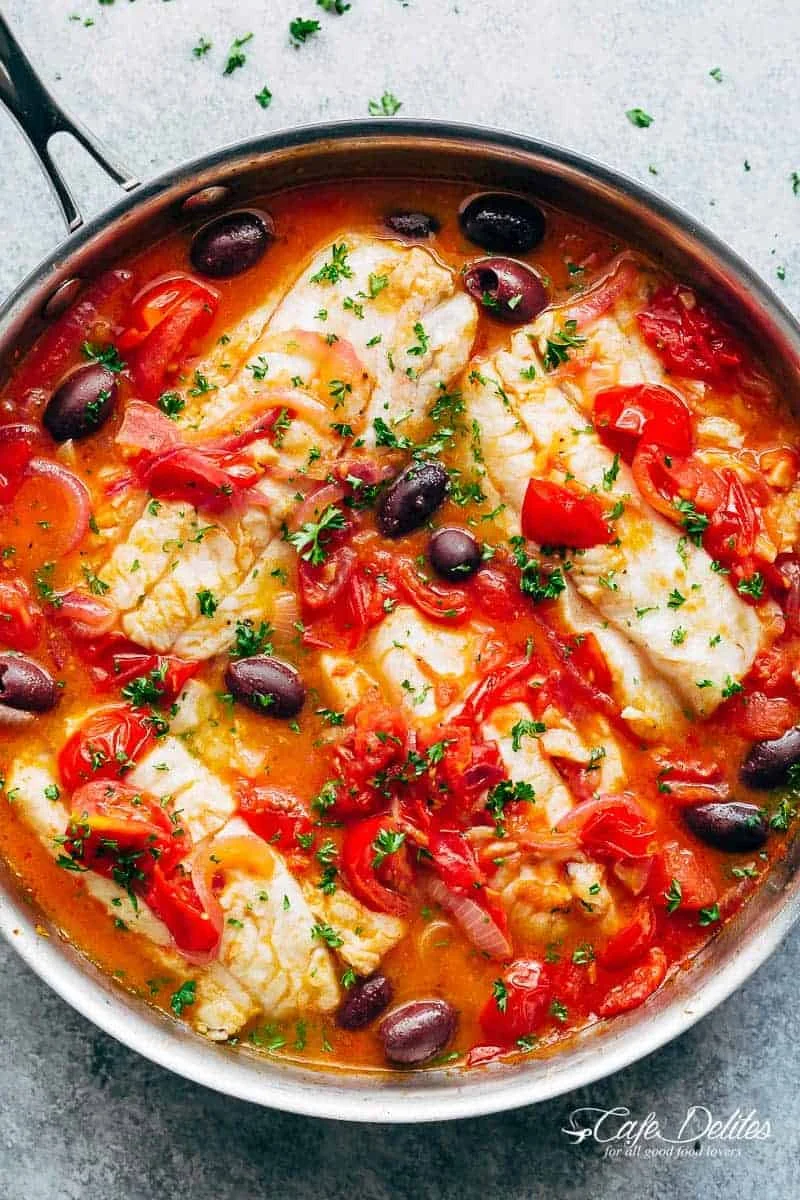
This Mediterranean-style pan-seared fish pairs tender white fish with a quick sauce of tomatoes, olives, garlic and white wine. It makes a flavourful weeknight meal in one pan and is ready in about 25 minutes.
Ingredients
- 10 ml (2 teaspoons)olive oil
- 4bass fillets (or skinless cod fillets or another firm white fish)
- 1 pinchsalt, to taste
- 1 pinchcracked pepper, to taste
- 2 large clovesgarlic, minced
- 1onion, finely sliced
- 150 g (1 cup)grape tomatoes (or cherry or heirloom tomatoes), quartered
- 60 ml (¼ cup)white wine
- 15 ml (1 tablespoon)lemon juice
- 50 g (⅓ cup)pitted Kalamata olives
- 8 g (2 tablespoons)parsley or basil, chopped, to garnish
Instructions
- 1
Season the fish
Heat the olive oil in a large non-stick pan over medium heat. Season both sides of the fish with salt and pepper.
- 2
Sear the fillets
Fry the fish for about 5 minutes, until golden brown. Carefully turn the fillets and cook for a further 2 minutes.
- 3
Soften the aromatics
Add the onion and garlic to the pan and fry for about 2 minutes, until fragrant.
- 4
Make the sauce
Add the tomatoes, wine, lemon juice and olives. As you add the tomatoes, squeeze them with your fingertips to help release their flavour. Continue cooking until the fish is cooked through and the sauce has reduced a little.
- 5
Season and serve
Taste the sauce and adjust the salt or pepper as needed. Spoon the sauce over the fish and serve straight away with the chopped herbs.
What is pan-seared fish with tomatoes and olives?
This is a quick Mediterranean-style fish dish, rather than a recipe tied to one specific region. Firm white fish is seared in a pan and finished with a bright, savoury sauce of tomatoes, olives, garlic and wine.
The method works well for a weeknight because the fish and sauce cook in the same pan. Tomatoes bring freshness, while briny olives and lemon give the mild fish plenty of flavour.
Nutrition and macros by portion
The nutrition label shows one serving as written: 272 calories, 45g protein, 6g carbs, 6g fat.
| Portion | Adjustment | kcal | Protein | Carbs | Fat |
|---|---|---|---|---|---|
| Lighter | Use less olive oil | 190 kcal | 31g | 4g | 4g |
| This serving | As written | 272 kcal | 45g | 6g | 6g |
| Hungry | Add potatoes or bread | 408 kcal | 68g | 9g | 9g |
The fish supplies most of the protein, while the tomatoes and onion contribute a modest amount of carbohydrate. Olive oil and olives provide most of the fat. Serve with a generous portion of vegetables and, if you want a more filling plate, add a measured serving of potatoes, rice or bread.
Choosing the fish
Firm fillets: Bass is the suggested choice, but skinless cod or another firm white fish can also work. Choose fillets of similar thickness so they cook at roughly the same pace.
Handle gently: White fish can flake as it cooks, so use a thin, broad spatula when turning it. Let the first side brown before lifting; it is less likely to stick once a crust has formed.
Building the tomato and olive sauce
Tomatoes: Quarter the tomatoes as directed, then squeeze them gently as they go into the pan. This helps release some juice into the sauce while leaving pieces for texture.
Olives and lemon: Kalamata olives add a salty, savoury note, and lemon juice keeps the sauce lively. Taste before adding extra salt, since the olives already bring saltiness.
Getting the timing right
Sear first: The fish gets about 5 minutes on its first side and 2 minutes after turning before the onion and garlic go in. These times are a guide; thicker fillets may need longer to cook through.
Finish in the pan: Once the tomatoes, wine, lemon and olives are added, cook until the fish is cooked through and the sauce has reduced a little. Avoid prolonged cooking, which can make the fish dry.
Reading the texture
Fish: The fillets should be opaque and flake easily when gently pressed with a fork. Check the thickest part, especially if the fillets vary in size.
Sauce: Look for softened tomatoes and a slightly concentrated sauce that can be spooned over the fish. It need not become thick; the juices help keep each serving moist.
What to serve alongside
For a simple plate, serve the fish with bread, boiled potatoes or rice to catch the tomato and olive sauce. A green salad or steamed vegetables add freshness alongside the savoury pan sauce.
Add the chopped parsley or basil just before serving, as the recipe directs. Its fresh flavour contrasts with the cooked tomatoes and olives.
Recipe notes & tips
- Pat the fish dry before seasoning to help it brown in the pan.
- Bring the fillets to a similar thickness where possible so they cook evenly.
- Use a pan large enough to leave a little space around the fish.
- Taste the sauce before adding extra salt because the olives are already salty.
- Have the tomatoes, wine, lemon juice and olives ready before you start cooking the fish.
Variations
- Use cod: Swap in skinless cod fillets of similar thickness.
- Try cherry tomatoes: Quarter them in place of the grape tomatoes.
- Choose basil: Use chopped basil instead of parsley for a different herbal finish.
- Add chilli: Include a little chilli alongside the garlic for gentle heat.
- Serve with grains: Spoon the fish and sauce over cooked rice or another grain.
Common mistakes to avoid
- Moving the fish too soon: Let the first side brown for about 5 minutes before trying to turn it.
- Turning roughly: Use a broad spatula and support the fillet so it does not break apart.
- Crowding the pan: Cook in batches if the fillets do not fit comfortably in one layer.
- Overcooking the fish: Check the thickest part and stop when it is cooked through and flakes easily.
- Adding salt without tasting: Check the sauce first, as Kalamata olives contribute salt.
How to store
Refrigerate leftovers in a covered container for up to 2 days. Reheat gently in a covered pan over low heat until hot, adding a small splash of water if the sauce has thickened; avoid repeated reheating, which can dry out the fish.
Frequently asked questions
Can I use cod instead of bass?
Yes. The recipe allows skinless cod or another firm white fish in place of bass. Fillets of similar thickness are easiest to cook evenly.
How can I tell when the fish is cooked?
Check the thickest part: it should be opaque and flake easily with gentle pressure from a fork. If it is not ready after the sauce is added, continue cooking briefly.
Do I need to remove the tomato skins?
No. The recipe uses quartered tomatoes with their skins on. Squeezing them gently as they go into the pan helps release their juices.
What can I use instead of white wine?
The listed recipe calls for white wine. If you prefer not to use it, use water in its place, keeping in mind that the sauce will have a different flavour.
What should I serve with this fish?
Bread, potatoes or rice work well with the sauce. A green salad or steamed vegetables make a fresh accompaniment.
Can I make it ahead?
It is best cooked just before serving, since fish can become dry when reheated. You can prepare the sliced onion, minced garlic and quartered tomatoes in advance.
Cook it from the original
This recipe comes from cafedelites.com. Their page has the author’s own photos, notes and tips — the best place to cook it from.
Open the recipe on cafedelites.com