
Pan Seared Salmon with Lemon Garlic Butter Sauce
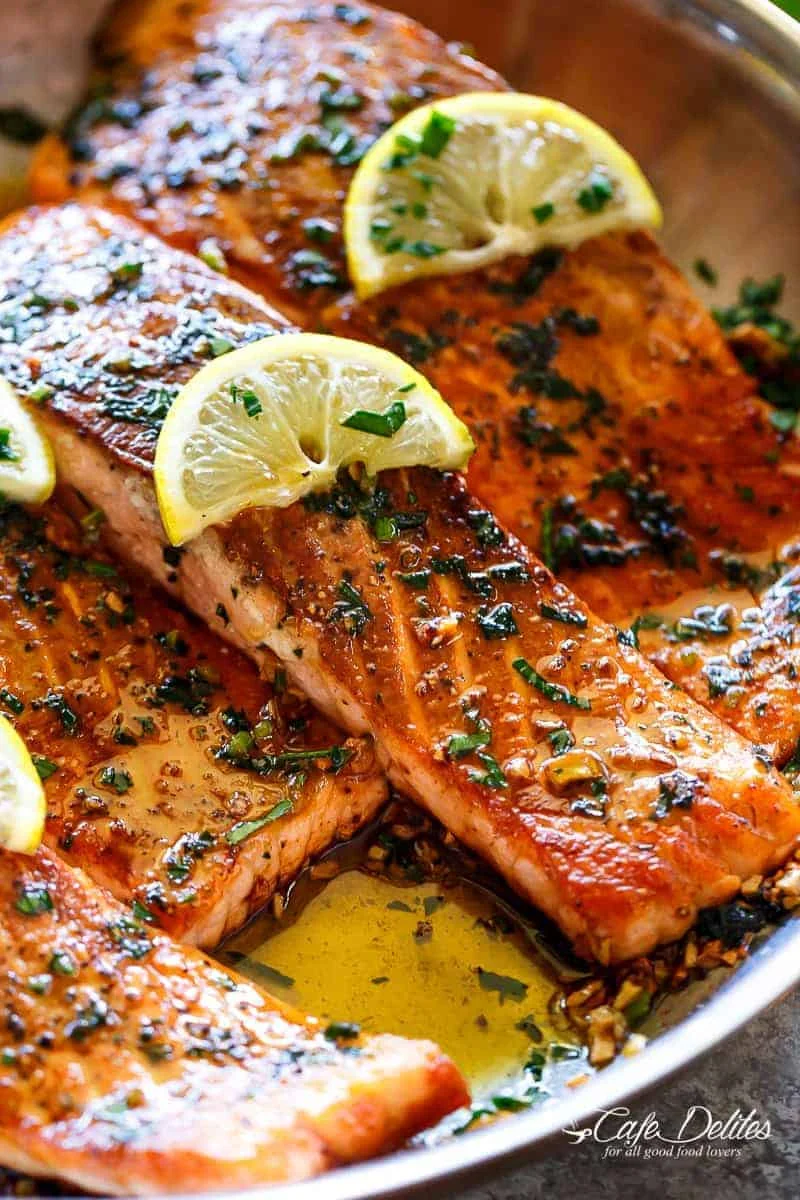
Pan-seared salmon is browned until crisp on the outside, then finished in a buttery sauce with garlic, lemon and parsley. It comes together in 25 minutes, making it a straightforward centrepiece for a weeknight meal.
Ingredients
- 794 g (28 oz)skinless salmon fillets
- 1.25 ml (1/4 teaspoon)salt, to season
- 1.25 ml (1/4 teaspoon)pepper, to season
- 45 ml (3 tablespoons), dividedlemon juice
- 15 ml (1 tablespoon)olive oil
- 30 g (2 tablespoons)butter
- 8 clovesgarlic, finely chopped or minced
- 60 ml (4 tablespoons), chopped and dividedfresh Italian parsley
- 1/2lemon, sliced
Instructions
- 1
Dry and season
Pat the room-temperature salmon fillets dry with kitchen paper. Season all over with salt and pepper, then squeeze 1–2 teaspoons of lemon juice over each fillet and rub it in.
- 2
Sear the first side
Heat the olive oil in a large non-stick frying pan or skillet over medium-high heat until hot. Put the fillets in flesh-side down and press gently so the flesh makes contact with the pan. Sear without moving them for 3–4 minutes, until golden and crisp.
- 3
Turn and add sauce
Turn each fillet and sear the other side for 2 minutes. Add the butter, chopped garlic, 3 tablespoons of the parsley, the remaining lemon juice and the lemon slices. Stir the butter and garlic around the fillets.
- 4
Finish cooking
Cook for a further 1–2 minutes, or until the salmon is done to your liking; the butter should begin to brown slightly. Taste and adjust the salt and pepper, adding more lemon juice if you wish.
- 5
Garnish and serve
Scatter over the remaining parsley and spoon the butter over each fillet. Serve immediately.
What is lemon garlic butter salmon?
This American-style salmon dish centres on fillets seared in a pan and finished with a quick lemon, garlic and butter sauce. Pan-searing is a familiar way to cook fish in home kitchens, giving it a browned surface without needing to turn on the oven.
Crisp searing and a short finish in the sauce make this version work: the fish gets colour first, while lemon and parsley bring freshness to the buttery garlic.
Nutrition and macros by portion
The nutrition label shows one serving as written: 377 calories, 40g protein, 3g carbs, 22g fat.
| Portion | Adjustment | kcal | Protein | Carbs | Fat |
|---|---|---|---|---|---|
| Lighter | Use less butter | 264 kcal | 28g | 2g | 15g |
| This serving | As written | 377 kcal | 40g | 3g | 22g |
| Hungry | Add potatoes and greens | 566 kcal | 60g | 5g | 33g |
The salmon provides most of the protein, while the butter and olive oil contribute most of the fat. The small amount of carbohydrate comes mainly from the garlic, lemon and parsley. Pair a fillet with plenty of vegetables and a modest portion of potatoes or rice for a balanced plate.
Choosing the salmon
Fillets: Skinless salmon is used here, so the flesh itself goes directly against the pan for browning. Aim for pieces of similar thickness so they cook at roughly the same rate.
Temperature: Let the salmon come to room temperature before cooking, as the method specifies. Pat it thoroughly dry too; surface moisture can interfere with browning.
Getting a golden sear
Hot pan: Heat the oil over medium-high heat before adding the fish. The fillets should make good contact with the pan, so press them gently at first rather than shifting them around.
Leave it alone: Sear the flesh side undisturbed for 3–4 minutes. Moving the fish too early can interrupt the crust forming on the surface.
Finishing the butter sauce
Garlic and butter: Add these after turning the salmon, rather than at the start, so the garlic has less time to scorch. Stir them around the fillets as the fish finishes cooking.
Lemon and herbs: The lemon juice goes into the pan with the sliced lemon, while most of the parsley cooks briefly in the butter. Keep some parsley back to add fresh at the end.
Checking doneness
Timing: The recipe calls for 3–4 minutes on the first side, 2 minutes after turning and another 1–2 minutes with the sauce. Fillet thickness and pan heat can affect how quickly the fish cooks.
Texture: The salmon should be cooked to your preferred doneness, as the method allows. Keep the final cooking period short and check the thickest part rather than relying on the clock alone.
What to serve alongside
Vegetables: Serve the salmon with green beans, asparagus or a crisp salad to add colour and a fresh contrast to the butter sauce.
Something to soak up the sauce: Boiled or roasted potatoes, rice, or crusty bread all work well alongside the lemony garlic butter.
Recipe notes & tips
- Dry the salmon well before seasoning to help it brown.
- Use a large pan so the fillets have room to sear rather than crowding one another.
- Press each fillet gently against the pan at the start of the first sear.
- Keep the salmon still during the first 3–4 minutes to give the surface time to turn golden.
- Add the garlic with the butter after turning the fish to limit the chance of burning it.
- Taste the sauce before serving and adjust the seasoning or lemon juice to your preference.
Variations
- Add chilli: Stir a pinch of chilli flakes into the butter and garlic for gentle heat.
- Use dill: Swap some or all of the parsley for chopped fresh dill.
- Add capers: Stir in a spoonful of capers with the lemon for a briny note.
- Make it dairy-free: Use a suitable plant-based butter alternative in place of butter.
- Serve with greens: Add tender green beans or asparagus on the side to complement the lemon.
Common mistakes to avoid
- Wet fish: Pat the fillets dry before seasoning so their surfaces can brown.
- Cold salmon: Bring the fillets to room temperature as directed for more even cooking.
- Moving it too soon: Leave the first side undisturbed for 3–4 minutes to help form a crust.
- Crowded pan: Cook in batches if the fillets do not fit in a single layer.
- Burnt garlic: Add it with the butter after turning the salmon, not to the oil at the beginning.
- Overcooking: Check the thickest part as the fish finishes, since fillet thickness affects cooking time.
How to store
Refrigerate leftover salmon in an airtight container for up to 2 days. Reheat gently in a covered pan over low heat with a splash of water, or enjoy it cold; avoid prolonged reheating, which can dry it out.
Frequently asked questions
Can I use salmon with the skin on?
Yes. The recipe is written for skinless fillets, but skin-on salmon can also be pan-seared. Place it skin-side down first and allow extra time for the skin to crisp.
How do I know when the salmon is done?
Check the thickest part and cook until it reaches your preferred doneness. The method gives a short final cooking window, but the thickness of the fillets can change the timing.
Can I use dried parsley?
Fresh parsley is specified for this recipe and provides a fresher finish. If using dried parsley instead, use less, as its flavour is more concentrated.
Can I make the sauce without butter?
The butter gives the sauce its rich texture. You can use a plant-based butter alternative, though the flavour and browning may differ.
What can I serve with this salmon?
Try it with green vegetables and potatoes, rice or crusty bread. These sides pair well with the lemony butter sauce.
Cook it from the original
This recipe comes from cafedelites.com. Their page has the author’s own photos, notes and tips — the best place to cook it from.
Open the recipe on cafedelites.com