
Homemade Vegan Sushi Rolls
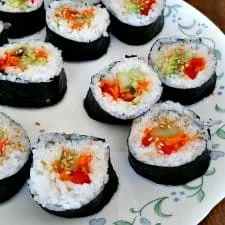
These homemade vegan sushi rolls pair seasoned rice with cucumber, pepper, carrot and avocado, wrapped in nori and served with dipping sauces. They are a practical way to make vegetable sushi at home, with the fillings easy to customise.
Ingredients
- To tasteNori sheets
- 370 g (2 cups)Sushi rice (or medium-grain white rice)
- 540 ml (2¼ cups)Water
- 45 ml (3 tbsp)Rice vinegar
- 38 g (3 tbsp)Sugar
- 15 ml (1 tbsp)Mirin (or white wine)
- 10 g (2 tsp)Salt
- 1Cucumber, shredded
- 1Red pepper, shredded
- 1Carrot, shredded
- 1Avocado, shredded
- To tasteSoy sauce, for dipping
- To tasteThai sweet chilli sauce, for dipping
- To tasteToasted sesame seeds, for garnish
Instructions
- 1
Rinse the rice
Rinse the rice thoroughly, changing the water until it runs clear.
- 2
Cook the rice
Cook the rinsed rice according to your steamer's instructions.
- 3
Cool the rice
Let the rice cool completely, then transfer it to a non-metallic bowl.
- 4
Mix the seasoning
Stir the rice vinegar, sugar and salt together until dissolved, then pour the mixture over the rice.
- 5
Season the rice
Fold the seasoning gently through the rice until evenly incorporated.
- 6
Prepare the vegetables
Prepare the vegetables and cut them into strips.
- 7
Deseed the cucumber
Remove the cucumber seeds.
- 8
Spread the rice
Place a nori sheet rough side up and spread rice over it, reaching all the edges.
- 9
Leave an edge
Spread the rice about 1.3 cm (½ inch) thick, leaving the top 2.5 cm (1 inch) of the nori bare.
- 10
Fill and roll
Arrange the vegetables along the bottom of the nori. Using a rolling mat or towel, roll carefully, keeping the fillings tucked inside.
- 11
Slice the rolls
Cut the rolls with a wet knife.
- 12
Rinse as needed
Keep your hands and knife rinsed to prevent the sticky rice from clinging to them.
- 13
Add sesame seeds
If desired, season the rolls with sesame seeds to taste.
- 14
Serve with sauces
Serve with soy sauce and Thai sweet chilli sauce for dipping.
What are vegan sushi rolls?
Sushi is a Japanese food built around vinegared rice, often combined with seaweed and other fillings. These rolls use vegetables and avocado in place of seafood, making a colourful, plant-based version to prepare at home.
Seasoned rice gives the rolls their familiar tang, while the different vegetables bring a mix of crisp and creamy textures. The nori holds everything together and adds a savoury, sea-like flavour.
Nutrition and macros by portion
The nutrition label shows one serving as written: 77 calories, 2g protein, 14g carbs, 1g fat.
| Portion | Adjustment | kcal | Protein | Carbs | Fat |
|---|---|---|---|---|---|
| Lighter | Use less dipping sauce | 54 kcal | 1g | 10g | 1g |
| This serving | As written | 77 kcal | 2g | 14g | 1g |
| Hungry | Serve a larger portion | 116 kcal | 2g | 21g | 2g |
The rice and sugar provide most of the carbohydrates, while avocado contributes much of the fat; the vegetables add smaller amounts of carbohydrate and fibre. Rice contributes some protein, but this is not a particularly protein-rich serving, so pair it with edamame or tofu if you want a more substantial plate.
Getting the rice right
Rinsing: Wash the rice until the water runs clear to remove excess surface starch. This helps the cooked grains stay distinct enough to spread and roll.
Cooling: Let the rice cool thoroughly before assembling. Warm rice can soften the nori and make the sheets harder to handle.
Balancing the seasoning
Vinegar and sugar: Stir these with the salt until dissolved before adding the mixture to the rice. Fold it in gently so the grains are seasoned without being crushed.
Mirin: The recipe allows white wine as an alternative. Add the specified amount with the vinegar, sugar and salt.
Preparing the fillings
Cucumber: Remove its seeds as directed, then cut it into strips. This reduces excess moisture inside the roll.
Other vegetables: Cut the pepper, carrot and avocado into manageable strips. Keep the fillings together near the bottom edge so they are easier to enclose.
Rolling and slicing
Rice layer: Spread it evenly, about 1.3 cm (½ inch) thick, while leaving the top 2.5 cm (1 inch) of nori bare. That uncovered edge helps close the roll.
Clean tools: Sticky rice can cling to your hands and knife, so rinse them as needed. A wet knife also helps make neater slices.
Serving the rolls
Dips: Serve the rolls with soy sauce and Thai sweet chilli sauce, letting everyone choose how much to use. Sesame seeds are an optional finishing touch.
On the plate: These rolls work well alongside a simple salad or a bowl of miso soup. Keep the dipping sauces separate until serving.
Recipe notes & tips
- Rinse the rice until the water runs clear before cooking.
- Cool the rice fully before spreading it over the nori.
- Keep the top 2.5 cm (1 inch) of each nori sheet free of rice.
- Cut the fillings into strips that fit comfortably inside the roll.
- Rinse your hands and knife when sticky rice begins to build up.
- Wet the knife before slicing for cleaner cuts.
Variations
- Add tofu: Include strips of firm tofu alongside the vegetables.
- Swap the vegetables: Use other crisp vegetables cut into strips.
- Change the dip: Offer tamari in place of soy sauce.
- Add more sesame: Sprinkle toasted sesame seeds over the fillings before rolling.
- Use white wine: Replace the mirin with the recipe's suggested white wine alternative.
Common mistakes to avoid
- Skipping the rinse: Excess starch can make rice stickier than intended; rinse until the water runs clear.
- Rolling warm rice: It can soften the nori; let the rice cool completely first.
- Overfilling the sheet: Too many vegetables make rolling difficult; keep the filling in a compact line.
- Covering the whole nori: The roll needs a bare top edge to close; leave about 2.5 cm (1 inch) uncovered.
- Using a dry knife: Sticky rice can drag and squash the roll; wet the blade before cutting.
How to store
Store leftover rolls in an airtight container in the fridge and eat within 1 day for the best texture. Keep dipping sauces separate, and note that refrigerated rice and nori may become firmer and less crisp; these rolls are best served freshly made.
Frequently asked questions
Can I use medium-grain white rice instead of sushi rice?
Yes. The recipe lists medium-grain white rice as an alternative, though the texture may differ slightly from sushi rice.
Do I need a sushi rolling mat?
No. The method allows you to use a towel instead, rolling carefully to keep the vegetables tucked inside.
Why should I remove the cucumber seeds?
The recipe calls for deseeding the cucumber before rolling. Removing them helps keep excess moisture out of the filling.
Can I make the rolls ahead?
They can be prepared ahead and chilled briefly, but the rice and nori are at their best soon after rolling. Keep the dipping sauces separate until serving.
What can I use instead of mirin?
The recipe suggests white wine as an alternative, using the same 15 ml amount.
How do I stop the rice sticking to the knife?
Rinse the knife and keep it wet while slicing, as directed in the method.
Cook it from the original
This recipe comes from brandnewvegan.com. Their page has the author’s own photos, notes and tips — the best place to cook it from.
Open the recipe on brandnewvegan.com