
10 Minute Ginger Veggie Stir Fry
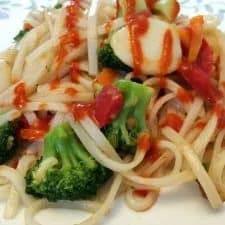
This quick ginger veggie stir-fry combines rice noodles and frozen vegetables with a sweet, savoury sauce with a little heat. It is a handy option when you want a warm meal without much chopping.
Ingredients
- 120 ml (½ cup)low-sodium vegetable broth
- 45 ml (3 tbsp), dividedlow-sodium soy sauce
- 15 ml (1 tbsp)mirin or white wine
- 10 ml (2 tsp)brown sugar
- 5 ml (1 tsp)cornflour
- 45 ml (3 tbsp), mincedginger
- 2.5 ml (½ tsp)chilli garlic paste
- ½ packetThai Kitchen rice noodles
- 1 packet (454 g / 16 oz)frozen stir-fry vegetables
Instructions
- 1
Boil the water
Fill a pasta pot halfway with cold water and bring it to the boil.
- 2
Add noodles
When the water boils, turn off the heat and add the noodles and vegetables.
- 3
Set the timer
Set a timer for 10 minutes.
- 4
Mix the sauce
In a small bowl, whisk together the broth, 30 ml (2 tbsp) of the soy sauce, mirin or wine, brown sugar, cornstarch and the vinegar mentioned in the method. Set aside; no amount of vinegar is specified in the ingredient list.
- 5
Cook the ginger
Peel and mince the ginger, then put it in a small saucepan with the remaining 15 ml (1 tbsp) of soy sauce and the chilli garlic paste.
- 6
Add sauce ingredients
Simmer the ginger mixture until softened, then add the remaining sauce ingredients.
- 7
Thicken and blend
Simmer until the sauce thickens, then pulse it in a blender until smooth and liquid.
- 8
Drain the noodles
Drain the noodles and vegetables and return them to the pot.
- 9
Combine and serve
Stir in the sauce and serve.
What is ginger veggie stir-fry?
Stir-frying is a cooking style associated with Chinese cuisine, though this quick version takes a shortcut by softening noodles and frozen vegetables in hot water rather than frying them in a wok. Ginger, soy and chilli bring the savoury, fragrant character of a stir-fry sauce.
The method blends the ginger sauce until smooth, so it coats the noodles and vegetables evenly. It is a speedy, pantry-friendly take on a noodle stir-fry rather than a traditional wok-fried dish.
Nutrition and macros by portion
The nutrition label shows one serving as written: 175 calories, 5g protein, 38g carbs, 1g fat.
| Portion | Adjustment | kcal | Protein | Carbs | Fat |
|---|---|---|---|---|---|
| Lighter | More vegetables, fewer noodles | 122 kcal | 4g | 27g | 1g |
| This serving | As written | 175 kcal | 5g | 38g | 1g |
| Hungry | Add extra rice noodles | 263 kcal | 8g | 57g | 2g |
The rice noodles provide most of the carbohydrates, while the vegetables contribute fibre and some carbohydrate. Soy sauce and chilli paste contribute sodium, and the recipe contains little added fat; for a more balanced plate, serve it with a protein-rich side such as tofu or edamame.
The sauce ingredients
Ginger and chilli: simmering minced ginger with soy sauce and chilli garlic paste softens its sharp edge and builds flavour into the sauce.
Sweet and savoury: brown sugar rounds out the soy, while mirin or white wine adds a little acidity. The method also mentions vinegar, but the ingredient list gives no amount for it.
Cornflour: it helps the sauce thicken as it simmers. Whisk it thoroughly into the liquid so it does not form lumps.
Noodles and vegetables
Rice noodles: the recipe uses half a packet, but does not state the packet size. Check the noodles as they soften, since thickness and brand can affect how quickly they are ready.
Frozen vegetables: adding them straight to the hot water keeps preparation simple. Drain them well with the noodles so excess water does not thin the sauce.
Getting the sauce texture right
Thickening: let the sauce simmer until it has visibly thickened before blending. If it seems too thick to blend smoothly, the method does not specify adding extra liquid, so pulse carefully and reassess.
Blending: the recipe calls for pulsing the sauce until liquefied. Blend cautiously, since hot liquids can splatter; leave space in the blender and follow its instructions for hot ingredients.
Timing and serving
The method sets a 10-minute timer after the noodles and vegetables go into the hot water. The stated total time is also 10 minutes, although bringing the water to the boil and preparing the sauce may add time.
Serve as soon as the sauce is stirred through, while the noodles are warm. The dish can be served on its own or alongside a simple salad or extra vegetables.
Recipe notes & tips
- Measure the soy sauce before dividing it between the sauce bowl and saucepan.
- Keep the noodles and vegetables submerged in the hot water while they soften.
- Drain the noodles and vegetables thoroughly before adding the sauce.
- Stir the sauce while it simmers so the cornflour thickens it evenly.
- Check the noodle texture before draining, as brands and noodle thickness vary.
Variations
- Add tofu: fold in cooked tofu for a more substantial meal.
- Use different vegetables: swap in another frozen stir-fry mix of similar quantity.
- Adjust the heat: use less chilli garlic paste for a milder sauce.
- Choose the wine: use mirin or white wine as listed, depending on what you have.
- Add fresh herbs: scatter chopped coriander over the finished noodles.
Common mistakes to avoid
- Adding noodles to actively boiling water: turn off the heat first, as the method directs.
- Skipping the drain: excess water can dilute the sauce, so drain the noodles and vegetables well.
- Lumpy sauce: whisk the cornflour thoroughly into the liquid before simmering.
- Overcooking the noodles: check their texture before draining, since cooking times can vary.
- Blending a full, hot jug: hot sauce can splatter, so pulse cautiously and follow the blender's guidance.
How to store
Refrigerate leftovers in a covered container for up to 3 days. Reheat until piping hot in a pan or microwave; add a small splash of water if the noodles have dried out.
Frequently asked questions
Can I use white wine instead of mirin?
Yes. The ingredient list gives white wine as an alternative to mirin.
How much vinegar should I use?
The method mentions vinegar, but the ingredient list does not include it or give an amount. Check the original recipe for clarification rather than guessing.
Can I use fresh vegetables instead of frozen?
You can, but the method is written for frozen stir-fry vegetables. Fresh vegetables may need different preparation and cooking time.
How do I know when the noodles are ready?
Check that they are softened and pleasant to eat before draining. The exact timing can vary with the noodle type and packet.
Can I make the sauce ahead?
You can prepare the sauce ahead and refrigerate it, then reheat it gently before combining it with the noodles and vegetables.
Cook it from the original
This recipe comes from brandnewvegan.com. Their page has the author’s own photos, notes and tips — the best place to cook it from.
Open the recipe on brandnewvegan.com