
Homemade Challah with Saffron | Recipes
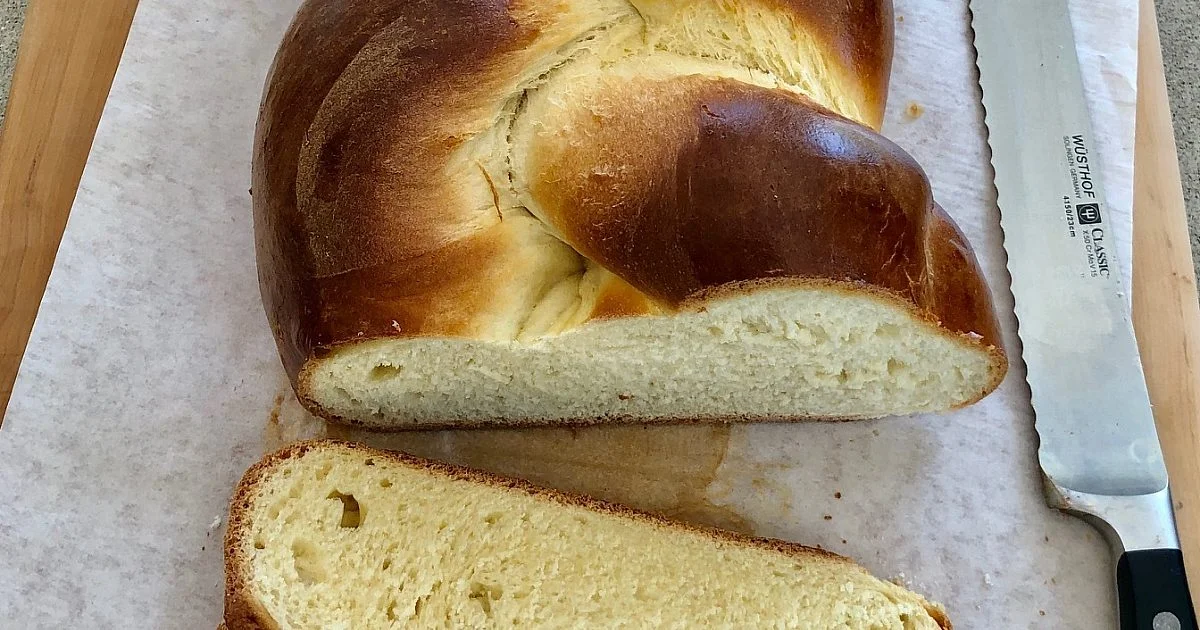
This saffron challah is a soft, enriched braided bread with a golden crust and a subtle floral aroma. It takes time to rise, but the four-strand braid makes a handsome loaf that is especially good toasted or turned into French toast.
Ingredients
- 240 ml (1 cup)warm water (115–120°F / 46–49°C)
- 1 packetactive dry yeast
- 100 g (½ cup)sugar
- a pinchsaffron threads
- 4extra-large eggs
- 1extra-large egg yolk
- 540 g (4½ cups), plus 120–180 g (1–1½ cups) as neededplain flour
- 1 tablespoonkosher salt
- 225 g (½ lb)unsalted butter, at room temperature
- as neededvegetable oil
- 1 extra-large egg, beaten with 1 tablespoon wateregg wash
Instructions
- 1
Mix the dough
Rinse the bowl of an electric mixer fitted with a dough hook with hot water to warm it. Add the warm water, ensuring it is at least 110°F (43°C) in the bowl, then mix in the yeast, sugar and saffron. Leave for 5 minutes, until frothy. Mix in the eggs and egg yolk on low speed. Gradually add 4½ cups of flour, scraping down the bowl as needed. Add the salt and butter, then slowly add 1–1½ more cups of flour. Mix on low for about 5 minutes, adding only enough extra flour to stop the dough sticking to the bottom of the bowl. It should remain soft and slightly sticky.
- 2
Knead and rise
Turn the dough onto a floured board and knead by hand for 2 minutes. Shape it into a ball with the smooth side uppermost. Brush a large bowl with vegetable oil and put the dough in smooth side down. Turn it to coat all over, then leave it smooth side up so the whole surface is covered in oil. Cover with a clean, dry tea towel and leave in a warm place for about 2 hours, until doubled in size.
- 3
Shape the ropes
Gently punch down the dough and turn it onto an unfloured chopping board. Cut it into 4 equal pieces with a sharp knife. Line a baking tray with baking parchment. Shape each piece smooth side up into a cylinder, then roll it into a rope 17 inches (43 cm) long. Set the ropes side by side on the prepared tray, seam side down.
- 4
Braid the loaf
Gather one end of the ropes, pinch them together and fold the pinched end underneath. With that end facing away from you, move the far-right rope left over 2 ropes. Move the far-left rope right over 2 ropes. Continue alternating in this way until the loaf is braided. Pinch the ends together and tuck them underneath. Cover with a clean, dry tea towel and leave in a warm place for 45–60 minutes, until doubled in size.
- 5
Bake the challah
Meanwhile, heat the oven to 350°F (175°C) and position a rack in the lower third. Brush the loaf thoroughly with egg wash and bake for 35–40 minutes, until browned and hollow-sounding when tapped on the bottom. Transfer to a wire rack and leave to cool completely.
- 6
Use leftovers
Make challah French toast the next day.
What is saffron challah?
Challah is an enriched, braided bread associated with Jewish Shabbat and holiday meals. This version adds saffron to the dough, giving it a gentle fragrance and a warm colour.
Eggs and butter make the crumb tender, while a four-rope braid gives the loaf its distinctive shape. Allowing enough time for both rises helps it bake up light rather than dense.
Nutrition and macros by portion
The nutrition label shows one serving as written: 3900 calories, 105g protein, 590g carbs, 125g fat.
| Portion | Adjustment | kcal | Protein | Carbs | Fat |
|---|---|---|---|---|---|
| Lighter | Serve a thinner slice | 2730 kcal | 74g | 413g | 88g |
| This serving | As written | 3900 kcal | 105g | 590g | 125g |
| Hungry | Serve a larger slice | 5850 kcal | 158g | 885g | 188g |
The flour and sugar provide most of the carbohydrates, while butter and egg yolks contribute much of the fat. Eggs and flour also supply some protein. As this recipe makes a whole loaf, serve a slice alongside fruit or a savoury dish to make a more balanced plate.
The ingredients that matter
Saffron: A pinch is enough to perfume the dough without overwhelming its buttery flavour. Stir it into the warm water with the yeast so it disperses through the loaf.
Flour: Begin with the stated 4½ cups, then add the extra gradually. The dough should be soft and slightly sticky, not firm from too much flour.
Butter and eggs: These enrich the dough and give the finished bread its tender texture. The egg wash adds colour to the crust.
Getting the dough right
Yeast: The water needs to be warm, and the mixture should turn frothy after 5 minutes. If it does not, the yeast may not be active, so check its freshness before proceeding.
Flour additions: Mix on low and add flour in small amounts. Stop when the dough no longer sticks to the bottom of the bowl; a little tackiness is expected.
Two rises, one good loaf
First rise: Oil the dough all over before covering it, which helps prevent a dry skin from forming. Leave it in a warm place for about 2 hours, until doubled.
Second rise: Once braided, the dough needs another 45–60 minutes in a warm place. Look for a visibly puffed loaf that has roughly doubled before baking.
Braiding four ropes
Even ropes: Divide the dough into four equal pieces and roll each to 17 inches (43 cm). Similar lengths and thicknesses make the braid more even.
Over-two pattern: Start with the pinched ends away from you, then alternate moving the far-right rope left over two and the far-left rope right over two. Keep the braid relaxed rather than pulling the ropes tight.
How to tell when it is baked
Colour: The loaf should be well browned after 35–40 minutes. If it is colouring quickly, check it closely as it nears the end of the stated baking time.
Sound: The method’s doneness cue is a hollow sound when you tap the bottom. Cool the loaf completely on a rack before slicing so the crumb can set.
Serving and using leftovers
Fresh slices: Serve the challah with savoury or sweet accompaniments at the table. Its rich crumb is also satisfying simply toasted.
Next day: The recipe suggests making challah French toast with the leftover loaf. Thick slices hold together well when dipped and cooked.
Recipe notes & tips
- Check that the water is at least 110°F (43°C) when it reaches the mixing bowl.
- Add the final flour gradually so the dough stays soft and a little sticky.
- Oil the whole surface of the dough before its first rise to prevent a dry crust.
- Use an unfloured board when dividing the risen dough into four pieces.
- Leave the finished loaf to cool completely on a rack before slicing.
Variations
- Citrus note: Add finely grated orange zest to the dough for a fresh aroma.
- Seeded top: Sprinkle sesame or poppy seeds over the egg wash before baking.
- Softer saffron flavour: Use a smaller pinch of saffron for a more delicate aroma.
- French toast: Slice the day-old loaf thickly and use it for French toast as suggested in the recipe.
Common mistakes to avoid
- Water too cool: The yeast may not froth; check that the water is at least 110°F (43°C) in the bowl.
- Too much flour: The dough can turn firm; add flour gradually and stop once it no longer sticks to the bowl bottom.
- Dry dough surface: It can form a crust during the first rise; coat the dough completely with oil.
- Tight braid: The loaf may not expand evenly; braid the ropes neatly without pulling them taut.
- Cutting while hot: The crumb may compress; wait until the loaf has cooled completely.
How to store
Once completely cool, store the loaf covered at room temperature for a few days. Use older slices for French toast, as suggested in the recipe; the method does not specify a storage period or reheating instructions.
Frequently asked questions
How warm should the water be?
The listed water temperature is 115–120°F (46–49°C), and the method says it should be at least 110°F (43°C) in the bowl. Check it after pouring it into the warmed mixer bowl.
How do I know the yeast is active?
After 5 minutes, the water, yeast, sugar and saffron mixture should start to froth. If it stays flat, the yeast may not be active.
Can I add all the flour at once?
No. Add 4½ cups gradually, then add the further 1–1½ cups slowly as needed. The dough should remain soft and slightly sticky.
How long does the dough need to rise?
Allow about 2 hours for the first rise, until doubled, then 45–60 minutes after braiding, until doubled again. The exact time depends on how warm the rising place is.
How do I know the challah is done?
Bake for 35–40 minutes at 350°F (175°C), until the outside is browned and the bottom sounds hollow when tapped.
What can I make with leftover challah?
The recipe recommends making challah French toast the next day.
Cook it from the original
This recipe comes from barefootcontessa.com. Their page has the author’s own photos, notes and tips — the best place to cook it from.
Open the recipe on barefootcontessa.com