
Roast Chicken with Spring Vegetables | Recipes
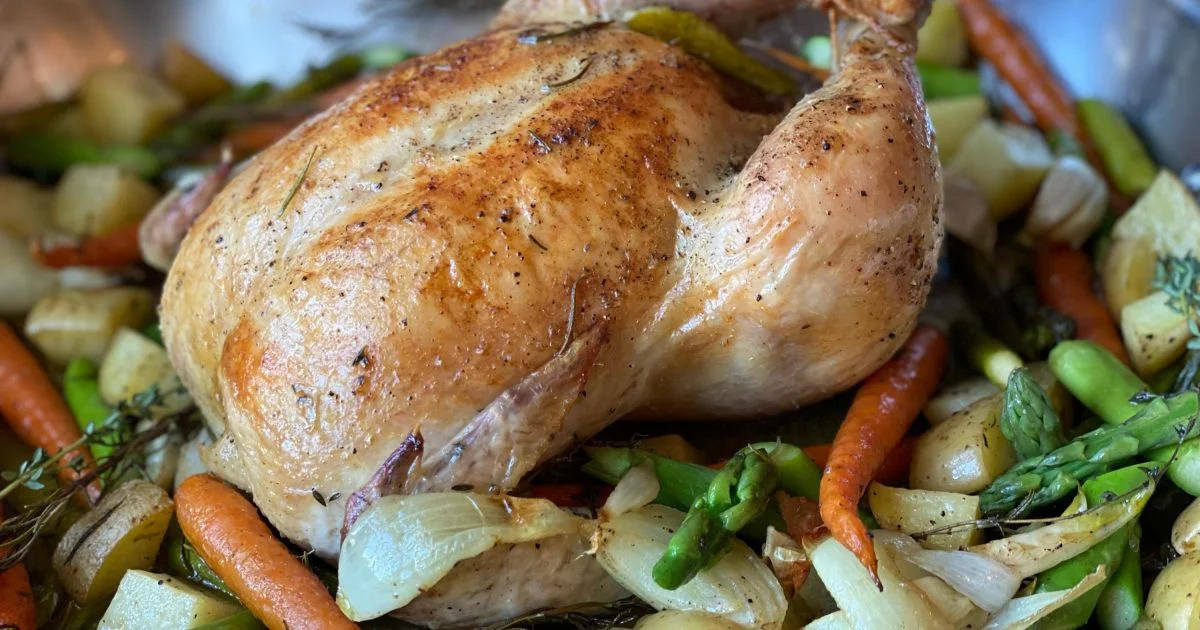
This roast chicken is cooked with carrots, potatoes and onions, with asparagus added near the end for a fresh, tender-crisp finish. It makes a generous one-pan meal, with crisp-skinned chicken and vegetables flavoured by the roasting juices and herbs.
Ingredients
- 1.8 kg (4 lb)whole chicken
- to tastesalt
- 1lemon
- 2 sprigs for the cavity, plus the remaining sprigs for the vegetablesfresh thyme
- 2 sprigs for the cavity, plus the remaining sprigs for the vegetablesfresh rosemary
- as neededkitchen string
- to tasteblack pepper
- as neededbutter
- as neededcarrots
- as neededpotatoes
- as neededonion
- as neededgarlic
- 80 ml (⅓ cup)olive oil
- 1 teaspoonsalt
- ½ teaspoonblack pepper
- as neededasparagus
Instructions
- 1
Heat the oven
Preheat the oven to 220°C (425°F).
- 2
Prepare the chicken
Pat the chicken dry with kitchen paper and set it in a large roasting tin, about 33 × 41 cm (13 × 16 inches). Season the cavity generously with salt, then put the lemon and 2 sprigs each of thyme and rosemary inside. Tie the legs together with kitchen string and tuck the wings under the bird. Brush the outside with butter and season generously with salt and pepper.
- 3
Season the vegetables
In a large bowl, mix the carrots, potatoes, onion and garlic with 80 ml (⅓ cup) olive oil, 1 teaspoon salt and ½ teaspoon pepper. Tip them into the roasting tin around the chicken and lay the remaining thyme and rosemary sprigs over the vegetables.
- 4
Roast and rest
Roast for 20 minutes, then lower the oven to 180°C (350°F) and cook for a further 40–50 minutes, turning the vegetables in the pan juices from time to time. The chicken is ready when an instant-read thermometer reads 74°C (165°F) in the breast and 79°C (175°F) in the thigh. Keep the oven on, move the chicken to a carving board, cover loosely with foil and rest for 12–15 minutes.
- 5
Cook the asparagus
Meanwhile, add the asparagus to the tin and toss it with the other vegetables. Roast for 10–12 minutes, until crisp-tender. Remove the herb branches, carve the chicken and serve it with the vegetables and pan juices.
What is roast chicken with spring vegetables?
Roast chicken is a familiar British and European-style centrepiece: a whole bird cooked in the oven and served with its pan juices. This version roasts the chicken with carrots, potatoes and onion, then adds asparagus towards the end.
The method works by giving the chicken a hotter start, then lowering the oven for the longer roast. The vegetables take on the herbs and juices, while the late-added asparagus keeps its fresh bite.
Nutrition and macros by portion
The nutrition label shows one serving as written: 950 calories, 75g protein, 36g carbs, 57g fat.
| Portion | Adjustment | kcal | Protein | Carbs | Fat |
|---|---|---|---|---|---|
| Lighter | More asparagus, less potato | 665 kcal | 53g | 25g | 40g |
| This serving | As written | 950 kcal | 75g | 36g | 57g |
| Hungry | Larger chicken portion | 1425 kcal | 113g | 54g | 86g |
The potatoes and carrots provide most of the carbohydrates, while the chicken supplies most of the protein and much of the fat; the butter and olive oil add further fat. Balance the plate by serving a generous amount of asparagus and other vegetables with the chicken and potatoes.
Prepare the chicken well
Dry skin: patting the chicken thoroughly with kitchen paper helps the surface roast rather than steam. Tucking the wings underneath and tying the legs also helps the bird cook evenly.
Cavity aromatics: the lemon, thyme and rosemary scent the chicken as it roasts. Season inside the cavity as well as on the outside so the flavour is not limited to the skin.
Make the most of the roasting tin
Vegetable pieces: cut the carrots and potatoes to similar sizes so they cook at a similar pace. Keep them in a single layer where possible, with room around the chicken for heat to circulate.
Pan juices: turning the vegetables occasionally coats them in the chicken juices and oil. Use a large roasting tin so there is space to toss them without spilling.
Check the chicken for doneness
Thermometer readings: check the thickest part of the breast and thigh, avoiding the bone. The recipe calls for 74°C in the breast and 79°C in the thigh.
Resting time: leave the chicken loosely covered for 12–15 minutes before carving. This gives you time to finish the asparagus and makes the bird easier to carve neatly.
Add asparagus at the end
Late addition: asparagus needs much less time than the potatoes and carrots, so add it only after the chicken has been removed to rest. Toss the spears in the pan juices before returning the tin to the oven.
Texture cue: take the asparagus out when it is crisp-tender rather than limp. The stated 10–12 minutes is a guide; thinner spears may finish sooner.
Serve it as a complete meal
Carve the chicken and bring it to the table with the roasted vegetables and spoonfuls of pan juices. The potatoes make this filling on its own, while the carrots and asparagus add colour and contrasting texture.
For a lighter-feeling plate, serve a larger share of the vegetables alongside a more modest piece of chicken. Crusty bread is useful for soaking up any extra juices.
Recipe notes & tips
- Use kitchen paper to dry the chicken well before brushing it with butter.
- Choose a roasting tin large enough to hold the chicken and vegetables without crowding.
- Turn the vegetables gently so they are coated with the pan juices during roasting.
- Check both the breast and thigh with an instant-read thermometer.
- Rest the chicken for the full 12–15 minutes before carving.
- Watch the asparagus closely near the end, as thin spears can cook quickly.
Variations
- Add lemon zest: grate a little over the vegetables just before serving for a brighter citrus note.
- Use other roots: swap in similarly sized pieces of parsnip for some of the carrots.
- Change the herbs: use extra thyme in place of rosemary if you prefer a milder herbal flavour.
- Add peas: stir cooked peas through the vegetables after roasting for another spring vegetable.
- Serve with greens: add a simple green salad alongside the roast for a crisp contrast.
Common mistakes to avoid
- Wet chicken skin: pat the bird dry before seasoning so the skin can roast properly.
- Crowded vegetables: use a roomy tin so the vegetables roast rather than steam.
- Skipping the temperature check: test both breast and thigh instead of relying only on the clock.
- Adding asparagus too early: put it in only after removing the chicken so it does not overcook.
- Carving straight away: rest the chicken for 12–15 minutes before slicing.
- Forgetting to toss: turn the vegetables now and then so they pick up the pan juices.
How to store
Refrigerate leftover chicken and vegetables in a covered container within 2 hours, and use within 3 days. Reheat until steaming hot throughout, adding a splash of water or pan juices to keep the meat from drying out.
Frequently asked questions
Can I use a smaller chicken?
Yes, but it will likely need less roasting time. Check the breast and thigh with an instant-read thermometer rather than relying on the listed timing.
Can I prepare the vegetables ahead?
You can peel and cut the vegetables in advance and keep them covered in the refrigerator. Toss them with the oil and seasoning just before roasting.
How do I know when the asparagus is done?
It should be tender when pierced but still have a little firmness. Start checking at 10 minutes, especially if the spears are thin.
Can I cook this without kitchen string?
Yes. The string helps hold the legs in place, but you can roast the chicken without tying them; tuck the wings under the body as directed.
Can I use dried herbs instead?
Fresh sprigs are used here and are easy to remove before serving. If substituting dried herbs, use a small amount and scatter it over the vegetables rather than placing branches in the cavity.
What should I do if the vegetables are not tender when the chicken is done?
Transfer the chicken to rest as directed and keep roasting the vegetables until tender. Add the asparagus for its final 10–12 minutes.
Cook it from the original
This recipe comes from barefootcontessa.com. Their page has the author’s own photos, notes and tips — the best place to cook it from.
Open the recipe on barefootcontessa.com