
Boiled Eggs
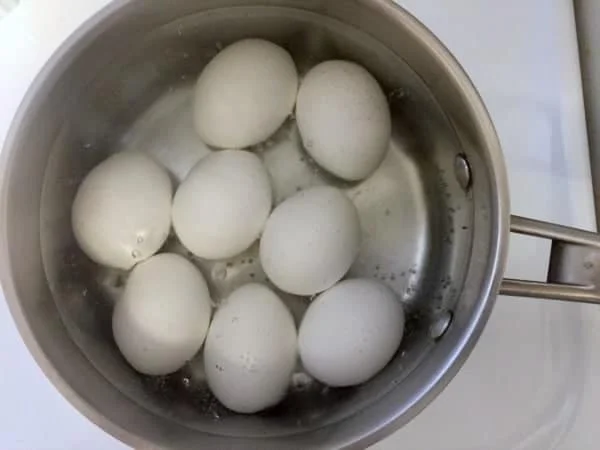
Boiled eggs are cooked in their shells, then cooled quickly in ice water to make them easier to handle and peel. The timing lets you choose a soft, medium or hard-set yolk.
Ingredients
- To tasteEggs (at least a few days old, preferably at least a week old)
- To tasteCold water
- To tasteIce water
Instructions
- 1
Cover the eggs
Place the eggs in an empty pan and add enough cold water to cover them by about 2.5 cm. If the eggs are very fresh, make a small crack in the broad end of each one without piercing the membrane.
- 2
Heat the pan
Set the pan over a medium-high heat and bring the water to a rapid simmer, not a hard boil. Cover the pan and take it off the heat.
- 3
Time the eggs
Set a timer for 4 minutes for soft-cooked eggs, 6 minutes for medium-cooked eggs, 8 minutes for medium-hard eggs or 10 minutes for hard-cooked eggs.
- 4
Cool in ice
Lift the eggs gently from the hot water with a slotted spoon and transfer them to the ice water to stop the cooking.
- 5
Peel the shells
To peel, crack the broad end of an egg on a clean surface to open the air pocket. Use the side of your thumb to start removing the shell.
What are boiled eggs?
Boiled eggs are cooked in their shells in hot water, then cooled and served whole or peeled. They are a simple preparation found in many food traditions, and the timing determines whether the yolk stays soft or sets firm.
This method brings the water to a simmer, then finishes the eggs off the heat. An ice-water bath halts the cooking so the yolk is less likely to keep setting while the eggs rest.
Nutrition and macros by portion
The nutrition label shows one serving as written: 78 calories, 6g protein, 1g carbs, 5g fat.
| Portion | Adjustment | kcal | Protein | Carbs | Fat |
|---|---|---|---|---|---|
| Lighter | Serve with vegetables | 55 kcal | 4g | 0g | 4g |
| This serving | As written | 78 kcal | 6g | 1g | 5g |
| Hungry | Add another egg | 117 kcal | 9g | 1g | 8g |
The egg provides most of the protein and fat, while the water contributes no meaningful energy or macros. Pair the egg with wholemeal toast and vegetables or fruit for a more substantial, balanced plate.
Choosing the eggs
Egg age: Eggs that are a few days old, and preferably about a week old, are suggested here because they can be easier to peel than very fresh eggs.
Fresh eggs: The recipe suggests making a small crack at the broad end if using very fresh eggs. Take care not to pierce the membrane.
Getting the water right
Water level: Cover the eggs by about 2.5 cm so they are submerged before the pan is heated.
Gentle heat: Bring the water to a rapid simmer rather than a hard boil, then cover the pan and remove it from the heat as directed.
Choosing the yolk texture
Shorter timing: Leave the eggs in the covered pan off the heat for 4 minutes for soft-cooked eggs or 6 minutes for medium-cooked eggs.
Longer timing: Use 8 minutes for a medium-hard result or 10 minutes for hard-cooked eggs. Start timing once the pan has been covered and taken off the heat.
Cooling and peeling
Ice bath: Move the eggs straight from the hot water into ice water to stop them cooking. This also cools them for handling.
Broad end: Crack the wider end first to open the air pocket, then use your thumb to begin loosening the shell.
Serving boiled eggs
Serve the eggs on toast, with a salad or alongside a simple breakfast. A soft yolk can be eaten with toast for dipping, while a hard-cooked egg is easy to slice or chop.
Recipe notes & tips
- Use a pan that holds the eggs in a single layer.
- Have the ice water ready before the eggs finish cooking.
- Use a slotted spoon to move the eggs without splashing hot water.
- Choose the timer setting that matches the yolk texture you want.
- Crack the broad end first when peeling, as directed in the method.
Variations
- Soft yolk: Use the 4-minute timing for a soft-cooked centre.
- Firm yolk: Choose the 10-minute timing for a hard-cooked egg.
- On toast: Serve a peeled egg with toast for a simple meal.
- With salad: Slice a hard-cooked egg over a green salad.
- Eggs for dipping: Serve soft-cooked eggs with strips of toast.
Common mistakes to avoid
- Hard boiling: Keep the water at a rapid simmer rather than letting it boil vigorously.
- Skipping the ice bath: Transfer the eggs to ice water promptly to stop them cooking.
- Guessing the timing: Set a timer for the yolk texture you want.
- Piercing the membrane: If cracking a very fresh egg, make only a small crack at the broad end.
- Peeling from the narrow end: Start at the broad end to open the air pocket.
How to store
Refrigerate cooked eggs promptly in a covered container. For best quality, eat them within a few days; peeled eggs should be kept covered and refrigerated.
Frequently asked questions
How long should I cook an egg for a soft yolk?
After bringing the water to a rapid simmer, cover the pan, remove it from the heat and time the egg for 4 minutes.
How long should I cook an egg for a hard yolk?
Use the 10-minute timing after covering the pan and taking it off the heat.
Why use eggs that are not very fresh?
The recipe recommends eggs that are a few days old, preferably about a week, as they can be easier to peel.
Why put the eggs in ice water?
The ice water stops the cooking after the timed rest in the covered pan.
Where should I start peeling an egg?
Crack the broad end first to open the air pocket, then use your thumb to begin removing the shell.
Cook it from the original
This recipe comes from bakerbettie.com. Their page has the author’s own photos, notes and tips — the best place to cook it from.
Open the recipe on bakerbettie.com