
Thai Chicken Panang Curry Recipe
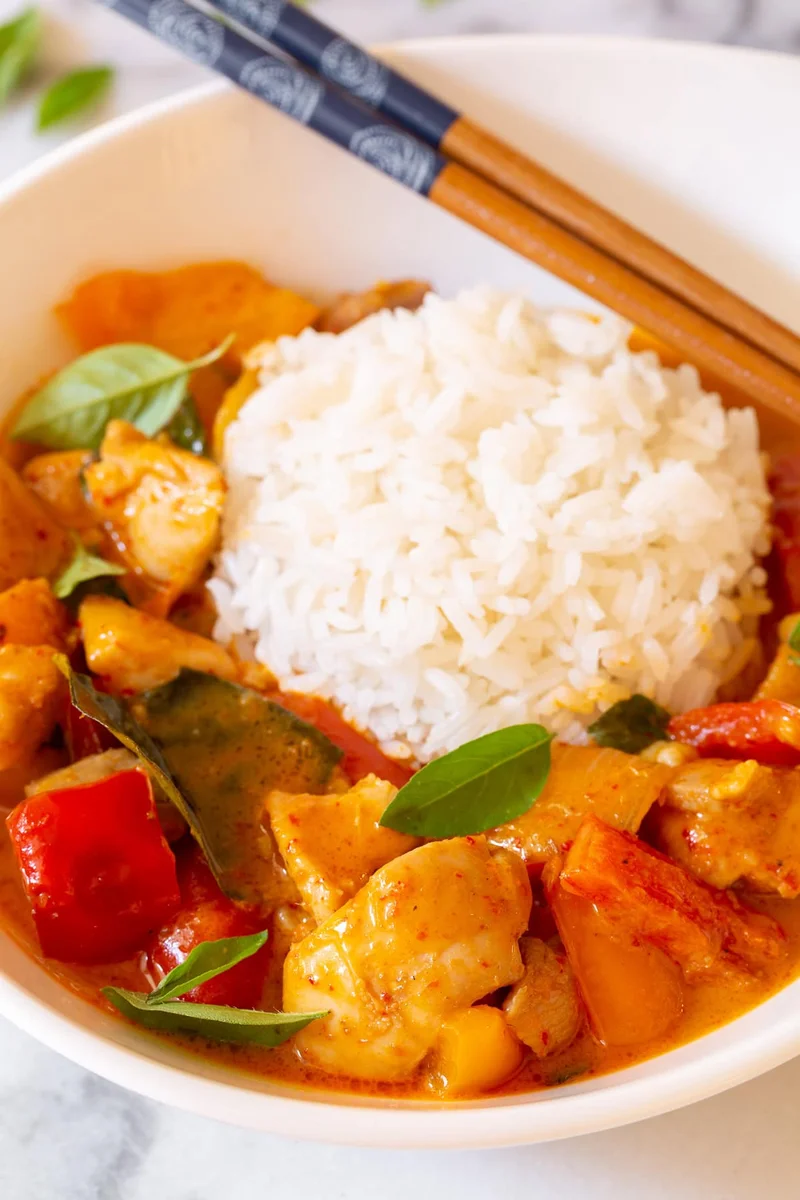
Thai Panang chicken curry pairs tender chicken with a rich coconut sauce flavoured with curry paste, lime leaves and basil. It comes together in about 32 minutes and is easy to serve with rice, quinoa or noodles.
Ingredients
- 680 g (1 1/2 pounds)boneless, skinless chicken thighs, chopped
- 1 smallonion, peeled and chopped
- 1red pepper, deseeded and chopped
- 1orange pepper, deseeded and chopped
- 2 clovesgarlic, minced
- 15 ml (1 tablespoon)coconut oil
- 113 g (4 ounces; 1 can)Panang red curry paste
- 15 ml (1 tablespoon)peanut butter
- 12kaffir lime leaves, crushed
- 400 ml (13.5 ounces; 1 can)thick unsweetened coconut milk
- 45 ml (3 tablespoons)fish sauce
- 15 g (1/4 cup)Thai basil leaves or sweet basil
Instructions
- 1
Prepare ingredients
Cut the chicken into bite-sized pieces. Roughly chop the onion and peppers into pieces about 2.5 cm (1 inch) across, mince the garlic, and crush the kaffir lime leaves to release their oils.
- 2
Sauté vegetables
Set a 36 cm (14-inch) frying pan or wok over medium-high heat and add the coconut oil. Once melted, add the onion and sauté for 1 minute. Add the peppers and garlic and cook for another 2–3 minutes.
- 3
Fry curry paste
Push the vegetables to the sides of the pan. Add the Panang curry paste and peanut butter to the centre and sauté for 2–3 minutes, moving them around the pan to intensify their flavour. Add the lime leaves, coconut milk and fish sauce, then stir to combine.
- 4
Simmer chicken
Stir in the chicken and bring the curry to a boil. Reduce the heat and simmer for 10–15 minutes, stirring occasionally, until the chicken is cooked through and the sauce has thickened. Take the pan off the heat and stir in the basil. Serve with rice, quinoa or noodles.
What is Panang curry?
Panang curry is a Thai curry known for its fragrant, rich sauce, often made with coconut milk and Panang curry paste. This version combines that paste with chicken, vegetables, lime leaves and basil for a quick, one-pan meal.
The balance of aromatic curry paste, creamy coconut milk and savoury fish sauce gives the sauce its character. The method briefly fries the paste before adding the liquid, helping its flavour mingle with the other ingredients.
Nutrition and macros by portion
The nutrition label shows one serving as written: 340 calories, 24g protein, 8g carbs, 23g fat.
| Portion | Adjustment | kcal | Protein | Carbs | Fat |
|---|---|---|---|---|---|
| Lighter | Use less coconut milk | 238 kcal | 17g | 6g | 16g |
| This serving | As written | 340 kcal | 24g | 8g | 23g |
| Hungry | Add more rice | 510 kcal | 36g | 12g | 35g |
The chicken contributes most of the protein, while the coconut milk and coconut oil provide much of the fat; the vegetables and curry paste contribute some carbohydrate. Serve it with a moderate portion of rice or another grain and add extra vegetables to round out the plate.
Choosing the ingredients
Chicken thighs: their higher fat content helps them stay tender during the simmer. Cut the pieces to a similar size so they cook at roughly the same pace.
Curry paste: Panang paste is the defining flavour, and brands can vary in heat and saltiness. Check the label if you need to know whether it contains allergens such as peanuts or shellfish.
Coconut milk: thick, unsweetened coconut milk gives the sauce body. Shake or stir the can before measuring if the cream has separated.
Lime leaves and basil: crushing the lime leaves helps release their aromatic oils, while adding basil at the end keeps its flavour fresh.
Frying the curry paste
After sautéing the vegetables, move them aside and fry the curry paste and peanut butter in the centre of the pan for 2–3 minutes. Keep the mixture moving so it warms evenly and does not catch.
Once the coconut milk and fish sauce go in, stir thoroughly to distribute the paste through the sauce. This creates an even base before the chicken is added.
Getting the chicken and sauce right
Simmer gently for 10–15 minutes, stirring occasionally. The chicken should be cooked through, and the sauce should look thicker than when the coconut milk was first added.
The timing can vary with the size of the chicken pieces and the heat of the hob. If the sauce thickens before the chicken is ready, lower the heat and continue cooking until the chicken is cooked through.
Serving the curry
Serve the curry with rice, quinoa or noodles to catch the coconut sauce. A simple side of steamed vegetables or a crisp salad can add freshness to the meal.
Add the basil off the heat just before serving, as directed, so it keeps its aromatic flavour. Remove the lime leaves from individual portions if you prefer not to eat around them.
Timing and preparation
The listed total time is 32 minutes, including preparing the chicken and vegetables. Chopping everything before heating the pan makes the short sauté and simmer stages easier to manage.
Have the curry paste, peanut butter, coconut milk and fish sauce ready before you start frying the vegetables. The paste needs a few minutes in the hot pan before the liquid is added.
Recipe notes & tips
- Cut the chicken into similarly sized pieces for more even cooking.
- Crush the lime leaves shortly before cooking to help release their oils.
- Keep the curry paste moving as it fries so it does not stick or scorch.
- Stir occasionally during the simmer to help the chicken cook evenly.
- Add the basil after taking the pan off the heat to preserve its aroma.
Variations
- Adjust the heat: Use a little less curry paste for a milder curry.
- Use chicken breast: Cut it into similar-sized pieces and check it carefully during the simmer so it does not overcook.
- Swap the basil: Use sweet basil if Thai basil is unavailable.
- Add vegetables: Stir in quick-cooking vegetables during the simmer, allowing them time to become tender.
- Change the accompaniment: Serve with rice, quinoa or noodles as suggested in the method.
Common mistakes to avoid
- Uneven chicken pieces: Cut them to a similar size so they cook at a similar rate.
- Scorched curry paste: Keep it moving over medium-high heat and add the liquids after 2–3 minutes.
- Skipping the lime leaves: Crush them before adding to help release their oils.
- Boiling too vigorously: Lower the heat after the curry comes to a boil and let it simmer gently.
- Adding basil too early: Stir it in after removing the pan from the heat, as the method directs.
How to store
Refrigerate leftovers in a covered container and eat within 3 days. Reheat gently in a pan until piping hot, stirring occasionally; add a splash of water if the sauce has thickened in the fridge.
Frequently asked questions
How do I know when the chicken is cooked?
The recipe gives a simmering time of 10–15 minutes. Check that the chicken is cooked through, allowing extra time if the pieces are large.
Can I use sweet basil instead of Thai basil?
Yes. The ingredient list gives sweet basil as an alternative to Thai basil.
What can I serve with Panang chicken curry?
The recipe suggests rice, quinoa or noodles. A simple vegetable side also works well with the rich sauce.
Can I make the curry milder?
Use less curry paste to reduce the heat. Curry paste brands differ, so check the flavour as you cook.
Do I need to remove the kaffir lime leaves before serving?
The recipe does not specify removing them. They are aromatic leaves, so you can leave them in the curry and avoid eating them as you serve.
Cook it from the original
This recipe comes from aspicyperspective.com. Their page has the author’s own photos, notes and tips — the best place to cook it from.
Open the recipe on aspicyperspective.com