
Easy Sweet and Sour Asian Noodles
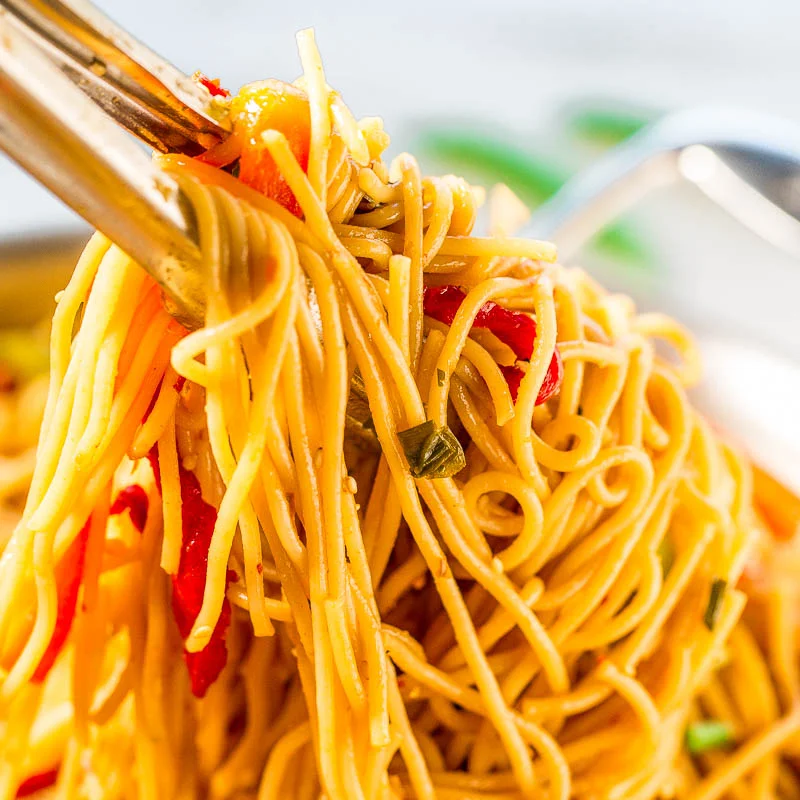
These sweet and sour noodles toss spaghetti and crisp-tender vegetables in a homemade sauce of rice wine vinegar, honey, soy sauce and sesame oil. They come together in 30 minutes and work as either a colourful main or a side dish.
Ingredients
- 454 g (1 lb)thin spaghetti, cooked and drained
- 1 largered pepper, trimmed, deseeded and thinly sliced
- 1 heaped cup (about 150 g)sugar snap peas
- 1 x 425 g can (15 oz)baby corn, drained and rinsed; cut into bite-sized pieces if whole
- 1 x 227 g can (8 oz)sliced water chestnuts, drained and rinsed
- 80 ml (⅓ cup), about 4spring onions, trimmed and sliced into thin rounds, plus extra for garnish
- 60 ml (¼ cup)fresh coriander leaves, stems removed and finely chopped
- 15 ml (1 tablespoon), optionalsesame seeds, toasted if desired, for garnish
- 180 ml (¾ cup)rice wine vinegar
- 170 g (½ cup)honey
- 80 ml (⅓ cup)reduced-salt soy sauce
- 60 ml (4 tablespoons), dividedsesame oil
- 30 ml (2 tablespoons)lime juice
- 15 ml (1 tablespoon)Asian chilli-garlic sauce
- 5–10 ml (1–2 teaspoons), to tasteground ginger
Instructions
- 1
Cook the spaghetti
Cook the spaghetti according to the packet instructions. Drain it and set it aside.
- 2
Mix the sauce
In a medium bowl, whisk together the rice wine vinegar, honey, soy sauce, 30 ml (2 tablespoons) of sesame oil, lime juice, chilli-garlic sauce and ginger. Add the ginger to taste, then set the sauce aside.
- 3
Soften the pepper
Heat the remaining 30 ml (2 tablespoons) of sesame oil in a large frying pan over a medium-high heat. Add the sliced pepper and cook for about 5 minutes, stirring now and then, until it starts to soften.
- 4
Cook the vegetables
Add the sugar snap peas, baby corn, water chestnuts and spring onions. Cook for 2–3 minutes, stirring occasionally, until the vegetables are crisp-tender.
- 5
Toss with sauce
Add the cooked spaghetti and sauce to the pan. Cook for about 2 minutes, tossing well, until everything is heated through. Any sauce pooling in the pan will be absorbed by the noodles as they stand.
- 6
Finish and serve
Sprinkle over the chopped coriander and toss to combine. Add sesame seeds and extra spring onions as an optional garnish, then serve straight away.
What are sweet and sour Asian noodles?
Sweet and sour noodles pair a tangy, sweetened sauce with noodles and vegetables. The flavour combination appears in many Asian-inspired dishes, though this particular recipe is a quick home-style version rather than a single traditional regional preparation.
Spaghetti makes the recipe easy to assemble, while honey, rice wine vinegar, soy sauce and lime make a punchy dressing. A mix of fresh and canned vegetables adds contrasting textures without much prep.
Nutrition and macros by portion
The nutrition label shows one serving as written: 483 calories, 12g protein, 84g carbs, 11g fat.
| Portion | Adjustment | kcal | Protein | Carbs | Fat |
|---|---|---|---|---|---|
| Lighter | Less honey and oil | 338 kcal | 8g | 59g | 8g |
| This serving | As written | 483 kcal | 12g | 84g | 11g |
| Hungry | Larger noodle portion | 725 kcal | 18g | 126g | 17g |
The spaghetti and honey provide most of the carbohydrates, while sesame oil supplies much of the fat; the soy sauce and vegetables contribute smaller amounts of protein. Serve the noodles with a source of protein on the side and add extra vegetables if you want a more varied plate.
Building the sauce
Sweet and tangy: Honey rounds out the sharpness of rice wine vinegar, while lime adds another bright note. Whisking the sauce before it goes into the pan helps distribute its flavours evenly.
Ginger and chilli: Both bring warmth, so start with the smaller amount of ginger if you prefer a milder result. You can adjust the ginger to taste when mixing the sauce.
Choosing the vegetables
Fresh pepper and peas: The pepper softens first, then the sugar snap peas join it for a short cook. This order gives the pepper a head start while helping the peas retain some bite.
Canned vegetables: Drain and rinse the baby corn and water chestnuts before adding them. They need only a brief time in the pan to heat through alongside the other vegetables.
Getting the texture right
Crisp-tender vegetables: Cook the peas and canned vegetables for 2–3 minutes, as directed, rather than leaving them to soften completely. Stir intermittently so they heat evenly.
Sauced noodles: Toss the spaghetti thoroughly with the sauce for about 2 minutes. A little liquid may collect in the pan at first; the recipe notes that it will absorb into the noodles as they stand.
Timing and preparation
Cook the spaghetti while you prepare the sauce and vegetables to keep the process moving. Drain it before adding it to the pan so excess water does not dilute the sauce.
Have the vegetables drained, sliced and ready before you start sautéing. Once the pepper is in the pan, the remaining cooking goes quickly.
Serving suggestions
Serve the noodles straight from the pan as a main or alongside another dish. Extra spring onions and sesame seeds make simple finishing touches, while the chopped coriander adds freshness.
For a balanced plate, pair a portion with a source of protein such as tofu or a suitable cooked protein on the side. Keep the noodles as the central part of the meal and adjust the accompanying portion to suit your appetite.
Recipe notes & tips
- Cook the spaghetti just until done according to its packet instructions so it holds together when tossed.
- Rinse and drain the canned vegetables well before adding them to the pan.
- Whisk the sauce ingredients thoroughly before pouring the mixture over the noodles.
- Start with 1 teaspoon of ground ginger and add more to taste if you want stronger warmth.
- Toss the noodles well in the pan so the sauce coats them evenly.
- Serve promptly, with extra spring onions or sesame seeds if desired.
Variations
- Adjust the heat: Use less chilli-garlic sauce for a gentler sauce.
- More ginger: Use the full 2 teaspoons for a stronger ginger note.
- Fresh coriander: Leave it out or use extra spring onions if you do not have coriander.
- Add protein: Serve with tofu or another cooked protein of your choice.
- Change the noodles: Use another noodle that can be cooked and tossed with the sauce.
Common mistakes to avoid
- Overcooking the peas: Keep their pan time to 2–3 minutes so they stay crisp-tender.
- Adding undrained tins: Drain and rinse the canned vegetables first to avoid excess liquid.
- Skipping the toss: Mix the noodles thoroughly with the sauce so the flavour is distributed.
- Adding all the ginger at once: Begin with the smaller amount and adjust it to taste.
- Worrying about pooled sauce: Toss the noodles and give them time to absorb it as directed.
How to store
Refrigerate leftovers in a covered container and use within 3 days. Reheat in a frying pan, tossing until hot; add a small splash of water if the noodles seem dry.
Frequently asked questions
Can I make these noodles ahead?
They are best served straight away, but you can prepare the sauce and vegetables in advance. Cook and toss the noodles shortly before serving for the freshest texture.
Can I use another type of noodle?
Yes. Cook a noodle of your choice according to its packet instructions, then drain it before adding it to the pan.
How can I make the sauce less spicy?
Use less chilli-garlic sauce. You can also begin with 1 teaspoon of ginger and adjust it to taste.
Why is there sauce at the bottom of the pan?
Some sauce may pool at first. The recipe notes that it will absorb into the noodles as they stand.
Can I leave out the sesame seed garnish?
Yes. Sesame seeds are an optional garnish, and the recipe also lists extra spring onions as optional.
How do I know when the vegetables are done?
The pepper should begin to soften after about 5 minutes, and the remaining vegetables should be crisp-tender after another 2–3 minutes.
Cook it from the original
This recipe comes from averiecooks.com. Their page has the author’s own photos, notes and tips — the best place to cook it from.
Open the recipe on averiecooks.com