
Standing Rib Roast
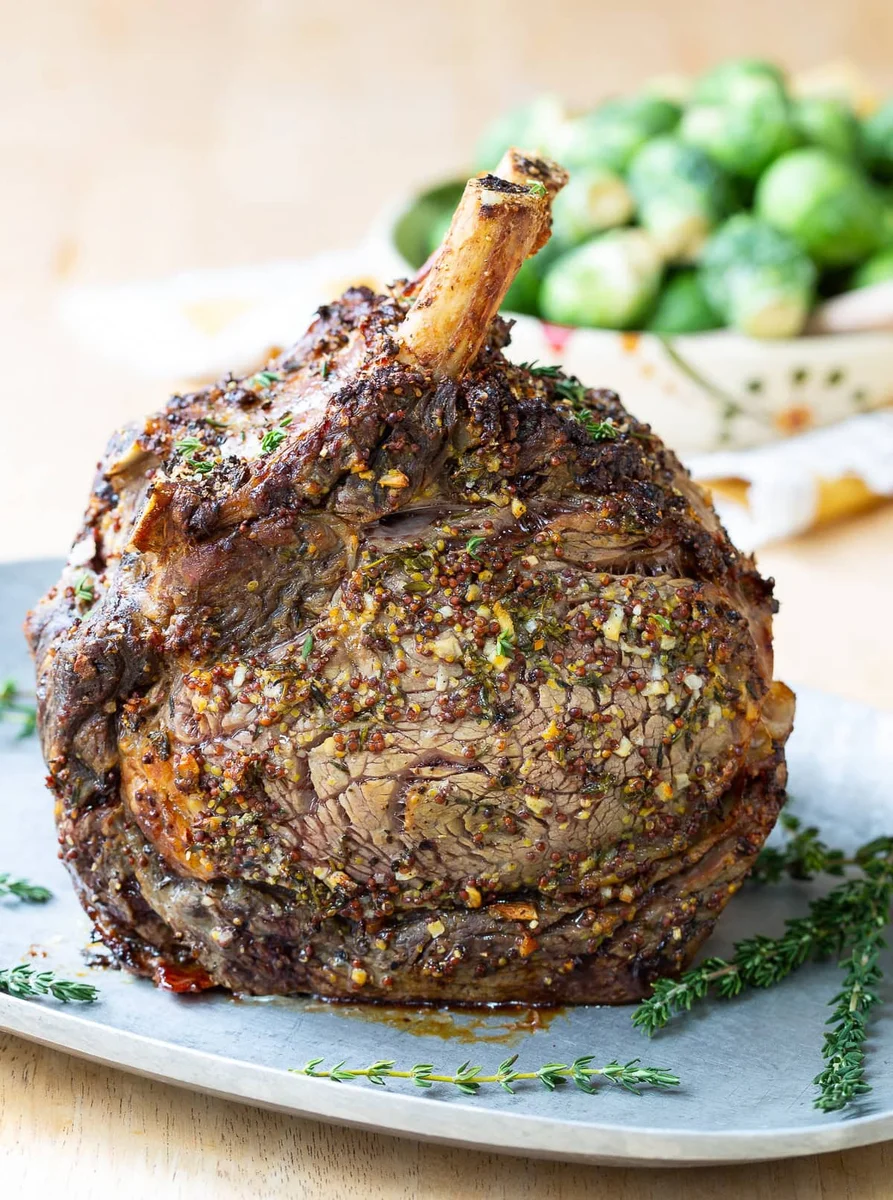
A standing rib roast is a bone-in beef roast coated with mustard, bacon grease, thyme and garlic, then cooked hot and finished at a lower temperature. It makes a celebratory centrepiece, with a crisp, savoury exterior and rosy slices when cooked to the stated temperature.
Ingredients
- 2.27–2.72 kg (5–6 lb)standing rib roast
- 37.5 ml (2½ tablespoons)wholegrain mustard
- 15 ml (1 tablespoon)bacon grease
- 15 ml (1 tablespoon)fresh thyme leaves
- 2 cloves, mincedgarlic
- 5 ml (1 teaspoon)sea salt
- 2.5 ml (½ teaspoon)cracked black pepper
Instructions
- 1
Prepare the oven
Heat the oven to 230°C (450°F) and remove the upper rack to make room. Line a rimmed baking dish with foil or baking parchment and set the roast on it. If it has not been trimmed, carefully cut away excess fat from the top, following the natural boundary between the meat and fat to expose the rib bones. Scrape the bones clean with a paring knife.
- 2
Season the roast
Stand the roast with the rib points facing upwards. Mix the mustard, bacon grease, thyme, garlic, 5 ml (1 teaspoon) sea salt and 2.5 ml (½ teaspoon) cracked black pepper in a small bowl, then rub the mixture over the roast. Insert an oven-safe meat thermometer into the centre, with its tip at the middle of the meat.
- 3
Roast and rest
Roast for 20 minutes, then reduce the oven temperature to 177°C (350°F) and continue cooking until the centre reaches 52°C (125°F). Take the roast out and leave it to rest for at least 15 minutes before slicing.
What is a standing rib roast?
A standing rib roast is a large cut of beef from the rib section, cooked on the bones so it can stand upright in the roasting tin. It is closely associated with celebratory American roast dinners and is often called prime rib, though that name does not guarantee a particular grade of beef.
This version keeps the seasoning simple: mustard, bacon grease, thyme and garlic form a savoury coating, while the high-then-lower oven method develops colour before gently bringing the centre to temperature.
Nutrition and macros by portion
The nutrition label shows one serving as written: 693 calories, 31g protein, 1g carbs, 62g fat.
| Portion | Adjustment | kcal | Protein | Carbs | Fat |
|---|---|---|---|---|---|
| Lighter | Smaller beef portion | 485 kcal | 22g | 1g | 43g |
| This serving | As written | 693 kcal | 31g | 1g | 62g |
| Hungry | Larger beef portion | 1040 kcal | 47g | 2g | 93g |
The beef supplies most of the protein and fat, while the mustard and garlic contribute only a small amount of carbohydrate. For a balanced plate, pair a slice with plenty of vegetables and a moderate serving of potatoes.
Choosing and preparing the roast
Bone-in roast: choose a piece within the recipe’s 2.27–2.72 kg range. Ask a butcher to trim it if you would rather not expose and clean the bones yourself.
Trim: if needed, cut along the natural seam between the fat and meat rather than cutting deeply into the meat. Cleaning the bones gives the roast a neater presentation, but take care with the sharp paring knife.
Making the seasoning paste
Mustard and bacon grease: stir them together with the herbs and seasonings until evenly combined. The mustard helps the mixture cling to the surface; the bacon grease adds savoury richness.
Even coating: rub the mixture across the exposed surface of the roast. Keep the thermometer probe in the meat’s centre, away from a bone, for a useful temperature reading.
Why the oven temperature changes
Initial heat: the first 20 minutes at 230°C (450°F) gives the outside a head start on browning. Put the roast in only once the oven has reached temperature.
Lower heat: turning the oven down to 177°C (350°F) lets the centre cook more gradually. The recipe gives a temperature target rather than a fixed second-stage time, so use the thermometer as your guide.
Judging doneness
Thermometer: check that the probe tip sits in the middle of the meat and is not touching a bone. Take the roast out when the centre reaches 52°C (125°F), as directed.
Rest: leave the roast undisturbed for at least 15 minutes before slicing. Resting makes it easier to carve and gives the juices time to settle.
Carving and serving
Carving: stand the roast securely on a board and slice across the meat after resting. A sharp carving knife helps make clean portions around the bones.
On the plate: serve with roast potatoes, vegetables and gravy or a simple pan sauce. These sides make a substantial meal and complement the roast’s rich, savoury flavour.
Recipe notes & tips
- Use an oven-safe thermometer so you can follow the centre temperature without repeatedly opening the oven.
- Set the roast securely in a rimmed dish to catch drippings.
- Keep the thermometer tip in the meat rather than against a rib bone.
- Begin checking the temperature after the initial 20-minute roast, as the remaining cooking time depends on the roast.
- Rest the meat for at least 15 minutes before carving.
Variations
- Herb change: replace the thyme with an equal amount of finely chopped rosemary.
- Pepper crust: use coarsely cracked black pepper for a more pronounced peppery coating.
- Mustard swap: use Dijon mustard in place of wholegrain mustard for a smoother paste.
- Garlic boost: add another minced clove for a stronger garlic flavour.
- No bacon grease: use beef dripping in its place for a similar savoury richness.
Common mistakes to avoid
- Guessing the cooking time: use the centre temperature target of 52°C (125°F) instead.
- Probe against bone: reposition the thermometer tip in the middle of the meat for a better reading.
- Cutting too deeply while trimming: follow the fat seam carefully to avoid removing meat.
- Skipping the rest: wait at least 15 minutes before slicing so the roast is easier to carve.
- Slicing immediately: let the roast rest first rather than cutting as soon as it leaves the oven.
How to store
Refrigerate leftover beef in an airtight container within 2 hours of cooking and use within 3–4 days. Reheat gently in a covered dish with a splash of stock or water until hot, or serve cold in sandwiches.
Frequently asked questions
How long does the roast take after the first 20 minutes?
The recipe does not give a fixed time for the lower-temperature stage because it depends on the roast. Cook until the centre reaches 52°C (125°F), checking with an oven-safe thermometer.
Can I prepare the seasoning ahead?
Yes. Mix the mustard, bacon grease, thyme, garlic, salt and pepper shortly ahead, then rub it over the roast before cooking.
Do I have to clean the rib bones?
Cleaning them is part of the recipe’s preparation and gives the roast a neater appearance. Use a paring knife carefully, or ask your butcher to trim the roast for you.
Can I cook this without a meat thermometer?
A thermometer is strongly recommended because the method relies on reaching a specific centre temperature. Timing alone is less dependable for a roast of variable size.
How long should it rest before carving?
Rest it for at least 15 minutes, as the recipe specifies.
What should I serve with standing rib roast?
Roast potatoes and vegetables are classic, practical sides. You can also serve gravy or a simple sauce alongside.
Cook it from the original
This recipe comes from aspicyperspective.com. Their page has the author’s own photos, notes and tips — the best place to cook it from.
Open the recipe on aspicyperspective.com