
Chicken Bites
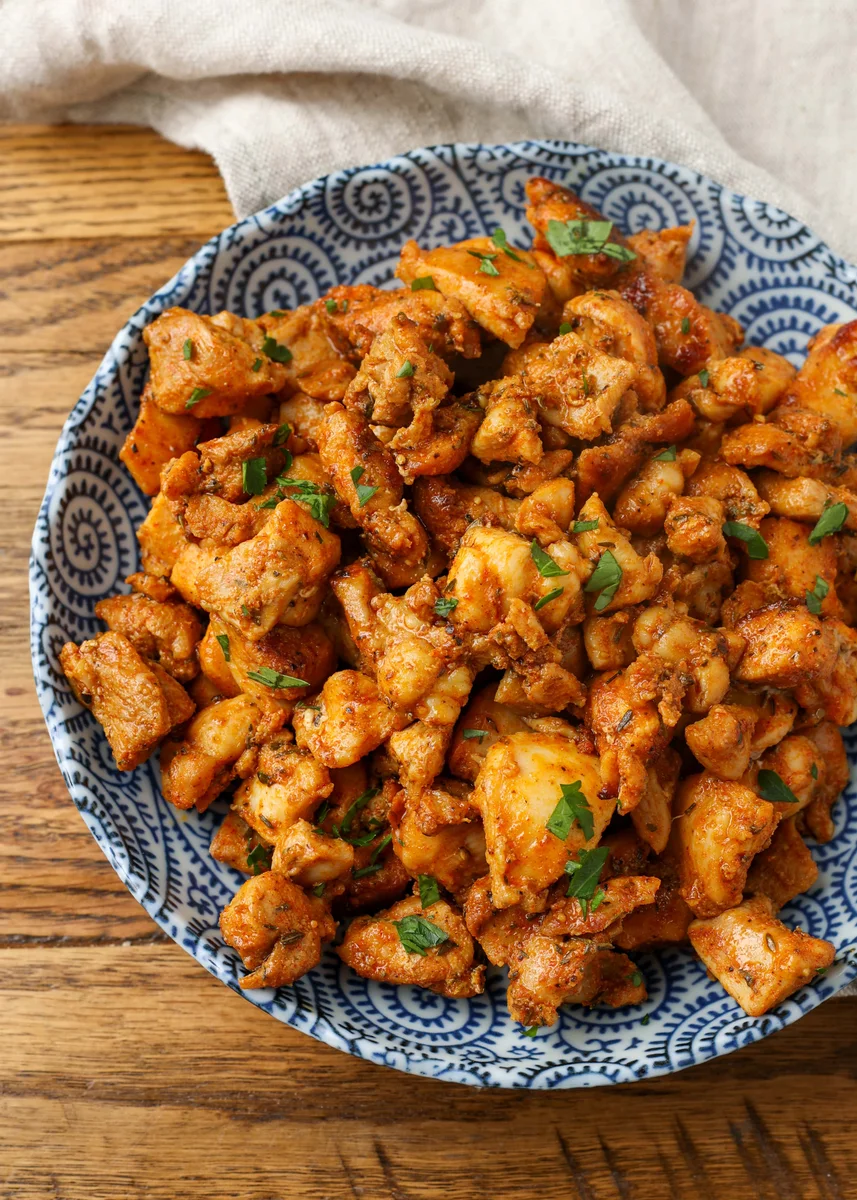
These quick American-style chicken bites are seasoned with a warm blend of spices and seared in a hot skillet. They make an easy main for a busy evening and are ready in about 20 minutes.
Ingredients
- 454–680 g (1–1½ lb)boneless, skinless chicken thighs or breasts
- 45 ml (3 tablespoons), dividedlight-flavoured olive oil or coconut oil
- 1 teaspoonfreshly ground black pepper
- 1 teaspooncumin
- 1 teaspoonthyme
- 1 teaspoonpaprika
- ¾ teaspoonkosher salt
- ¼ teaspoongarlic powder
- ¼ teaspoonturmeric
- ¼ teaspooncayenne
Instructions
- 1
Season the chicken
Cut the chicken into small pieces about 2–2.5 cm across and place in a medium bowl. Mix the spices in a small dish or measuring cup. Add 15 ml (1 tablespoon) of the oil, melted first if using coconut oil, and all the spices to the chicken. Toss to coat and leave to rest for at least 10 minutes.
- 2
Sear the chicken
Heat the remaining 30 ml (2 tablespoons) of oil in a very large frying pan over high heat. Once hot, add the chicken and cook, turning or stirring constantly, until browned outside and cooked through; this should take just a few minutes. Take care not to overcook it.
- 3
Remove from pan
As soon as the chicken is cooked, take the pieces out of the pan. They are small and can dry out if left in the residual heat.
What are chicken bites?
Chicken bites are small pieces of chicken cooked quickly in a pan, a straightforward American-style approach to a weeknight meal. This version gets its flavour from a spice coating rather than a batter or a long marinade.
The method works because the chicken is cut small and cooked in a very hot pan. A short rest lets the oil and seasonings cling to the pieces before they are seared.
Nutrition and macros by portion
The nutrition label shows one serving as written: 200 calories, 36g protein, 1g carbs, 5g fat.
| Portion | Adjustment | kcal | Protein | Carbs | Fat |
|---|---|---|---|---|---|
| Lighter | Use less pan oil | 140 kcal | 25g | 1g | 4g |
| This serving | As written | 200 kcal | 36g | 1g | 5g |
| Hungry | Serve with extra rice | 300 kcal | 54g | 2g | 8g |
Chicken supplies most of the protein, while the oil contributes most of the fat; the spices provide the small amount of carbohydrate. Pair a portion with vegetables and a suitable serving of rice or potatoes to make a more balanced plate.
Choosing the chicken
Thighs: these tend to stay succulent during quick, high-heat cooking and bring a slightly richer flavour.
Breasts: these are leaner and work well too, but watch them closely, as small pieces can overcook quickly.
Getting the spice coating right
Spice blend: cumin, thyme, paprika, turmeric, garlic powder, black pepper and cayenne provide earthy, savoury warmth with a little heat. Mix them together before adding them so they distribute evenly.
Oil: one tablespoon goes into the chicken with the spices, while the other two are reserved for the pan. If using coconut oil, melt it before mixing it into the seasoning.
Searing without crowding
Hot pan: heat the oil fully before adding the chicken, which helps the pieces brown rather than sit in a cooling pan.
Room to cook: use a very large frying pan and avoid packing it too tightly. If the chicken does not fit comfortably in one layer, cook it in batches so it can sear.
Checking doneness
Colour: look for browned surfaces and opaque chicken throughout; the recipe's small pieces should cook in just a few minutes, though the exact time depends on their size and your pan.
Finish: remove the chicken from the pan as soon as it is cooked. Leaving it in the hot pan can carry on cooking the small pieces and make them dry.
Serving the chicken bites
Serve them straight from the pan with rice, potatoes or flatbreads, and add a vegetable such as a crisp salad or steamed greens for contrast.
They also work well tucked into wraps or served over a grain bowl. Keep accompaniments simple so the spiced chicken remains the focus.
Recipe notes & tips
- Cut the chicken into similarly sized pieces so they cook at about the same rate.
- Leave the chicken to rest with the spices for at least 10 minutes.
- Use a large pan and let the oil heat before adding the chicken.
- Stir or turn the pieces constantly as they cook, as directed.
- Transfer the chicken out of the hot pan as soon as it is cooked.
Variations
- Milder seasoning: leave out the cayenne for a gentler spice blend.
- More heat: increase the cayenne a little to make the bites spicier.
- Choose thighs: use chicken thighs for a richer, more succulent result.
- Choose breasts: use chicken breasts for a leaner option and watch them closely.
- Coconut oil: use melted coconut oil in place of the olive oil for a different flavour.
Common mistakes to avoid
- Uneven pieces: cut the chicken to a similar size so smaller pieces do not finish far ahead of larger ones.
- Cool pan: wait until the oil is hot before adding the chicken to help it brown.
- Crowded skillet: cook in batches if needed so the pieces have room to sear.
- Overcooking: keep the pieces moving and remove them as soon as they are cooked through.
- Leaving them in the pan: transfer the chicken out promptly, since the hot pan can dry out small pieces.
How to store
Refrigerate leftovers in a sealed container and use within 3 days. Reheat in a frying pan over medium heat until piping hot, taking care not to cook them for longer than needed.
Frequently asked questions
Can I use chicken thighs instead of breasts?
Yes. The recipe allows for either boneless, skinless thighs or breasts. Thighs are richer, while breasts are leaner and need close attention to avoid overcooking.
How small should I cut the chicken?
Cut it into pieces about 2–2.5 cm across. Keeping the pieces a similar size helps them cook evenly.
Can I prepare the chicken ahead?
You can mix the chicken with the oil and spices ahead and keep it covered in the fridge. The method calls for a rest of at least 10 minutes before cooking.
How do I stop the chicken from drying out?
Avoid overcooking it, especially if using breast, and remove the pieces from the hot pan as soon as they are cooked through.
Can I use coconut oil?
Yes. The recipe lists coconut oil as an alternative to light-flavoured olive oil. Melt it before adding the tablespoon used in the spice coating.
Cook it from the original
This recipe comes from barefeetinthekitchen.com. Their page has the author’s own photos, notes and tips — the best place to cook it from.
Open the recipe on barefeetinthekitchen.com