
Better Than Cinnabon Cinnamon Rolls Recipe
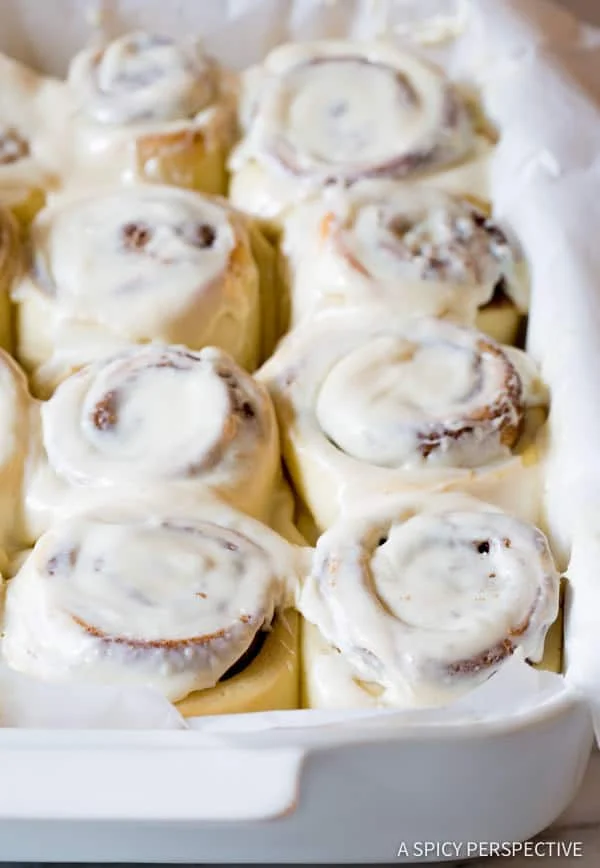
These American-style cinnamon rolls have a soft, fluffy dough wrapped around a buttery cinnamon and brown sugar filling, finished with a smooth cream cheese glaze. Make them for a warm, generously iced breakfast or treat to share.
Ingredients
- 240 ml (1 cup)whole milk, scalded
- 113 g (1/2 cup)unsalted butter
- 67 g (1/3 cup)granulated sugar
- 2 1/2 teaspoons (about 7 g; or 1 packet)active dry yeast
- 2 largeeggs
- 500 g (4 cups), plus extra as neededplain flour
- 2 teaspoonssalt
- 220 g (1 cup, packed)brown sugar
- 113 g (1/2 cup), softenedunsalted butter
- 2 1/2 tablespoonsground cinnamon
- 3/4 teaspoonground nutmeg
- 113 g (1/2 cup), softenedcream cheese
- 113 g (1/2 cup), softenedunsalted butter
- 10 ml (2 teaspoons)vanilla extract
- 240 g (2 cups)icing sugar
Instructions
- 1
Scald the milk
Bring the milk to a boil in a small saucepan, then remove it from the heat straight away. Set the butter, eggs and cream cheese aside to come to room temperature.
- 2
Start the yeast
Pour the hot milk into a mixer bowl and stir in 113 g butter until it melts, then mix in the sugar. Check that the milk mixture is lukewarm; if it is not, stir in 1/2 cup flour and check again. Once it is just above room temperature, stir in the yeast and leave it to foam for about 10 minutes.
- 3
Knead the dough
Fit the mixer with a dough hook and run it on low as you add the eggs, salt and flour, up to 4 cups in total. Knead until the dough pulls away from the sides, then continue mixing for about 10 minutes. If it still seems very sticky after 2–3 minutes, add a further 1/4 cup flour. Cover with plastic and leave to rise until doubled, about 60–90 minutes in a warm kitchen.
- 4
Mix the filling
Stir the brown sugar, softened butter, cinnamon and nutmeg together until smooth. Keep the filling at room temperature until ready to use.
- 5
Roll and fill
Turn the risen dough onto a well-floured work surface. Fold it into thirds and press flat, then turn and fold it into thirds again and press it into a rectangle. Roll it into a sheet about 41 × 51 cm (16 × 20 inches). Spread the filling in a thin layer, leaving 4 cm (1 1/2 inches) bare along one long edge; take care not to tear or gouge the dough.
- 6
Cut the rolls
Starting from the cinnamon-covered long edge, roll the dough tightly towards the bare edge to make a log. Line a 23 × 33 cm (9 × 13 inch) baking dish with parchment paper. Cut the log into 12 equal rolls, tuck the loose end under each one and arrange them in the dish to rise.
- 7
Bake the rolls
Heat the oven to 175°C (350°F). Let the rolls rise for at least 30 minutes while the oven heats, then bake for 20–25 minutes, until the edges are just turning golden and the centres have puffed up.
- 8
Make the glaze
While the rolls bake, beat the cream cheese, butter, vanilla and icing sugar until completely smooth. As soon as the rolls come out of the oven, gently spread half the glaze over them so it runs into the cracks. Add more glaze after five minutes if you like, and serve warm or at room temperature.
What are cinnamon rolls?
Cinnamon rolls are a sweet American bake made from yeasted dough rolled around a spiced sugar filling. They are baked close together and often topped with a rich icing.
This version gets its soft, layered texture from an enriched dough, while cinnamon and nutmeg flavour the buttery brown sugar filling. A cream cheese glaze finishes the warm rolls.
Nutrition and macros by portion
The nutrition label shows one serving as written: 581 calories, 7g protein, 79g carbs, 26g fat.
| Portion | Adjustment | kcal | Protein | Carbs | Fat |
|---|---|---|---|---|---|
| Lighter | Use less glaze | 407 kcal | 5g | 55g | 18g |
| This serving | As written | 581 kcal | 7g | 79g | 26g |
| Hungry | Serve two rolls | 872 kcal | 11g | 119g | 39g |
The flour and sugars provide most of the carbohydrates, while butter and cream cheese contribute much of the fat. Eggs, milk and cream cheese provide some protein; pair a roll with fruit and a protein-rich savoury side for a more balanced plate.
Getting the yeast started
Milk temperature: Scalding the milk means bringing it to a boil, then taking it off the heat. The butter cools it as it melts, but check the mixture is only lukewarm before adding yeast; liquid that is too hot can stop the yeast working.
Foam: Give the yeast about 10 minutes to become foamy before mixing the dough. This gives you a visible cue that it has activated.
Building a soft dough
Kneading: The dough hook works the dough for about 10 minutes, helping it become stretchy. It should pull away from the bowl sides, though it may remain slightly tacky.
Flour: Add the stated flour gradually and only use extra if the dough remains too sticky after the first few minutes. Too much extra flour can make the baked rolls less tender.
Rolling and filling evenly
Rectangle: Roll the dough to about 41 × 51 cm so the filling can be spread across a broad, even surface. Keep the layer thin and avoid pressing hard enough to damage the dough.
Bare edge: Leave about 4 cm clear along one long side. Rolling towards that edge helps close the log, and tucking each loose end underneath helps the rolls hold their shape.
Rising and baking cues
First rise: Leave the covered dough in a warm kitchen until it has doubled in size; the stated 60–90 minutes is a guide. The dough's expansion is the useful cue.
Second rise: Give the cut rolls at least 30 minutes while the oven heats. Bake at 175°C for 20–25 minutes, looking for just-golden edges and puffed centres rather than waiting for deep browning.
Glazing and serving
Glaze: Beat the cream cheese, butter, vanilla and icing sugar until smooth. Spreading half over the rolls as soon as they leave the oven lets it soften and seep into the gaps.
Serving: Add the remaining glaze after five minutes if you want a thicker topping. The rolls can be served warm or at room temperature.
What to serve alongside
A cinnamon roll is sweet and filling, so pair it with unsweetened tea or coffee if you want a simple breakfast. Fresh fruit is another easy side to bring a fresh contrast to the buttery glaze.
For a brunch spread, serve the rolls alongside savoury dishes rather than making the icing sweeter or heavier.
Recipe notes & tips
- Let the eggs and dairy ingredients come to room temperature before using them.
- Check the milk mixture is lukewarm before adding the yeast.
- Add extra flour sparingly if the dough remains sticky after 2–3 minutes of kneading.
- Use a well-floured surface to make the dough easier to fold and roll.
- Cut the log into 12 equal pieces so the rolls bake at a similar rate.
- Start checking the rolls at 20 minutes, since ovens can vary.
Variations
- Extra cinnamon: Increase the cinnamon in the filling for a more pronounced spice flavour.
- No nutmeg: Leave out the nutmeg if you prefer the filling to taste only of cinnamon.
- More glaze: Add the full amount of glaze after the rolls have rested for five minutes.
- Vanilla aroma: Add a little extra vanilla to the glaze if you want its flavour to stand out.
- Smaller rolls: Cut the log into more pieces, allowing for a shorter bake and checking for the same doneness cues.
Common mistakes to avoid
- Milk too hot: Check that it is lukewarm before adding yeast so the yeast is not exposed to excessive heat.
- Too much flour: Add extra only if the dough remains sticky after the first 2–3 minutes of kneading.
- Torn dough: Spread the filling gently with a flat utensil rather than digging into the sheet.
- Uneven rolls: Cut the log into 12 similar pieces so they cook evenly.
- Under-risen rolls: Let them rise for at least 30 minutes while the oven heats before baking.
- Overbaking: Look for barely golden edges and puffed centres, and begin checking at 20 minutes.
How to store
Store leftover rolls covered in the refrigerator and use within 3 days. Reheat individual rolls briefly until warm, or let them come to room temperature before serving.
Frequently asked questions
Can I make the dough without a stand mixer?
Yes. Mix the ingredients by hand and knead until the dough is stretchy and pulls away from the work surface, using the same cues as the mixer method.
How do I know the yeast is active?
After about 10 minutes in the lukewarm milk mixture, it should look foamy. If it does not foam, check the yeast and liquid temperature before continuing.
Why does the recipe leave part of the dough bare?
The bare strip forms the outside edge when the dough is rolled into a log. Roll towards it and tuck the loose end under each cut roll to help keep the spiral secure.
Can I use all the glaze at once?
Yes. The recipe suggests spreading half over the rolls straight from the oven and adding more after five minutes, but you can use as much as you like.
Can I serve the rolls at room temperature?
Yes. The recipe serves them warm or at room temperature.
How can I tell when the rolls are baked?
After 20–25 minutes at 175°C, the edges should be barely golden and the centres puffed up.
Cook it from the original
This recipe comes from aspicyperspective.com. Their page has the author’s own photos, notes and tips — the best place to cook it from.
Open the recipe on aspicyperspective.com