
Three Cheese Risotto
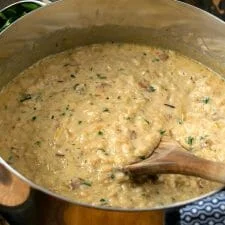
This Italian-style risotto combines creamy Arborio rice with Parmesan, Romano and provolone, plus crisp-edged prosciutto for a savoury finish. It makes a rich, comforting main course and is ready in about 40 minutes.
Ingredients
- 590 ml (2½ cups)vegetable stock
- 355 ml (1½ cups)double cream
- 30 ml (2 tablespoons), dividedextra-virgin olive oil
- 113 g (¼ pound)sliced prosciutto, diced into small pieces
- 14 g (1 tablespoon)butter
- 150 g (1 cup), dicedshallots
- 200 g (1 cup)Arborio rice
- 120 ml (½ cup)white wine
- 2.5 ml (½ teaspoon)white pepper
- 50 g (½ cup), freshly gratedParmesan cheese
- 50 g (½ cup), freshly gratedRomano cheese
- 75 g (½ cup), dicedprovolone cheese
- 15 g (¼ cup), choppedfresh Italian flat-leaf parsley
Instructions
- 1
Warm the liquid
Put the vegetable stock and cream in a saucepan and bring to the boil. Reduce the heat and keep the mixture warm. Alternatively, heat it in the microwave in a 950 ml (4-cup) glass measuring jug.
- 2
Crisp the prosciutto
Heat 15 ml (1 tablespoon) of the olive oil in a heavy-based pot or Dutch oven over medium heat. Once hot, add the prosciutto and cook for about 3 minutes, until slightly crisp.
- 3
Cook the shallots
Add the butter and, once it has melted, stir in the shallots. Cook for 2 minutes.
- 4
Toast the rice
Add the remaining 15 ml (1 tablespoon) of olive oil and the Arborio rice. Cook for 2 minutes, stirring often.
- 5
Add wine and pepper
Stir in the wine and white pepper. Cook for about 2 minutes, until the wine has evaporated.
- 6
Lower the heat
Reduce the heat to medium-low.
- 7
Add the first ladle
Ladle in about 240 ml (1 cup) of the warm liquid and stir until the rice has absorbed it.
- 8
Continue adding liquid
Add the remaining liquid about 240 ml (1 cup) at a time, stirring and waiting for each addition to be absorbed before adding the next. This process will take 30–35 minutes.
- 9
Check the rice
Taste a few grains to check that they are tender. If they are not, add a little more stock or water and continue cooking, possibly for about 5 minutes more.
- 10
Stir in the cheese
Take the pot off the heat and stir in the Parmesan, Romano, provolone and parsley. Taste, and add salt only if needed, as the prosciutto and stock may provide enough.
- 11
Serve immediately
Serve the risotto straight away.
What is three cheese risotto?
Risotto is an Italian rice dish made by gradually cooking short-grain rice with liquid until it turns creamy. Its traditional technique centres on adding warm liquid in stages and stirring as the grains absorb it.
This version builds richness with cream and three cheeses, while prosciutto adds a salty, savoury contrast. The combination makes it especially substantial and best served freshly cooked.
Nutrition and macros by portion
The nutrition label shows one serving as written: 550 calories, 19g protein, 32g carbs, 38g fat.
| Portion | Adjustment | kcal | Protein | Carbs | Fat |
|---|---|---|---|---|---|
| Lighter | Use less cream | 385 kcal | 13g | 22g | 27g |
| This serving | As written | 550 kcal | 19g | 32g | 38g |
| Hungry | Serve a larger portion | 825 kcal | 29g | 48g | 57g |
Most of the carbohydrates come from the Arborio rice, while cream, olive oil, butter and cheese contribute much of the fat. The cheeses and prosciutto provide most of the protein, and also make the dish relatively salty. Pair a serving with a generous portion of green vegetables or salad for a more balanced plate.
The rice and the liquid
Arborio rice: its starchy surface helps give risotto its characteristic creamy texture while the grains retain some bite. Keep it in the pot rather than rinsing it first.
Warm mixture: heating the stock and cream beforehand helps the rice cook steadily when each ladleful goes in. Keep it warm over low heat while you work.
Building savoury flavour
Prosciutto: cooking it first gives the pieces a lightly crisp edge and leaves savoury flavour in the pot. The recipe relies on this and the stock for much of its salt, so taste before seasoning.
Shallots and wine: the shallots soften in butter, then the wine cooks down with the pepper. Let the wine evaporate before beginning to add the warm liquid.
Adding liquid gradually
Small additions: add about 240 ml (1 cup) at a time and wait for the rice to absorb it before adding more. This is the main hands-on part of the recipe and takes 30–35 minutes.
Steady stirring: stir often as the rice cooks so it heats evenly and releases starch into the liquid. Keep the heat at medium-low once you start adding the liquid.
Getting the texture right
Tender grains: taste a few grains near the end; they should be tender rather than hard in the centre. If they need longer, add a little more stock or water and cook for about 5 minutes more as needed.
Creamy finish: stir in the three cheeses off the heat, once the rice is cooked. Serve promptly, while the risotto is loose and creamy.
Choosing the cheeses
Parmesan and Romano: both are grated into the hot rice, where they melt through and bring a savoury, salty flavour. Freshly grated cheese is called for in the recipe.
Provolone: diced pieces add a different texture and melt into the finished risotto. Stir all three cheeses in together with the parsley.
What to serve alongside
A crisp green salad or simply dressed vegetables can offer a fresh contrast to the creamy rice. Keep sides fairly simple so the cheeses and prosciutto remain the focus.
Because the risotto is rich, serve it as the main part of the meal with a modest side of vegetables. It is also suitable as a smaller first course.
Recipe notes & tips
- Keep the stock and cream warm while the rice cooks.
- Stir often, particularly after each addition of liquid.
- Add the next ladle only when the previous one has mostly absorbed.
- Taste before adding salt, since the prosciutto and stock can be salty.
- Have the grated and diced cheeses ready before the rice is done.
- Serve as soon as the cheese has been stirred through.
Variations
- Use Pinot Grigio: swap it for the Chardonnay-style white wine mentioned in the recipe.
- Change the herbs: use chopped fresh chives instead of parsley for a different finish.
- Add peas: stir in cooked peas with the cheeses for a sweet, fresh note.
- Try a milder cheese: replace some of the Romano with extra provolone for a gentler savoury flavour.
Common mistakes to avoid
- Adding cold liquid: warm the stock and cream first so each addition does not cool the rice.
- Pouring it all in at once: add the liquid gradually and let each measure absorb before continuing.
- Cooking over high heat: keep the pan at medium-low during the gradual additions to avoid uneven cooking.
- Skipping the taste test: check the grains for tenderness and give them more time with a little extra liquid if needed.
- Salting too early: taste after adding the cheeses and prosciutto before deciding whether extra salt is needed.
- Leaving it to stand: serve immediately after stirring in the cheese, while the texture is creamy.
How to store
Cool leftovers promptly, transfer them to an airtight container and refrigerate for up to 3 days. Reheat gently in a saucepan with a splash of water or stock, stirring until hot; the texture will be thicker than when freshly made.
Frequently asked questions
Can I make this risotto without cream?
The recipe uses cream as part of its cooking liquid, so leaving it out will change the richness and texture. You could use more warm vegetable stock instead, though the result will be less creamy.
Can I use a different white wine?
Yes. The recipe notes that Pinot Grigio can be used instead of Chardonnay. Choose a dry white wine and let it evaporate before adding the stock and cream.
How do I know when the rice is cooked?
Taste a few grains: they should be tender, without a hard centre. If needed, continue cooking with a little extra stock or water.
Why add the liquid one cup at a time?
Gradual additions let the rice absorb the liquid as it cooks and release starch into the risotto. Wait for each addition to be absorbed before adding the next.
Can I make it ahead?
It is best served immediately, when the texture is at its creamiest. Leftovers can be refrigerated and reheated gently with a splash of stock or water.
Should I add salt?
Taste the finished risotto first. Prosciutto and vegetable stock may already provide enough salt, and the cheeses add more savoury seasoning.
Cook it from the original
This recipe comes from afamilyfeast.com. Their page has the author’s own photos, notes and tips — the best place to cook it from.
Open the recipe on afamilyfeast.com