
Food Processor Rosemary Shortbread
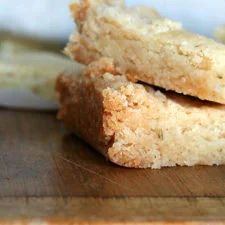
These crisp, buttery shortbread squares pair the gentle piney flavour of fresh rosemary with a touch of honey. The food processor makes the dough quickly, and the bake is easy to portion while still warm.
Ingredients
- 256 g (2 cups)plain flour
- 134 g (2/3 cup)granulated sugar
- just under 15 ml (1 scant tablespoon)finely chopped fresh rosemary
- 1 teaspoon plus 1 pinchkosher salt
- 227 g (1 cup), cold and cut into 2.5 cm chunksunsalted butter
- 1 1/2 teaspoonshoney
Instructions
- 1
Mix the dry ingredients
Heat the oven to 163°C. Pulse the flour, sugar, rosemary and salt together in a food processor.
- 2
Add butter and honey
Add the butter and honey, then pulse until the mixture forms fine crumbs. Pulse a few more times, just until some crumbs begin to clump together; do not overprocess. The dough should not be smooth.
- 3
Press into the pan
Press the dough into an ungreased 20 or 23 cm square baking pan, or line the pan with baking parchment for easier removal. Prick the dough all over with a fork.
- 4
Bake until golden
Bake for 35–40 minutes in a 23 cm pan or 45–50 minutes in a 20 cm pan, until golden brown.
- 5
Cool and cut
Transfer the pan to a wire rack to cool. Cut the shortbread into squares, bars or wedges while it is still warm.
What is rosemary shortbread?
Shortbread is a rich, crumbly biscuit associated with Scotland, made from a simple mixture of flour, sugar and butter. This American recipe gives the classic a savoury, aromatic edge with fresh rosemary and a little honey.
The food processor brings the ingredients together quickly while keeping the dough crumbly. Pressing those crumbs into a pan makes the shortbread straightforward to bake and slice.
Nutrition and macros by portion
The nutrition label shows one serving as written: 194 calories, 2g protein, 21g carbs, 12g fat.
| Portion | Adjustment | kcal | Protein | Carbs | Fat |
|---|---|---|---|---|---|
| Lighter | Smaller shortbread portion | 136 kcal | 1g | 15g | 8g |
| This serving | As written | 194 kcal | 2g | 21g | 12g |
| Hungry | Add another shortbread piece | 291 kcal | 2g | 32g | 17g |
Most of the energy comes from the butter, with the flour and sugar supplying most of the carbohydrates; the butter also provides nearly all the fat. Protein is modest and mainly comes from the flour, so serve a piece with fruit and yoghurt for a more balanced plate.
Why use cold butter?
Cold butter: cutting it into chunks helps it break down into the flour without turning the mixture into a smooth paste. Pulse only until fine crumbs form and a few begin to clump.
Honey: the small amount adds sweetness and helps the dough come together, while the granulated sugar provides the familiar shortbread flavour.
Getting the rosemary right
Fresh rosemary: chop it finely so it is distributed through the shortbread rather than leaving large, woody pieces in individual bites. Keep to the scant measure for a gentle herbal flavour.
Even mixing: pulse the rosemary with the flour, sugar and salt before adding the butter. This helps spread the herb through the dry ingredients.
How to judge the bake
Colour: look for a golden-brown surface as the main cue that the shortbread is ready. The smaller, 20 cm pan needs the longer baking time because the dough is thicker.
Texture: the mixture should remain crumbly before baking, not form a smooth dough. Pricking it all over with a fork is part of the method and helps prepare the pressed surface for baking.
Why cut it while warm?
Warm shortbread: slice it after the pan has been transferred to a wire rack, while the bake is still warm. It is easier to portion at this stage than once fully cooled and firm.
Choose squares, bars or wedges according to the pan and how you plan to serve them. A sharp knife helps make clean cuts through the buttery crumb.
Serving ideas
With tea or coffee: serve a piece alongside a hot drink for a simple afternoon treat. Its buttery sweetness also makes it a fitting finish to a meal.
For a dessert plate: pair a portion with fresh fruit or plain yoghurt. The mild accompaniment lets the rosemary remain noticeable without making the shortbread feel overly sweet.
Recipe notes & tips
- Chop the rosemary finely before measuring it.
- Use butter straight from the fridge so it stays cold during processing.
- Pulse in short bursts and stop while the mixture is still crumbly.
- Line the pan with baking parchment if you want to lift out the shortbread more easily.
- Use the longer bake time for the smaller pan and check for a golden-brown surface.
- Cut the shortbread while it is still warm, after transferring the pan to a wire rack.
Variations
- More rosemary: add a little extra finely chopped rosemary for a stronger herbal note.
- Citrus lift: mix finely grated lemon zest into the dry ingredients.
- Orange aroma: add finely grated orange zest with the rosemary.
- Different shapes: cut the warm bake into bars or wedges instead of squares.
- Parchment lining: line the pan to make lifting and portioning easier.
Common mistakes to avoid
- Overprocessing: the dough can become smooth; stop when it is crumbly and a few crumbs start to clump.
- Large rosemary pieces: they can make bites uneven; chop the leaves finely.
- Using a smaller pan with the shorter timing: the thicker shortbread may need 45–50 minutes; bake until golden brown.
- Waiting until fully cool to cut: the shortbread can be harder to portion; slice it while warm.
- Skipping the fork pricks: prick the pressed dough all over before baking, as directed.
How to store
Once fully cool, store the shortbread in an airtight container at room temperature for up to a week. If desired, warm briefly in a low oven before serving.
Frequently asked questions
Can I use a 20 cm or 23 cm pan?
Yes. Use a 23 cm square pan for a thinner bake, or a 20 cm pan for a thicker one. The smaller pan takes 45–50 minutes; the larger takes 35–40 minutes.
How finely should I chop the rosemary?
Chop it finely so it disperses through the dough and does not leave large pieces in the finished shortbread.
Why is the dough still crumbly?
It is meant to be crumbly rather than smooth. Press it into the pan once some crumbs begin to clump together.
When should I cut the shortbread?
Cut it into squares, bars or wedges while it is still warm, after transferring the pan to a wire rack.
Can I prepare the shortbread without a food processor?
The stated method relies on a food processor to pulse the ingredients into fine crumbs. Use one for the closest match to the recipe's method.
Cook it from the original
This recipe comes from alexandracooks.com. Their page has the author’s own photos, notes and tips — the best place to cook it from.
Open the recipe on alexandracooks.com