
Thick-Cut Sweet Potato Fries
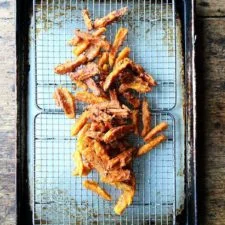
These thick-cut sweet potato fries get a crisp, lightly browned coating from a brief simmer and a cornstarch slurry before frying. Make them in batches, then keep them warm in the oven so they are ready to serve together.
Ingredients
- 60 ml (1/2 cup)cornstarch
- 1/4 cup for the cooking water; plus more to tastekosher salt
- 1 teaspoonbicarbonate of soda
- 1.36 kg (3 pounds)sweet potatoes, peeled and cut into 2 cm-thick wedges, then cut in half crosswise
- 710 ml (3 cups)peanut oil
- to tastegood sea salt, such as Maldon or fleur de sel, for sprinkling at the end
- 2 quarts (1.9 litres)water
- 120 ml (1/2 cup)cold water
Instructions
- 1
Prepare the oven
Set the oven rack in the middle and heat the oven to 95°C (200°F). Put a wire rack over a rimmed baking sheet. In a large bowl, whisk the cornstarch with 120 ml (1/2 cup) cold water.
- 2
Simmer the potatoes
Bring 1.9 litres (2 quarts) water, 1/4 cup kosher salt and the bicarbonate of soda to the boil in a Dutch oven. Add the potatoes and bring the water back to the boil, then lower the heat to a simmer. Cook for 3–5 minutes, until the outsides are slightly mushy but the centres are still firm. Whisk the cornstarch mixture again, then transfer the potatoes to the bowl with a wire skimmer or slotted spoon.
- 3
Coat the wedges
Use a rubber spatula to fold the potatoes through the slurry until it turns light orange, thickens to a paste and clings to the wedges.
- 4
Fry in batches
Heat the peanut oil in a 30 cm (12-inch) non-stick frying pan over high heat to 163°C (325°F). Carefully add one third of the potatoes with tongs, keeping the wedges separate. Fry for 7–10 minutes until crisp and lightly browned, turning them halfway through. Adjust the heat as needed to keep the oil between 138 and 149°C (280–300°F). Transfer the fries to the prepared rack with a wire skimmer or slotted spoon; separate any stuck pieces with tongs or forks. Sprinkle with sea salt to taste and keep warm in the oven. Bring the oil back to 163°C (325°F) and fry the remaining potatoes in two more batches. Serve straight away.
What are thick-cut sweet potato fries?
Sweet potato fries are a familiar American-style side, cut from sweet potatoes and cooked until browned. This Cook’s Illustrated Cook’s Science version uses a short simmer and a coating before frying to help give the thick wedges a crisp exterior.
The wedges are cut into substantial pieces, then halved crosswise for easier frying and serving. Cooking them in batches helps each piece brown rather than crowding together.
Nutrition and macros by portion
The nutrition label shows one serving as written: 610 calories, 9g protein, 100g carbs, 25g fat.
| Portion | Adjustment | kcal | Protein | Carbs | Fat |
|---|---|---|---|---|---|
| Lighter | Use less frying oil | 427 kcal | 6g | 70g | 18g |
| This serving | As written | 610 kcal | 9g | 100g | 25g |
| Hungry | Serve a larger portion | 915 kcal | 14g | 150g | 38g |
Sweet potatoes and cornstarch provide most of the carbohydrates, while peanut oil contributes most of the fat. The potatoes also supply some protein, though this is not a protein-rich side. Balance a serving with a protein-rich main and vegetables or salad.
The coating that helps them crisp
Cornstarch slurry: Whisk it again before adding the potatoes, as it can settle while you prepare the wedges. Fold gently until it becomes a thick paste that clings to the surfaces.
Bicarbonate of soda: It goes into the simmering water with the salt. The recipe uses it to help soften the potatoes’ exteriors while their centres remain firm.
Watch the simmer
Short cooking: Simmer the wedges for 3–5 minutes, checking for slightly mushy outsides and firm centres. They still need to hold their shape for coating and frying.
Careful transfer: Lift the potatoes from the water with a slotted spoon or wire skimmer and move them into the slurry. This avoids rough handling of the softened edges.
Control the frying temperature
Initial heat: Bring the oil to 163°C (325°F) before adding the first batch. Adding wedges slowly and leaving space between them makes it easier to fry them evenly.
During frying: Keep the oil between 138 and 149°C (280–300°F), adjusting the heat as needed. Let it return to 163°C (325°F) before starting each new batch.
Look for colour and texture
The recipe’s cue is a crisp, lightly browned exterior after 7–10 minutes. Turn the wedges halfway through so both sides have time in the oil.
The coating should stay attached as the fries cook. If a few pieces stick together, separate them with tongs or forks when you transfer them to the rack.
Serve them while crisp
Season each batch with sea salt as it comes out of the oil, then hold it on the rack in the low oven while the next batch cooks. The rack lets the fries sit above the baking sheet rather than resting directly on it.
Serve immediately after the final batch is done. These fries pair well with a burger or sandwich, or alongside a main course and a fresh salad.
Recipe notes & tips
- Cut the wedges to a consistent thickness so they cook at a similar rate.
- Whisk the slurry again just before transferring the potatoes into it.
- Use tongs to place the coated wedges carefully into the hot oil.
- Keep the batches separate in the pan rather than trying to fry all the potatoes at once.
- Use a thermometer to check the oil temperature and adjust the heat during frying.
Variations
- Smoky seasoning: Add a little smoked paprika along with the finishing salt.
- Peppery finish: Season the cooked fries with freshly ground black pepper.
- Herb finish: Scatter chopped fresh herbs over the fries just before serving.
- Dipping sauce: Serve with a tangy yoghurt or mayonnaise-based dip.
- Spicy finish: Add a pinch of chilli flakes with the sea salt.
Common mistakes to avoid
- Overcooking the simmer: The centres should remain firm; check after 3 minutes and stop when the outsides are slightly mushy.
- Skipping the second whisk: Cornstarch settles in the water, so whisk the slurry again before coating the potatoes.
- Crowding the pan: The wedges need space; fry in three batches and keep them from touching.
- Letting the oil run too hot: Adjust the hob to keep it in the stated 138–149°C range while frying.
- Serving too late: The fries are best straight from the final batch, so have the rest of the meal ready.
How to store
For the best texture, serve these fries immediately. If needed, refrigerate leftovers in a sealed container for up to 3 days and reheat on a baking tray in a hot oven until warmed through; they may be softer than freshly fried.
Frequently asked questions
Can I prepare the potatoes ahead?
The method is designed to coat and fry the potatoes after simmering. For the crispest result, fry and serve them straight away rather than storing them after coating.
How do I know when the potatoes have simmered enough?
The outsides should be slightly mushy while the centres remain firm. The recipe gives a simmering time of 3–5 minutes.
Do I need a thermometer for the oil?
A thermometer makes it much easier to hit the initial 163°C temperature and maintain the lower frying range. Without one, judge the heat carefully, but the results may be less consistent.
Why fry the potatoes in batches?
The recipe specifies three batches so the wedges can stay separate in the pan. This also lets the oil return to the starting temperature before each batch.
Can I use another oil?
Peanut oil is specified here. If substituting, choose an oil suitable for frying at the temperatures in the method and bear in mind that the flavour may differ.
Can I make these in an air fryer?
This method relies on frying in a pan of oil, and an air fryer would be a different cooking method. The recipe does not provide air-fryer timings or temperatures.
Cook it from the original
This recipe comes from alexandracooks.com. Their page has the author’s own photos, notes and tips — the best place to cook it from.
Open the recipe on alexandracooks.com