
Fish En Papillote
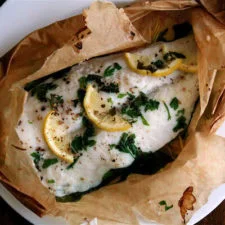
Fish en papillote is white fish steamed in a folded parchment parcel with greens, lemon, olives and wine. It makes a fresh, flavourful meal, and the individual parcels are easy to assemble ahead of time.
Ingredients
- 4 pieces, approximately 45 × 33 cm eachparchment paper
- about 16 leavesSwiss chard or spinach, washed and dried
- 4 fillets, 170 g eachwhite fish such as bronzino or striped bass
- to tastekosher salt and freshly ground black pepper
- 4 tablespoonsshallots, thinly sliced
- 2 tablespoonscapers
- 2 to 3lemons; use 12 thin slices, plus extra for squeezing
- 120 mlNicoise or Kalamata olives, pitted (optional)
- 150 gcherry tomatoes (optional)
- 125 gcourgette, sliced (optional)
- 4 tablespoons (60 ml)olive oil
- 4 tablespoons (60 ml)white wine or Prosecco
- to tastebasil, parsley or tarragon, sliced (optional)
Instructions
- 1
Preheat the oven
Heat the oven to 260°C (500°F).
- 2
Fill the parcels
Lay one piece of parchment on the work surface and fold it in half lengthways to make a crease, then open it out. Arrange about four leaves of Swiss chard or spinach in the centre, just below the crease, and set a fish fillet on top. Season with salt and pepper, then add about 1 tablespoon shallots and 1½ teaspoons capers. Squeeze lemon over the fish and tuck three lemon slices beside it. Scatter olives, tomatoes and courgette around the fish, if using, then pour over 1 tablespoon olive oil and 1 tablespoon white wine.
- 3
Seal the parcels
Fold the top half of the paper over the bottom half. Starting at the centre, make tight folds towards one side, then return to the centre and fold tightly towards the other side.
- 4
Bake the fish
Make the remaining parcels in the same way and arrange them on a baking tray. Bake for 10 minutes. Allow about 10 minutes per 2.5 cm of fish thickness; if the fillets are a little thicker than 2.5 cm, add 1 or 2 minutes.
What is fish en papillote?
En papillote is a French cooking method in which food is enclosed in a paper parcel and baked. The parcel traps steam, gently cooking the fish alongside its vegetables and aromatics.
This version layers white fish with leafy greens, shallots, capers and lemon, with wine and olive oil to make a light cooking liquid. Optional olives and seasonal vegetables add extra savoury or sweet notes.
Nutrition and macros by portion
The nutrition label shows one serving as written: 330 calories, 36g protein, 9g carbs, 18g fat.
| Portion | Adjustment | kcal | Protein | Carbs | Fat |
|---|---|---|---|---|---|
| Lighter | Use less olive oil | 231 kcal | 25g | 6g | 13g |
| This serving | As written | 330 kcal | 36g | 9g | 18g |
| Hungry | Add potatoes or bread | 495 kcal | 54g | 14g | 27g |
The fish supplies most of the protein, while the olive oil and olives contribute much of the fat. The small amount of carbohydrate comes mainly from the vegetables and wine; serve with potatoes or bread if you want a more substantial plate, or add extra greens for a lighter balance.
Choose vegetables that cook quickly
Leafy greens: Swiss chard or spinach make a soft bed for the fish and cook quickly in the parcel.
Seasonal additions: Cherry tomatoes and courgette are suggested options, but slice any vegetables thinly so they soften in the short baking time. If using asparagus, shave it into thin ribbons with a peeler.
Build each parcel evenly
Layering: Keep the greens under the fish, then distribute the shallots, capers and lemon around it. This brings the flavourings into contact with the fish while the parcel steams.
Portions: Divide the ingredients evenly among the four parcels. Add the listed tablespoon of oil and wine to each one so the fish has moisture as it cooks.
Seal the paper tightly
Crease first: Folding the parchment before opening it again gives you a guide for placing the ingredients and bringing the two halves together.
Tight folds: Work outwards from the centre, folding the edge over itself to close the parcel. A snug seal helps keep steam inside during baking.
Check the fish for doneness
Timing: The recipe gives 10 minutes as a guide and estimates about 10 minutes per 2.5 cm of thickness. Add 1 or 2 minutes for fillets just over that thickness.
Texture: Open one parcel carefully, as hot steam will escape. The fish should be opaque and separate into flakes when tested with a fork; return it to the oven briefly if needed.
Assemble shortly before baking
Make-ahead: The parcels can be prepared in advance, but the recipe advises not assembling them more than about 2 hours ahead. Salt and lemon can affect the fish while it sits.
Serving: Bring the unopened parcels to the table and open them carefully, or transfer the fish and vegetables to plates. Rice, potatoes or bread make useful accompaniments for the juices.
Recipe notes & tips
- Dry the washed greens well so excess water does not dilute the parcel juices.
- Slice the vegetables thinly to help them cook through in the short baking time.
- Use fish fillets of similar thickness so the parcels finish cooking together.
- Season each fillet to taste, keeping in mind that capers and olives are already salty.
- Open a parcel away from your face to avoid the burst of hot steam.
Variations
- Change the greens: Use spinach instead of Swiss chard, or the other way round.
- Pick seasonal vegetables: Swap in thinly sliced seasonal produce that cooks quickly.
- Try different herbs: Choose basil, parsley or tarragon for a fresh finishing note.
- Use another white fish: Choose a similar-sized white fish fillet in place of bronzino or striped bass.
- Omit the olives: Leave them out for a milder parcel, as they are optional.
Common mistakes to avoid
- Thick vegetable slices: They may stay firm; cut them thinly, or shave asparagus into ribbons.
- Loose parcel folds: Steam can escape; fold the paper tightly from the centre towards both ends.
- Uneven fillets: Different thicknesses cook at different speeds; choose portions of similar thickness.
- Assembling too early: Salt and lemon can affect the fish as it sits; prepare the parcels no more than about 2 hours ahead.
- Opening carelessly: Hot steam escapes when the paper is opened; keep your face and hands clear.
How to store
Refrigerate leftover fish and vegetables in an airtight container and use within 1–2 days. Reheat gently in a covered ovenproof dish until hot throughout; the fish can dry out if overheated.
Frequently asked questions
Can I assemble the parcels ahead of time?
Yes, but avoid assembling them more than about 2 hours ahead. The salt and lemon can affect the fish while it sits.
How thick should the fish fillets be?
The recipe uses 170 g fillets and estimates about 10 minutes of cooking per 2.5 cm of thickness. Allow an extra 1 or 2 minutes for fillets a little thicker than that.
Can I use frozen fish?
Thaw the fish completely and pat it dry before making the parcels. This helps it cook more evenly and avoids excess liquid.
Can I leave out the optional ingredients?
Yes. The olives, cherry tomatoes, courgette and herbs are optional; the basic parcels still include greens, shallots, capers, lemon, oil and wine.
How do I know when the fish is cooked?
Open a parcel carefully and check that the fish is opaque and flakes with a fork. If it needs more time, reseal it and return it to the oven briefly.
Cook it from the original
This recipe comes from alexandracooks.com. Their page has the author’s own photos, notes and tips — the best place to cook it from.
Open the recipe on alexandracooks.com