
Char Siu Pork
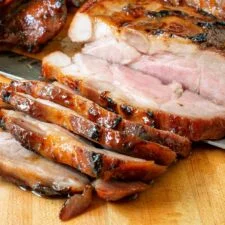
Char siu pork is pork shoulder brined, marinated in a sweet-savoury sauce and roasted until glazed and lightly charred. It takes time to prepare, but the hands-on work is simple and the sliced pork is well suited to serving with rice.
Ingredients
- 1.36–1.81 kg (3–4 lb)boneless pork shoulder (pork butt)
- 946 ml (1 US quart)water
- 79 ml (⅓ cup)kosher salt
- 59 ml (¼ cup)granulated sugar
- 946 ml (1 US quart)ice cubes, to cool and dilute the brine
- 473 ml (2 cups)char siu sauce
- 118 ml (½ cup)honey
Instructions
- 1
Divide the pork
Separate the pork shoulder into three or four pieces, each at least 5 cm (2 inches) thick. Follow the natural fat lines between the muscles; the pieces will be uneven rather than uniform.
- 2
Make the brine
Combine the water, sugar and salt in a pan and bring to the boil, stirring until the sugar and salt dissolve. Add the ice to cool the brine.
- 3
Brine the pork
Put the pork pieces in a large, 3.8-litre (1-gallon) resealable bag with the cooled brine. Refrigerate for 24 hours.
- 4
Marinate the pork
Discard the brine and rinse the pork. Return it to the bag with 237 ml (1 cup) of char siu sauce, then refrigerate for a further 24 hours.
- 5
Prepare the tray
Line a baking tray with foil and set a rack over it. Spray the rack with cooking spray.
- 6
Heat the oven
Preheat the oven to 218°C (425°F).
- 7
Arrange the pork
Lift the pork from the marinade and place it on the prepared rack, fat side up. Discard the marinade.
- 8
Glaze and roast
Mix 118 ml (½ cup) of char siu sauce with the honey. Brush some over the pork and roast for 15 minutes. Turn each piece, brush with more of the sauce mixture and roast for another 15 minutes.
- 9
Start the rice
If serving the pork with rice, start cooking it now.
- 10
Finish roasting
Reduce the oven to 191°C (375°F). Continue brushing and turning the pork every 15 minutes until the internal temperature reaches 57°C (135°F). Check every piece, removing smaller pieces as they reach that temperature and leaving larger ones in the oven until they do.
- 11
Char the fat
Set the oven to grill (broil). Return all the pieces to the rack, brush the pork once more and grill until the fat side is charred, about 5 minutes. Check every minute.
- 12
Rest the pork
Remove the pork from the oven, cover loosely with foil and leave to rest for 10 minutes. The recipe says the carry-over heat will bring it to 63°C (145°F).
- 13
Slice and serve
Transfer the cooked pork to a chopping board and slice across the grain into 6 mm (¼-inch) slices. Serve with rice.
What is char siu pork?
Char siu is a Cantonese-style roast pork, known for its sweet, savoury glaze and browned edges. This version uses pork shoulder, first soaked in a salt-and-sugar brine and then marinated in char siu sauce.
Shoulder has distinct muscles and natural seams of fat, so the pieces do not need to be perfectly even. Roasting them on a rack and glazing as they cook helps the outside caramelise while the meat cooks through.
Nutrition and macros by portion
The nutrition label shows one serving as written: 289 calories, 35g protein, 21g carbs, 7g fat.
| Portion | Adjustment | kcal | Protein | Carbs | Fat |
|---|---|---|---|---|---|
| Lighter | More vegetables, less rice | 202 kcal | 25g | 15g | 5g |
| This serving | As written | 289 kcal | 35g | 21g | 7g |
| Hungry | Larger pork portion | 434 kcal | 53g | 32g | 10g |
The pork provides most of the protein, while the sugar, honey and sauce contribute much of the carbohydrate. The shoulder and the sauce also supply fat, though the stated serving has less fat than many richer pork roasts. Serve it with rice and a generous portion of vegetables to make a balanced plate.
Why brine and marinate separately?
Brine first: salt and sugar dissolve in the water to season the pork. Cool the brine with ice before adding the meat, and refrigerate it for the full 24 hours.
Marinate next: rinse away the brine, then give the pork another 24 hours with char siu sauce. Keeping these stages separate lets the sauce coat the meat without mixing into the discarded brine.
Cut along the natural seams
Natural seams: separate the shoulder where the muscles meet rather than trying to make identical portions. Keep each piece at least 5 cm thick so it can roast without drying too quickly.
Uneven pieces: different sizes will cook at different rates. Check every piece separately and take smaller ones out when they reach the recipe’s target temperature.
Glaze without burning
Brush in stages: the sauce-and-honey mixture goes on before the first roast, after turning, and during the later roasting rounds. This builds up the coating gradually.
Watch the grill: honey and sauce can darken quickly under high heat. Check the pork every minute during the final charring, and stop once the fat side is charred.
Check doneness carefully
Use a thermometer: check the centre of each piece rather than relying on colour or timing alone. The recipe calls for removing pieces as they reach 57°C (135°F), then resting them for 10 minutes.
Rest before slicing: a loose foil cover gives the meat time to settle after roasting. Slice across the grain into thin pieces for a more tender bite.
Plan the long timing
Allow two days for the brining and marinating stages: each takes 24 hours in the fridge. The roasting and resting happen after that, so this is best prepared ahead rather than started just before dinner.
Rice timing: start cooking it when the pork has completed its first two 15-minute roasting periods, as directed. That gives you a chance to serve both while warm.
Serving ideas
Rice: plain rice is the suggested accompaniment and soaks up the glossy sauce. Slice the pork just before serving and arrange it over or alongside the rice.
For a fuller plate, add a simple vegetable side such as steamed greens or stir-fried vegetables. Keep their seasoning modest so it does not compete with the pork’s sweet-savoury glaze.
Recipe notes & tips
- Cool the brine fully with the ice before putting the pork in it.
- Use a large resealable bag and make sure the pork is surrounded by the brine and marinade.
- Keep the pieces at least 5 cm thick when separating the shoulder.
- Check the temperature of every piece because uneven sizes will finish at different times.
- Stay close during grilling and check the pork every minute to prevent the glaze from burning.
- Slice across the grain for more tender pieces.
Variations
- Rice bowl: serve the sliced pork over rice with steamed greens.
- Noodle plate: serve the pork with cooked noodles and vegetables.
- Extra heat: add a little chilli to the sauce-and-honey mixture before brushing.
- Fresh finish: add sliced spring onions at the table for a fresh contrast.
- Vegetable side: pair the pork with stir-fried vegetables for a more substantial meal.
Common mistakes to avoid
- Adding pork to hot brine: cool it with the ice first so the meat does not go into a hot liquid.
- Skipping the rinse: discard the brine and rinse the pork before adding the char siu sauce.
- Making the pieces too thin: keep them at least 5 cm thick to match the recipe’s roasting approach.
- Cooking every piece for the same time: check each one and remove smaller pieces as they reach the target temperature.
- Leaving the pork unattended under the grill: check every minute because the sweet glaze can char quickly.
- Slicing with the grain: cut across the grain into thin slices for a more tender texture.
How to store
Refrigerate leftover pork in an airtight container within 2 hours of cooking and use within 3–4 days. Reheat until steaming hot throughout, using the oven or a covered pan with a splash of water to help keep the meat moist.
Frequently asked questions
Can I prepare the pork ahead?
Yes. The recipe already includes 24 hours of brining followed by 24 hours of marinating, so plan those stages in advance and keep the pork refrigerated.
Can I use another cut of pork?
The recipe is written for boneless pork shoulder, also called pork butt. Other cuts may cook at a different rate, so check their internal temperature rather than relying on the timing here.
Why are my pork pieces different sizes?
The shoulder is separated along its natural muscle and fat seams, which produces uneven pieces. Check each piece individually and remove smaller ones first when they reach the recipe’s target.
Do I need to turn the pork while it roasts?
Yes. Turn and brush the pieces every 15 minutes during the lower-temperature roasting stage, as well as once after the first 15 minutes.
What should I serve with char siu pork?
Rice is the suggested accompaniment. Vegetables, such as steamed greens or a simple stir-fry, also work well alongside it.
Can I skip the final grilling?
The final grill is what chars the fat side, so skipping it will change the finish. If you use it, watch closely and check every minute.
Cook it from the original
This recipe comes from afamilyfeast.com. Their page has the author’s own photos, notes and tips — the best place to cook it from.
Open the recipe on afamilyfeast.com