
BHARLI VANGI | STUFFED BRINJAL MAHARASHTRIAN STYLE
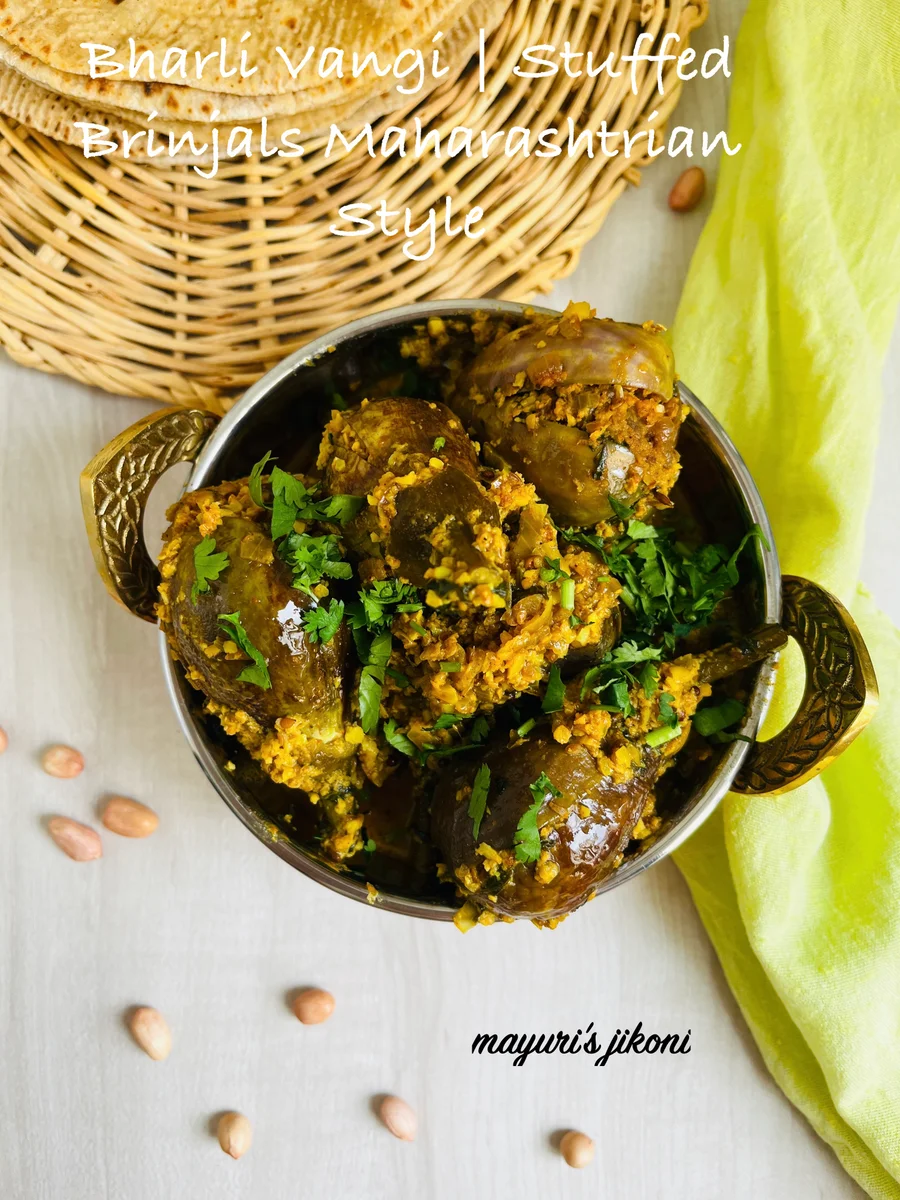
Bharli vangi is a Maharashtrian curry of baby brinjals filled with a fragrant mixture of peanuts, coconut, sesame and spices. This dryish version cooks the stuffed brinjals gently until tender, making it a hearty match for flatbreads or rice.
Ingredients
- 8–9baby brinjals
- 2 tbspoil
- ¼ tspfenugreek seeds
- ½ tspmustard seeds
- 1 tspcumin seeds
- ½ tspturmeric powder
- 240–360 ml (1–1½ cups)water
- 2 tbspfresh coriander, chopped
- 1–2 tbspoil
- 150 g (1 cup)onion, finely chopped
- 1 tbspgarlic, minced
- 40 g (½ cup)fresh coconut, grated
- 35 g (¼ cup)peanuts
- 2 tbspsesame seeds
- 1 tbspjaggery powder
- 1 tbspGoda masala
- 1 tspred chilli powder
- ½ tspturmeric powder
- 2 tbsptamarind paste
- 1 tspsalt
- 15 g (¼ cup)fresh coriander, finely chopped
Instructions
- 1
Prepare the brinjals
Wash the brinjals. Mix 1 tsp salt into a bowl of water. Trim each stem halfway down, keeping the green calyx attached, then peel away the calyx. Cut a cross into the base of each brinjal, stopping about three-quarters of the way up and leaving the stem end intact. Soak in the salted water for 15 minutes; this helps the cuts open without splitting the brinjals.
- 2
Toast the seeds
Set a wide pan over low heat. Toast the sesame seeds, stirring constantly, until golden and beginning to pop, taking care not to burn them. Tip them onto a plate to cool. Toast the peanuts in the same pan until their skins begin to split and they look lightly browned, then transfer them to a plate to cool.
- 3
Make the stuffing
Heat 1–2 tbsp oil in the pan over medium heat. Stir-fry the chopped onion until soft, without letting it overcook, then leave it to cool slightly in the pan. Grind the peanuts to a coarse powder and place them in a mixing bowl. Process the coconut to a finer texture and add it to the bowl. Add the sesame seeds, cooked onion, garlic, jaggery, Goda masala, chilli powder, turmeric, salt, tamarind paste and chopped fresh coriander; mix well.
- 4
Fill the brinjals
Lift the brinjals out of the water and pat them dry with a kitchen towel. Check the cuts for any worms and discard any affected brinjal. Fill each set of slits with some stuffing, pressing it in gently, and repeat with the remaining brinjals.
- 5
Cook the curry
Heat 2 tbsp oil in the wide pan over medium heat. Add the fenugreek seeds and, as they turn dark brown, add the mustard and cumin seeds. When the mustard seeds start to splutter, add the asafoetida and turmeric powder. Immediately arrange the stuffed brinjals in one layer and pour in the water. Scatter any remaining stuffing over the top, cover, and reduce the heat. Cook for 5–7 minutes, turn the brinjals gently, then cover and cook for another 5–7 minutes.
- 6
Finish and serve
Uncover and test a brinjal with a knife; it should be getting soft. Simmer uncovered for 5 minutes, adding more water if you want extra gravy. Garnish with chopped fresh coriander and serve with roti, paratha, naan, bhakri or rice.
What is bharli vangi?
Bharli vangi is a Maharashtrian dish whose name means stuffed brinjals. Small aubergines are slit and filled with a spiced mixture before being cooked in a pan.
This version uses peanuts, coconut and sesame for a rich, textured filling, with Goda masala and tamarind bringing warmth and tang. It is cooked fairly dry, though the cooking liquid can be increased for more gravy.
Nutrition and macros by portion
The nutrition label shows one serving as written: 350 calories, 9g protein, 36g carbs, 22g fat.
| Portion | Adjustment | kcal | Protein | Carbs | Fat |
|---|---|---|---|---|---|
| Lighter | Use less oil and coconut | 245 kcal | 6g | 25g | 15g |
| This serving | As written | 350 kcal | 9g | 36g | 22g |
| Hungry | Serve with extra rice | 525 kcal | 14g | 54g | 33g |
The brinjals and jaggery contribute most of the carbohydrates, while the peanuts, sesame, coconut and cooking oil provide much of the fat. Peanuts also supply some protein, though this is not a high-protein main on its own; serve it with a protein-rich side such as dal or yoghurt and add vegetables if desired.
Choosing and preparing the brinjals
Baby brinjals: Choose small, firm ones that are similar in size so they cook at roughly the same pace. Leave the stem end intact to hold each brinjal together while you slit and stuff it.
Cross-cutting: Make the cuts from the base and stop well before the stem. The short soak in salted water makes the cuts easier to open and gives you a chance to inspect inside.
Building the stuffing
Toasting: Toast the sesame and peanuts separately over low heat, stirring the sesame constantly. Take them off the heat as soon as they are golden or the peanut skins begin to split; they can turn bitter if scorched.
Texture: Grind the peanuts coarsely, while processing the coconut more finely. This gives the filling body without making it uniformly pasty.
Filling without splitting
Dry brinjals: Pat them dry after soaking so they are easier to handle and the filling stays in place.
Gentle pressure: Ease open the slits and press the stuffing into them without forcing the brinjal apart. Keep any extra stuffing to scatter into the pan.
Cooking gently
Whole spices: Let the fenugreek darken before adding the mustard and cumin, then move quickly to the next ingredients once the mustard starts to splutter. Have the brinjals ready to add straight away.
Even cooking: Arrange the brinjals in a single layer and keep the pan covered for the two cooking intervals. Turn them gently halfway through so they soften without losing their shape.
Checking the finish
Tenderness: After the covered cooking, a knife should pass into a brinjal with little resistance. If it still feels firm, give it a little more covered cooking time before reducing the liquid.
Consistency: The final uncovered simmer thickens the cooking juices around the stuffing. Add water at this stage if you prefer a looser curry.
What to serve with it
Flatbreads: Roti, paratha, naan or bhakri all work well for scooping up the spiced stuffing and any sauce.
Rice: Serve with plain rice for a simple meal. A cooling yoghurt accompaniment or a crisp salad can balance the dish's warm, nutty flavours.
Recipe notes & tips
- Choose brinjals of similar size so they soften at about the same time.
- Keep the sesame seeds moving in the pan to prevent them catching.
- Let the toasted peanuts cool before grinding for a more even texture.
- Set the stuffed brinjals in the pan with the slits facing upwards where possible.
- Turn the brinjals carefully with a spoon so the filling stays inside.
- Add water gradually during the final simmer to control how much gravy you make.
Variations
- More gravy: Add extra water during the final simmer and adjust the seasoning to taste.
- Milder filling: Reduce the red chilli powder for a gentler heat.
- Extra tang: Add a little more tamarind paste to the stuffing.
- Flatbread pairing: Serve with bhakri for a traditional-style meal.
- Rice pairing: Spoon the curry over plain rice to catch the cooking juices.
Common mistakes to avoid
- Cutting through the stem end: Leave the top intact so the brinjal holds together when stuffed.
- Burning the sesame: Toast over low heat and stir constantly, removing the seeds as soon as they turn golden.
- Over-grinding the peanuts: Stop at a coarse powder so the stuffing keeps some texture.
- Packing the filling too forcefully: Press it gently into the slits to avoid splitting the brinjals.
- Crowding the pan: Arrange the brinjals in one layer so they cook evenly.
- Skipping the doneness check: Test with a knife before the final simmer and cook longer if the centre is still firm.
How to store
Cool leftovers and refrigerate in a covered container for up to 3 days. Reheat gently in a covered pan over low heat, adding a splash of water if the curry has thickened; stir carefully to keep the brinjals intact.
Frequently asked questions
Can I use larger aubergines?
Baby brinjals are easiest to stuff and cook whole. Larger ones can be cut into smaller pieces, but they will not hold the filling in the same way and may need a different cooking time.
How do I know when the brinjals are cooked?
Push a knife into one after the covered cooking time. It should slide in with little resistance; if it does not, cover the pan and cook for a little longer.
Can I make the curry with more gravy?
Yes. Add more water during the final uncovered simmer until the consistency suits you, then let it heat through.
What can I use instead of Goda masala?
Goda masala gives the dish its distinctive Maharashtrian seasoning. If you cannot find it, use another warm spice blend, knowing the flavour will differ.
What should I serve with bharli vangi?
Roti, paratha, naan, bhakri and rice are all suitable. Dal or yoghurt can make the meal more substantial.
Can I prepare the stuffing ahead?
Yes. Make the stuffing in advance and keep it covered in the refrigerator, then fill the brinjals shortly before cooking.
Cook it from the original
This recipe comes from mayuris-jikoni.com. Their page has the author’s own photos, notes and tips — the best place to cook it from.
Open the recipe on mayuris-jikoni.com