
VASTAD ROTI
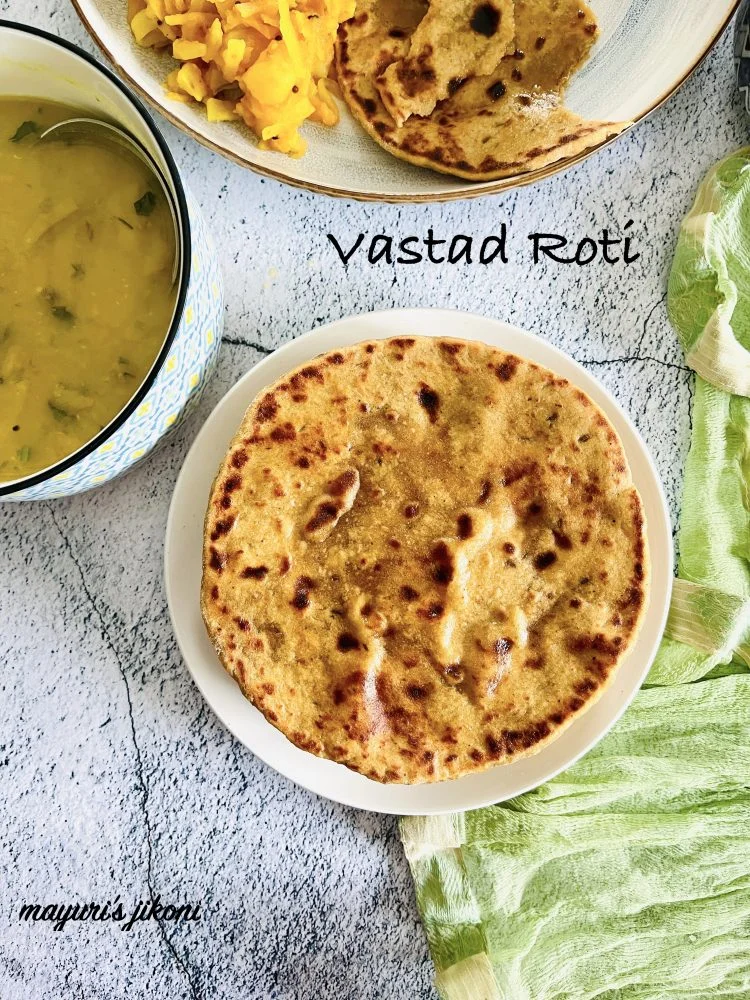
Vastad roti is a soft, fermented Mangalorean-Konkani flatbread made with wheat, ripe banana, yoghurt and warming spices. Serve it with curry or dalithoy, or enjoy it with tea or coffee for breakfast.
Ingredients
- 250 g (2 cups)wheat flour
- 225 g (1 cup), mashedoverripe banana
- 80–120 ml (⅓–½ cup)thick plain yoghurt
- ½ tspbicarbonate of soda
- ¼ tspsalt
- 1 tspcumin seeds
- 1 tspcoarsely ground black pepper
- 1–2 tbspsugar
- 1 tbspoil
- as neededextra flour, for dusting
- as neededghee, for brushing
Instructions
- 1
Mix dry ingredients
Combine the flour, salt, sugar, coarsely ground pepper, cumin seeds and bicarbonate of soda.
- 2
Rub in oil
Add the oil and rub it into the flour mixture.
- 3
Add banana
Mix in the mashed banana.
- 4
Add yoghurt
Stir in ½ cup yoghurt first, then add more a little at a time as needed.
- 5
Knead the dough
Knead until smooth, then shape the dough into a ball.
- 6
Ferment the dough
Rub the dough with ghee or oil, cover it and leave it to ferment for 6–8 hours.
- 7
Ferment overnight
For a longer fermentation, leave the covered dough overnight.
- 8
Heat the pan
Set a tawa or frying pan over medium heat.
- 9
Divide the dough
Divide the dough into 8 equal portions.
- 10
Shape each portion
Roll each portion into a ball and coat it in flour.
- 11
Roll out a roti
Take one portion and roll it into a circle 5–6 inches in diameter, dusting with flour whenever needed.
- 12
Cook the first side
Place the rolled roti on the hot tawa or frying pan and cook for 2–3 minutes.
- 13
Cook the second side
Flip the roti and cook the other side for 2–3 minutes.
- 14
Press the edges
Gently press the edges with a spatula until brown specks appear and the underside is cooked.
- 15
Finish cooking
Flip the roti and gently press it with the spatula until cooked through.
- 16
Transfer to plate
Move the cooked roti to a serving plate.
- 17
Brush with ghee
Brush the roti with ghee.
- 18
Cook remaining rotis
Repeat the shaping and cooking steps with the remaining dough.
- 19
Serve with curry
Serve the vastad roti with your favourite curry or dalithoy.
- 20
Serve for breakfast
It can also be served for breakfast with filter coffee or masala tea.
What is vastad roti?
Vastad roti is a fermented flatbread associated with Mangalorean-Konkani cooking. Its dough combines wheat flour with ripe banana, yoghurt and spices, then rests before being cooked on a hot griddle.
Ripe banana brings sweetness and softness, while cumin and black pepper give the bread a savoury, gently spiced character. This version is made in small rounds that cook quickly and are finished with ghee.
Nutrition and macros by portion
The nutrition label shows one serving as written: 175 calories, 5g protein, 34g carbs, 3g fat.
| Portion | Adjustment | kcal | Protein | Carbs | Fat |
|---|---|---|---|---|---|
| Lighter | Use less ghee | 122 kcal | 3g | 24g | 2g |
| This serving | As written | 175 kcal | 5g | 34g | 3g |
| Hungry | Serve an extra roti | 263 kcal | 7g | 51g | 5g |
Wheat flour supplies most of the carbohydrate, while banana and sugar add more; the flour, yoghurt and banana also contribute some protein. Oil and the ghee brushed on top account for much of the fat, so serve a roti with a generous portion of dal or curry and vegetables for a more balanced plate.
The dough ingredients
Ripe banana: mash it thoroughly so it blends evenly into the flour and leaves fewer lumps in the dough.
Thick yoghurt: add it gradually because the banana also contributes moisture; the dough should become smooth without turning overly sticky.
Spices: cumin seeds and coarsely ground black pepper provide the main savoury notes. Sugar balances them and can be adjusted within the recipe’s 1–2 tablespoon range.
Fermentation and timing
Resting: cover the dough after rubbing its surface with ghee or oil, then leave it to ferment for 6–8 hours. An overnight rest is also suggested in the method.
Planning: the stated total time of 25 minutes does not include the 6–8-hour fermentation, so allow for that resting period before you plan to cook and serve the rotis.
Rolling without sticking
Portions: divide the dough into 8 equal pieces so the rotis cook at a similar rate. Roll each piece into a ball and dust it with flour before shaping.
Thickness: roll each round to 5–6 inches across, using extra flour as needed to stop it sticking. Brush away excess flour before putting the roti on the pan so it does not scorch.
Cooking on the tawa
Heat: use a tawa or frying pan over medium heat. A pan that is too cool can leave the roti pale, while excessive heat may brown the outside before the centre cooks.
Doneness: cook each side for 2–3 minutes, then gently press the edges and surface with a spatula. Brown specks and a cooked underside are the cues given in the method.
How to serve it
With a meal: serve the roti alongside your favourite curry or dalithoy, a Konkani-style lentil dish. Its mild sweetness works well with savoury accompaniments.
For breakfast: it can also be served with filter coffee or masala tea. Brush with ghee while warm, just before serving.
Recipe notes & tips
- Use a very ripe banana so it mashes easily and mixes smoothly into the dough.
- Add the yoghurt gradually, stopping once the dough comes together smoothly.
- Cover the dough well during its 6–8-hour fermentation.
- Dust the work surface and dough lightly rather than adding large amounts of flour while rolling.
- Keep the tawa at medium heat and adjust it if the rotis brown too quickly.
- Brush each roti with ghee while it is warm so the ghee spreads easily.
Variations
- Adjust the sweetness: use 1 tablespoon sugar for a subtler sweet note or 2 tablespoons for more.
- Change the spice: reduce the black pepper for a milder roti.
- Add a curry pairing: serve the rotis with dalithoy for a traditional-style meal.
- Make it a breakfast: pair a warm roti with filter coffee or masala tea.
- Choose the finish: use oil instead of ghee to coat the dough before fermentation.
Common mistakes to avoid
- Adding all the yoghurt at once: the banana already adds moisture, so pour it in gradually and stop when the dough is smooth.
- Skipping the rest: the recipe relies on 6–8 hours of fermentation, so allow enough time before cooking.
- Using too much dusting flour: excess flour can scorch on the tawa, so use only what is needed to roll the dough.
- Cooking over high heat: the outside can brown before the roti is cooked through, so keep the pan at medium heat.
- Pressing too firmly: use gentle pressure with the spatula to cook the edges without crushing the roti.
How to store
Keep cooled rotis in an airtight container in the fridge for up to 3 days. Reheat them briefly in a dry frying pan over medium-low heat, turning once, and brush with a little ghee if desired.
Frequently asked questions
How long does the dough need to ferment?
Leave it covered for 6–8 hours. The method also suggests leaving it overnight.
Why is the yoghurt added gradually?
The mashed banana adds moisture too, so the dough may need less yoghurt than the full amount. Add it a little at a time until the dough is smooth.
How large should each roti be?
Divide the dough into 8 equal portions and roll each into a circle 5–6 inches in diameter.
How can I tell when a roti is cooked?
Look for brown specks and a cooked underside, and gently press the surface and edges with a spatula to finish cooking it through.
What should I serve with vastad roti?
Serve it with curry or dalithoy, or enjoy it for breakfast with filter coffee or masala tea.
Can I use oil instead of ghee?
Yes. The method allows oil to be used on the dough before fermentation; ghee is used to brush the cooked roti.
Cook it from the original
This recipe comes from mayuris-jikoni.com. Their page has the author’s own photos, notes and tips — the best place to cook it from.
Open the recipe on mayuris-jikoni.com