
FARALI DHOKLA
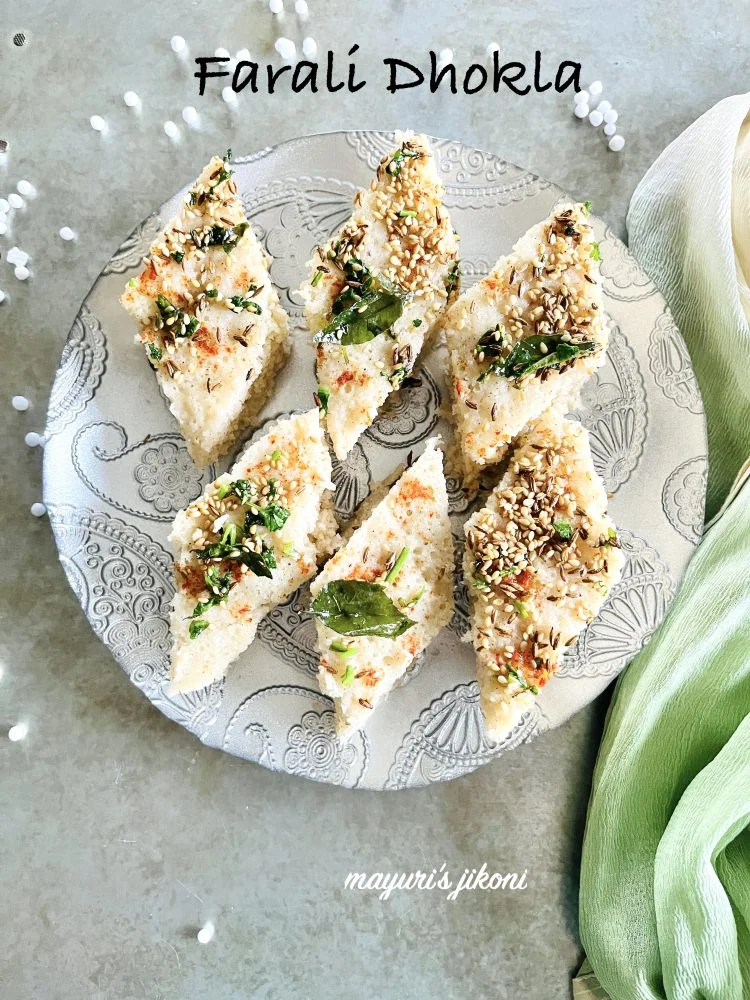
Farali dhokla is a Gujarati steamed snack made with samo (barnyard millet) and sabudana, seasoned with yoghurt, chilli and ginger. It is a useful fasting-day dish, and steaming gives the grain-based batter a soft, light texture.
Ingredients
- 180 g (1 cup)samo
- 40 g (¼ cup)sabudana
- 120 g (½ cup)thick plain yoghurt
- 60 ml (¼ cup)water
- 5 ml (1 tsp)green chilli paste
- 5 ml (1 tsp)ginger paste
- 15 ml (1 tbsp)oil
- 4 g (1 tsp)sugar
- 15 ml (1 tbsp)lemon juice
- ¾–1 tsprock salt
- 5 g (1 tsp)Eno or baking soda
- 1 g (¼ tsp)red chilli powder or coarsely ground black pepper
- 30 ml (2 tbsp)oil
- 5 ml (1 tsp)cumin seeds
- 9 g (1 tbsp)sesame seeds
- 1green chilli, sliced
- 1 sprigcurry leaves
- 8 g (2 tbsp)fresh coriander, chopped
Instructions
- 1
Soak the grains
Wash the samo and sabudana, then soak them separately in plenty of water for 4–6 hours.
- 2
Blend the batter
Drain both ingredients in a colander or large strainer. Process the samo, sabudana and yoghurt until smooth; a slightly coarse texture is fine. Transfer to a mixing bowl and stir in the green chilli paste, ginger paste, salt, sugar, lemon juice and 15 ml (1 tbsp) oil. Add the water gradually, using up to 60 ml (¼ cup), until the batter is thick but pourable.
- 3
Set up steamer
Prepare a steamer, or use a pan fitted with a steamer basket and lid. Pour water into the bottom pan, making sure it will not touch the basket or plate, and bring it to the boil. Lightly grease an 20–23 cm (8–9 inch) steel plate, place it on the steamer basket and let it heat as the water comes to the boil.
- 4
Steam the dhokla
Once the water is boiling, add the Eno or baking soda to the batter and whisk briefly; do not overmix. Pour the batter into the hot plate and sprinkle the red chilli powder or coarsely ground black pepper over the top. Cover and steam for 10 minutes. Check the centre with a toothpick or fork; it is ready when the tester comes out clean. Remove the plate from the steamer.
- 5
Make the tempering
Heat 30 ml (2 tbsp) oil in a small pan over medium heat. When hot, add the cumin and sesame seeds, followed by the sliced green chilli and curry leaves. Stir-fry for 30 seconds, add the chopped coriander and stir-fry for a further 30 seconds. Spread the tempering over the dhokla. Let it cool before cutting into squares or diamonds, then serve with Farali Green Chutney or Peanut Chutney.
What is farali dhokla?
Dhokla is a Gujarati steamed savoury snack, and farali versions are adapted for fasting days using ingredients permitted for the fast. This recipe uses samo, also known as barnyard millet, and sabudana rather than the fermented gram-flour batter used for some other dhokla styles.
Yoghurt and lemon add tang, while the final tempering brings fragrance and a little crunch. The batter is steamed in a plate, so it can be cut into neat pieces for sharing.
Nutrition and macros by portion
The nutrition label shows one serving as written: 312 calories, 6g protein, 50g carbs, 11g fat.
| Portion | Adjustment | kcal | Protein | Carbs | Fat |
|---|---|---|---|---|---|
| Lighter | Use less tempering oil | 218 kcal | 4g | 35g | 8g |
| This serving | As written | 312 kcal | 6g | 50g | 11g |
| Hungry | Serve a larger portion | 468 kcal | 9g | 75g | 17g |
Most of the carbohydrates come from the samo, sabudana and small amount of sugar; the oils and sesame contribute most of the fat, while yoghurt and the grains provide some protein. Serve a piece with a generous portion of vegetables or salad where suitable for your fast to make the plate more balanced.
Soaking and blending the grains
Separate soaking: Soak the samo and sabudana separately for 4–6 hours, as directed. Drain them well before blending so excess soaking water does not loosen the batter.
Batter texture: Blend with the yoghurt until mostly smooth. A little graininess is acceptable, but the finished mixture should still be thick and pourable.
Getting the batter ready to steam
Liquid: Add the measured water gradually, stopping when the batter pours in a steady, thick stream. The full 60 ml (¼ cup) may be needed, depending on how thoroughly the grains were drained.
Raising agent: Stir in the Eno or baking soda only when the steamer water is boiling and the plate is hot. A short, gentle whisk helps preserve the airiness before the batter goes straight into the steamer.
Steaming and checking for doneness
Steamer setup: Keep the water below the steamer basket or plate so it steams the dhokla rather than wetting it. Heating the greased plate in the steamer helps the batter begin cooking as soon as it is poured in.
Doneness cue: Steam covered for 10 minutes, then test the centre with a toothpick or fork. If it comes out clean, remove the dhokla; if batter clings to it, continue steaming and check again.
Why the tempering matters
Seed tempering: Cumin and sesame are added to hot oil first, then the sliced chilli and curry leaves. This brief frying gives the oil a savoury, aromatic flavour without needing a long cook.
Fresh finish: Coriander goes in for the final 30 seconds, then the tempering is spread across the steamed surface. Let the dhokla cool before cutting so the pieces are easier to lift.
Serving and timing
Allow the dhokla to cool before slicing it into squares or diamonds. Serve it with Farali Green Chutney or Peanut Chutney, as suggested in the recipe.
The 4–6 hour soak is the main time commitment, so plan it ahead; steaming takes 10 minutes once the batter and steamer are ready. Keep the plate covered during steaming to maintain a steady cooking environment.
Recipe notes & tips
- Soak the samo and sabudana separately for the full 4–6 hours.
- Drain the grains thoroughly before blending to avoid a loose batter.
- Heat the greased steel plate in the steamer while the water comes to the boil.
- Add the raising agent only just before steaming and whisk it in briefly.
- Keep the steamer water below the basket or plate.
- Let the dhokla cool before cutting for cleaner pieces.
Variations
- Pepper topping: Use coarsely ground black pepper instead of red chilli powder.
- Milder batter: Reduce the green chilli paste for a gentler heat.
- Tangier finish: Serve with extra lemon alongside the dhokla.
- Chutney pairing: Choose Farali Green Chutney or Peanut Chutney to accompany the pieces.
- Seed tempering: Keep the cumin and sesame, but adjust the green chilli to suit your preference.
Common mistakes to avoid
- Skipping the soak: The grains may not blend smoothly; allow the full 4–6 hours.
- Leaving excess water: The batter can become too thin; drain the grains well before processing.
- Adding the raising agent early: It may lose its lift while waiting; add it when the steamer is ready.
- Overmixing after adding Eno: Too much whisking can reduce fluffiness; mix only briefly.
- Water touching the plate: The dhokla can become wet; keep the water level below the steamer basket.
- Cutting while hot: The pieces may break apart; let the dhokla cool first.
How to store
Refrigerate leftover dhokla in an airtight container and use within 2–3 days. Reheat gently in a steamer or microwave until warmed through; it may be firmer after chilling.
Frequently asked questions
Can I soak the samo and sabudana overnight?
The recipe specifies 4–6 hours. If soaking overnight, keep them covered in the refrigerator and drain thoroughly before blending.
How thick should the batter be?
It should be thick but pourable. Add the water gradually, up to 60 ml (¼ cup), until it reaches that consistency.
Can I use Eno or baking soda?
The recipe gives either as an option. Add the chosen raising agent just before steaming and whisk it in briefly.
How do I know when the dhokla is cooked?
After steaming for 10 minutes, insert a toothpick or fork in the middle. It is done when the tester comes out clean.
Why did my dhokla turn out dense?
Overmixing after adding the raising agent can reduce its fluffiness. Briefly whisk the batter, then pour it into the hot plate and steam promptly.
What can I serve with farali dhokla?
The recipe suggests Farali Green Chutney or Peanut Chutney. Cut the dhokla into squares or diamonds once it has cooled.
Cook it from the original
This recipe comes from mayuris-jikoni.com. Their page has the author’s own photos, notes and tips — the best place to cook it from.
Open the recipe on mayuris-jikoni.com