
Pear caramel babka
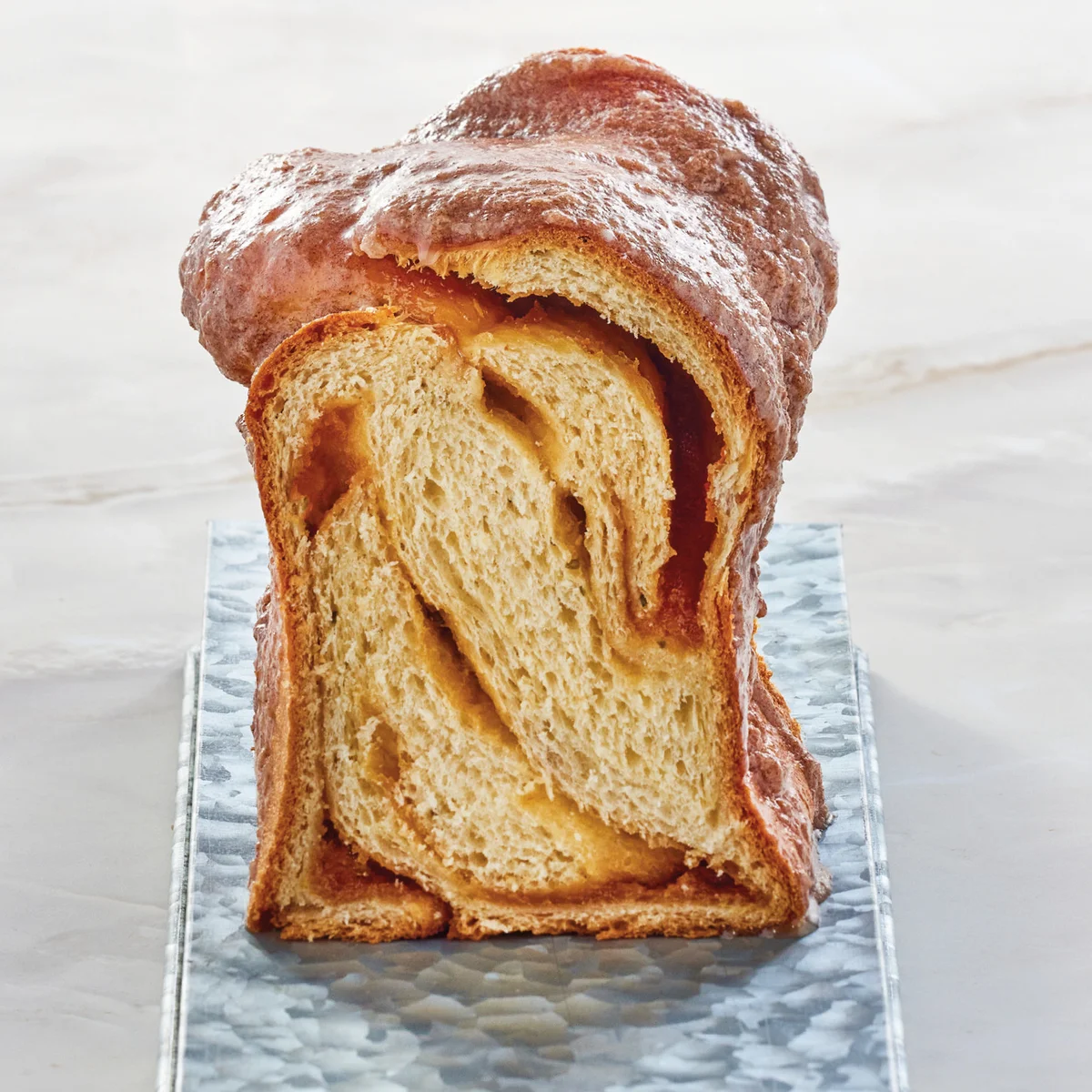
Pear caramel babka is a Polish-origin enriched bread filled with pear caramel, twisted into a braid and finished with a pear-and-cinnamon glaze. It takes time to rise and chill, but makes three generously flavoured loaves for sharing.
Ingredients
- 150 mlmilk
- 5 ganise seeds
- 150 gegg
- 9 gsalt
- 9 gbaking powder
- 500 ghigh-protein wheat flour
- 90 gsugar
- 175 gbutter, cubed and at room temperature
- 200 gsugar
- 30 gbutter
- 350 gpear purée
- 180 gicing sugar
- 5 gground cinnamon
- 1 pinchsalt
- 45 gpear purée
- 85 gmelted butter
- as neededwater
- as neededwheat flour, for dusting
Instructions
- 1
Infuse the milk
Warm the milk in a saucepan over a medium heat until it begins to boil. Take it off the heat, add the anise seeds and leave to infuse until cool, keeping the seeds in the milk.
- 2
Mix the liquids
Put half of the infused milk in a mixer bowl with the egg, salt and baking powder. Mix with the dough hook for 2 minutes.
- 3
Add the flour
Add the high-protein wheat flour and mix on low speed for 10 minutes, occasionally scraping down the sides and base of the bowl. Check the dough: if it looks too dry, add a little more milk. Increase the mixer to medium speed and mix until the dough is semi-elastic.
- 4
Work in butter
Gradually add the butter cubes and mix on medium-high speed for about 15 minutes, until fully incorporated and the dough is smooth and elastic.
- 5
Chill the dough
Lightly grease a bowl and place the dough inside. Cover with cling film and leave to ferment in the fridge for 4 hours, or until doubled in volume.
- 6
Make the caramel
Put the sugar in a saucepan over a medium heat, stirring occasionally, until it becomes a light caramel. Remove from the heat and gradually whisk in the butter and pear purée, mixing vigorously to prevent the caramel from crystallising, until smooth.
- 7
Cook the sauce
Return the sauce to a saucepan over a medium heat for 10 minutes, or until it reaches 108 °C. Remove it from the heat.
- 8
Cool the sauce
Transfer the sauce to a container, cover with cling film and leave it to cool until lukewarm. Refrigerate until completely cold.
- 9
Mix the glaze
In a bowl, whisk together the icing sugar, cinnamon, salt and pear purée. Whisk in the melted butter until smooth and lump-free. If needed, add a little water and mix to a slightly thick consistency.
- 10
Roll the dough
Dust the work surface with flour and roll out the dough into a 50 x 60 cm rectangle, 5 mm thick. Transfer it to a floured tray, cover with cling film and chill for 1 hour.
- 11
Spread the filling
Place the rectangle on the floured work surface with its shorter side facing you. Spread the pear sauce evenly over the surface, then cut the rectangle in half lengthways.
- 12
Shape the rolls
Starting from a long edge, roll one half up as tightly as possible, gently stretching the dough as you go to create as many turns as you can. Repeat with the other half.
- 13
Braid and prove
Lay the two rolls parallel to each other and twist them together, gently pressing them to make a two-strand braid. Cut the braid into 3 equal pieces and place each in a greased loaf tin. Cover with cling film and leave at room temperature for 1 1/2 hours, or until doubled in volume.
- 14
Bake the babka
Preheat the oven to 160 °C and bake the babkas for 30 minutes, or until golden. Remove them from the oven, leave them to cool completely and turn them out. Set them on a wire rack and cover with the pear-and-cinnamon glaze.
What is pear caramel babka?
Babka is a rich, yeasted bread associated with Poland and other parts of Central and Eastern Europe, often shaped with a twisted or braided filling. This version layers pear caramel through the dough and adds a spiced pear glaze.
Anise-infused milk gives the dough a gentle aromatic note, while the paired chilling and proving stages help make the enriched dough easier to handle and shape.
Nutrition and macros by portion
The nutrition label shows one serving as written: 2100 calories, 28g protein, 300g carbs, 100g fat.
| Portion | Adjustment | kcal | Protein | Carbs | Fat |
|---|---|---|---|---|---|
| Lighter | Use less glaze | 1470 kcal | 20g | 210g | 70g |
| This serving | As written | 2100 kcal | 28g | 300g | 100g |
| Hungry | Serve a larger slice | 3150 kcal | 42g | 450g | 150g |
Most of the carbohydrates come from the flour and sugars, while butter supplies most of the fat and the flour and eggs contribute protein. Pair a slice with plain yoghurt or fresh fruit for a more balanced plate.
Building the dough
Infused milk: leave the anise seeds in as the milk cools, as the method specifies. Only half of the milk is used at first; keep the remainder available to adjust a dough that seems too dry.
High-protein flour: the recipe uses it for a dough that can be kneaded and stretched into thin, defined rolls. Add the butter gradually after the dough has begun to develop.
Getting the caramel right
Light caramel: heat the sugar until it takes on a pale caramel colour, then remove the pan from the heat before adding the butter and pear purée. Whisk vigorously as you add them to help bring the mixture together.
Temperature cue: the sauce is cooked for 10 minutes, or until it reaches 108 °C. Chill it completely before spreading so it is easier to handle.
Rolling and braiding
Even rectangle: roll the dough to 50 x 60 cm and about 5 mm thick, then chill it for an hour as directed. A cool sheet is easier to work with when spreading the filling and rolling it up.
Tight rolls: roll each half from a long edge, keeping the coil snug and stretching the dough slightly as you go. Braid the rolls together gently so the strands stay distinct.
Proving and baking
Final rise: allow the shaped pieces to prove at room temperature for 1 1/2 hours, or until doubled in volume. The dough's growth is a more useful cue than the clock alone.
Golden finish: bake at 160 °C for 30 minutes, checking for a golden surface. Let the loaves cool completely before turning them out and glazing.
Glaze and serving
Glaze consistency: combine the pear purée, icing sugar, cinnamon, salt and melted butter until smooth. Add water only as needed to reach a slightly thick consistency.
Serve the babka in slices with tea or coffee, or alongside plain yoghurt and fresh fruit. The glaze adds sweetness, so a simple accompaniment works well.
Recipe notes & tips
- Let the infused milk cool fully before mixing it with the egg.
- Add the butter cubes gradually so they incorporate evenly into the dough.
- Use the dough's doubled volume as the cue for the proving stages.
- Chill the pear caramel thoroughly before spreading it over the dough.
- Dust the work surface and tray with flour before handling the dough.
- Wait until the babkas are completely cool before adding the glaze.
Variations
- More spice: add a little extra ground cinnamon to the pear glaze.
- Citrus note: add finely grated lemon zest to the pear filling.
- Nutty finish: scatter chopped toasted nuts over the glaze.
- Less glaze: drizzle on a thinner layer for a less sweet finish.
- Anise accent: add a little more anise to the milk infusion for a stronger aroma.
Common mistakes to avoid
- Hot infused milk: cool it fully before adding the egg so the mixture is not too warm.
- Dry dough: check its consistency while mixing and add a little of the reserved milk if needed.
- Butter added too quickly: add the cubes gradually so they can be worked into the dough.
- Warm filling: chill the pear caramel completely before spreading to make shaping easier.
- Loose rolls: roll each half tightly so the finished braid has visible layers.
- Glazing warm bread: let the babkas cool completely first so the glaze stays in place.
How to store
Once cool, store the babka in an airtight container at room temperature and eat within 2–3 days. Rewarm slices briefly in a low oven, or freeze well-wrapped portions for longer storage.
Frequently asked questions
Can I make the dough ahead?
Yes. The recipe already includes a 4-hour covered rise in the fridge. Keep the dough covered during that stage.
Why is only half the infused milk added at first?
The method starts with half and keeps the rest available in case the dough looks too dry. Add extra milk gradually rather than all at once.
How do I know when the dough has proved enough?
For both rises, use the recipe's visual cue: the dough should double in volume. Room temperature and dough temperature can affect how long that takes.
Can I skip the hour of chilling after rolling?
The recipe includes this chill before filling and shaping. It helps the dough stay cool and more manageable, so allow the full hour if possible.
What if the glaze is too thick?
Whisk in a little water at a time until it reaches a slightly thick consistency. Avoid adding too much at once.
How can I tell the babka is ready?
Bake at 160 °C for 30 minutes, using a golden surface as the recipe's doneness cue.
Cook it from the original
This recipe comes from laroussecocina.mx. Their page has the author’s own photos, notes and tips — the best place to cook it from.
Open the recipe on laroussecocina.mx