
Authentic Mexican Red Salsa Recipe
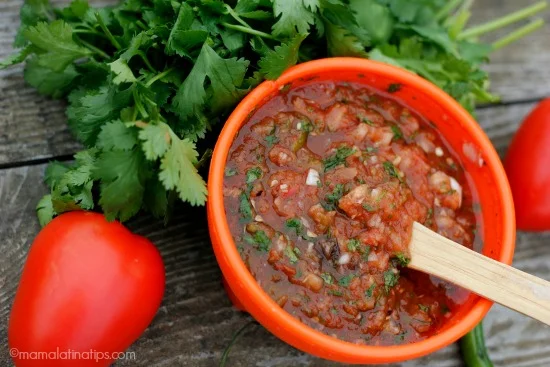
This Mexican-style red salsa is made by charring tomatoes, peppers, onion and garlic, then blending them with fresh cilantro. A brief simmer with olive oil brings the flavours together, making it a versatile salsa for serving with tacos, grilled dishes or tortilla chips.
Ingredients
- 6Roma tomatoes
- 2serrano or jalapeño peppers
- 2garlic cloves, peeled
- 1/4white onion
- 1 small bunchcilantro, washed
- to tastesalt
- 3 teaspoons, dividedolive oil or another neutral oil
Instructions
- 1
Heat the pan
Set a comal, pan or cast-iron skillet over medium-high heat and pour in 1 teaspoon of the oil.
- 2
Char the vegetables
When the oil is warm, add the tomatoes, peppers, onion and garlic. Roast until well charred, keeping in mind that the onion and garlic will soften and colour sooner than the tomatoes and peppers. Remove each ingredient from the pan when charred and soft.
- 3
Blend the salsa
Put all the charred ingredients in a blender with the cilantro and salt, then blend to your preferred texture. Alternatively, chop the cilantro and stir it in after blending the other ingredients.
- 4
Simmer with oil
Heat the remaining 2 teaspoons of oil in a separate pot. Add the blended salsa and cook for 3–5 minutes.
What is Mexican red salsa?
Red salsa is a Mexican sauce built around tomatoes and chillies, with aromatics and herbs added for depth. This version chars its vegetables before blending, giving the finished salsa a savoury, smoky edge.
The recipe keeps the ingredient list simple and finishes the salsa with a short simmer. That final step melds the flavours while leaving the cook in control of how smooth or textured it is.
Nutrition and macros by portion
The nutrition label shows one serving as written: 60 calories, 2g protein, 9g carbs, 7g fat.
| Portion | Adjustment | kcal | Protein | Carbs | Fat |
|---|---|---|---|---|---|
| Lighter | Use less finishing oil | 42 kcal | 1g | 6g | 5g |
| This serving | As written | 60 kcal | 2g | 9g | 7g |
| Hungry | Serve with extra beans | 90 kcal | 3g | 14g | 11g |
The tomatoes and peppers provide most of the carbohydrates, while the olive oil contributes most of the fat; the recipe contains only a modest amount of protein. Serve a portion alongside beans, eggs or another protein-rich filling to make a more balanced plate.
Why char the vegetables?
Tomatoes: charring softens them and concentrates their flavour, while adding browned notes to the salsa.
Peppers and aromatics: chillies bring the heat, and the onion and garlic round out the flavour. They cook faster than the tomatoes, so check them early and remove them once soft and charred.
Choose your chilli
Serrano peppers give the salsa a sharper, hotter kick; jalapeños are a milder option for many cooks. Either works here, and the number of peppers stays the same.
For a less fiery result, remove the seeds and inner membranes before roasting. Keep them in for more heat, and taste cautiously when blending.
Get the texture right
Blend briefly for a chunky salsa, or run the blender longer for a smoother sauce. The vegetables will be soft after charring, so short pulses are often enough to bring them together.
If blending the cilantro with everything else, its flavour will be distributed throughout. For a fresher herbal note and visible flecks, chop it and stir it in after blending.
Watch the cooking time
Keep the pan at medium-high heat and turn the vegetables as needed so they char on more than one side. Remove the onion and garlic first if they are ready before the tomatoes and peppers.
The blended salsa needs only 3–5 minutes in the pot. Stir during this short simmer and take it off the heat once warmed through and combined.
How to serve it
Serve the salsa with tacos, quesadillas, grilled vegetables or tortilla chips. It also works as a table sauce alongside rice and beans.
For a fuller meal, pair it with a protein-rich filling such as beans, eggs or grilled chicken. The salsa's acidity and chilli make a lively contrast to richer foods.
Recipe notes & tips
- Use a pan large enough to keep the vegetables in contact with its hot surface.
- Remove the onion and garlic as soon as they are soft and charred so they do not burn while the tomatoes finish.
- Blend in short pulses if you want to keep some texture.
- Add the cilantro after blending for a fresher flavour and visible green flecks.
- Taste the salsa before serving and adjust the salt to your preference.
Variations
- Milder salsa: use jalapeños and remove their seeds and membranes before roasting.
- Hotter salsa: use serranos and leave their seeds in when blending.
- Chunky finish: pulse the charred ingredients briefly, stopping before the salsa becomes smooth.
- Fresh cilantro: chop the washed leaves and stir them in after blending the other ingredients.
- Neutral oil: use a neutral cooking oil in place of olive oil if you prefer its flavour.
Common mistakes to avoid
- Leaving garlic in too long: it chars faster than the tomatoes, so remove it as soon as it is soft and browned.
- Blending until completely smooth: pulse in short bursts if you want a more textured salsa.
- Adding all the oil to the pan: use 1 teaspoon for charring and reserve the other 2 teaspoons for the pot.
- Skipping the final simmer: cook the blended salsa for 3–5 minutes to bring it together.
- Using too much chilli for your taste: start by removing the seeds and membranes, then adjust the heat next time.
How to store
Refrigerate the salsa in a covered container and use within 3–4 days. Reheat gently in a small pot, stirring until warm, or serve it chilled.
Frequently asked questions
Can I use jalapeños instead of serranos?
Yes. The recipe allows either pepper; jalapeños are often a milder choice, while serranos usually bring more heat.
Do I need a comal to make this salsa?
No. A pan or cast-iron skillet works too, as long as it can be heated over medium-high heat.
How can I make the salsa less spicy?
Remove the peppers' seeds and inner membranes before roasting. You can also choose jalapeños rather than serranos.
Should I blend the cilantro with the vegetables?
Either method works. Blend it in for an evenly distributed flavour, or chop and add it afterwards for a fresher note.
Can I make the salsa ahead?
Yes. Refrigerate it in a covered container and use it within 3–4 days; warm it gently before serving if you prefer it hot.
Cook it from the original
This recipe comes from mamalatinatips.com. Their page has the author’s own photos, notes and tips — the best place to cook it from.
Open the recipe on mamalatinatips.com