
Couscous Pudding with Candied Oranges Recipe
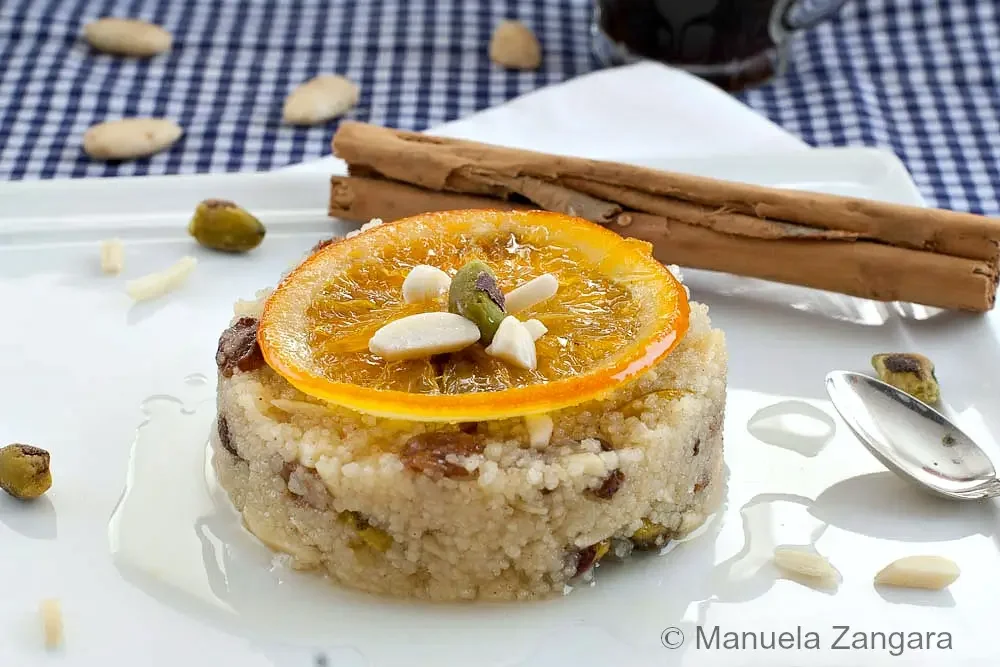
This Middle Eastern-inspired couscous pudding pairs tender, lightly sweetened grains with candied orange and fragrant orange blossom water. It makes a refreshing, citrus-led dessert that can be served at room temperature.
Ingredients
- 1/2orange
- 225 g (1 cup)sugar
- 180 ml (3/4 cup)water
- 2 tsplemon juice
- as preparedcandied oranges and their syrup
- 200 to 250 g (8 oz)couscous
- 2 tbspraisins, softened in warm water
- 2 tbsppistachios
- 2 tbspslivered almonds
- 6 tspcaster sugar
- 2 tsporange blossom water
- 1 tspcinnamon
Instructions
- 1
Slice the orange
Cut half an orange into slices about 3 mm (⅛ inch) thick.
- 2
Dissolve the sugar
Put the water, sugar and lemon juice in a pan. Warm over medium heat, stirring or swirling as needed, until the sugar dissolves.
- 3
Candy the slices
Add the orange slices and bring the liquid to a gentle simmer. Cover and cook for 5 minutes, then uncover and simmer for about 10 minutes, turning the slices occasionally, until translucent and slightly candied and the liquid has become a thin syrup.
- 4
Cool the oranges
Leave the orange slices to cool in the pan.
- 5
Cook the couscous
Prepare the couscous according to the packet instructions, then leave it to cool to room temperature.
- 6
Mix the pudding
Set the orange slices aside and mix the remaining ingredients into the couscous, adding the syrup from the pan. Reserve 4 teaspoons of syrup for decorating.
- 7
Shape and serve
Press the couscous mixture into a large round pasta or biscuit cutter to shape it. Lift off the cutter, top with the candied orange slices and the reserved syrup, then serve at room temperature.
What is couscous pudding?
Couscous pudding is a sweet preparation of couscous, a staple grain product used in cuisines across North Africa and the Middle East. Here, the cooked grains are mixed with dried fruit, nuts, spices and citrus syrup for a dessert rather than a savoury dish.
The candied orange brings a bright, gently bitter citrus note, while orange blossom water lends a floral aroma. Shaping the mixture in a round cutter gives it a neat presentation without changing its soft, grainy texture.
Nutrition and macros by portion
The nutrition label shows one serving as written: 400 calories, 10g protein, 90g carbs, 5g fat.
| Portion | Adjustment | kcal | Protein | Carbs | Fat |
|---|---|---|---|---|---|
| Lighter | Use less syrup | 280 kcal | 7g | 63g | 4g |
| This serving | As written | 400 kcal | 10g | 90g | 5g |
| Hungry | Serve a larger portion | 600 kcal | 15g | 135g | 8g |
Most of the carbohydrates come from the couscous, sugar and raisins, while the pistachios and almonds contribute much of the fat and some protein. Serve a moderate portion with fresh fruit or a plain yoghurt alongside for a more balanced plate.
Making the candied orange
Even slices: Cut the orange to a consistent thickness of about 3 mm so the pieces cook at a similar rate. Keep the peel on; it softens as it simmers in the syrup.
Gentle simmer: Let the slices cook slowly rather than boiling them vigorously. They are ready when they look translucent and the liquid has reduced to a thin syrup.
Choosing the couscous
Packet directions: Couscous types and preparation methods vary, so follow the instructions on the packet. The recipe gives a range of 200 to 250 g; the amount used will affect how sweet and syrupy the finished pudding tastes.
Cool before mixing: Let the cooked couscous reach room temperature before adding the other ingredients. This helps keep the raisins, nuts and syrup evenly distributed.
Balancing the flavours
Citrus syrup: The orange, sugar and lemon juice make a sweet-tart syrup that flavours the couscous and dresses the top. Set aside 4 teaspoons before mixing so you have some for the final decoration.
Floral spice: Orange blossom water and cinnamon add fragrance, while raisins contribute little pockets of sweetness. Pistachios and slivered almonds provide a contrasting nutty bite.
Shaping and texture
Firm pressing: Pack the mixture into the round cutter so it holds its shape when lifted. If it crumbles, press it together more firmly in the cutter rather than adding extra liquid.
Finishing: Arrange the candied orange on top after shaping, then drizzle over the reserved syrup. The pudding should remain tender and distinct-grained, not become a smooth paste.
Serving the pudding
Room temperature: The recipe is served at room temperature, allowing the orange blossom water and citrus aroma to come through. Plate it soon after shaping for the tidiest edges.
On the side: Offer it after a meal with tea or coffee, or alongside fresh citrus segments for a less rich-feeling finish. The nuts and candied fruit already add plenty of texture.
Recipe notes & tips
- Slice the orange evenly so the pieces candy at roughly the same pace.
- Keep the syrup at a gentle simmer to help the orange slices turn translucent without breaking apart.
- Soften the raisins in warm water before mixing them into the couscous.
- Reserve the 4 teaspoons of syrup before adding the rest to the pudding.
- Press the couscous firmly into the cutter for a shape that holds when released.
Variations
- Extra citrus: Add a little finely grated orange zest to the couscous mixture.
- More dried fruit: Replace some of the raisins with chopped dried apricots.
- Nut swap: Use chopped walnuts in place of pistachios or almonds.
- Spice change: Add a pinch of ground cardamom alongside the cinnamon.
- Individual portions: Shape the mixture in smaller round cutters for separate servings.
Common mistakes to avoid
- Uneven orange slices: Cut them to a consistent 3 mm thickness so they candy evenly.
- Boiling the syrup hard: Keep it at a gentle simmer to avoid breaking up the orange slices.
- Skipping the cooling: Let the couscous cool to room temperature before mixing in the other ingredients.
- Forgetting the reserved syrup: Set aside 4 teaspoons before combining the rest with the pudding.
- Loose shaping: Press the couscous mixture firmly into the cutter before lifting it away.
How to store
Store leftovers in a covered container in the fridge and eat within 2 days. Bring the pudding back to room temperature before serving; avoid reheating, as it is intended to be served at room temperature.
Frequently asked questions
Can I make this pudding ahead?
Yes. Prepare the couscous and candied oranges ahead, then refrigerate them separately in covered containers. Shape and decorate the pudding when ready to serve.
How do I know when the orange slices are ready?
They should look translucent and slightly candied after simmering for about 10 minutes uncovered. The syrup should be thin rather than heavily reduced.
Should the couscous be warm or cold when I mix it?
Let it cool to room temperature first. This keeps the mixture from becoming overly soft and makes it easier to shape.
Can I use a different type of couscous?
Use the couscous you have, but follow its packet instructions for cooking. The texture and cooking method can differ between types.
What can I use instead of a round cutter?
A small bowl or ramekin can help shape the pudding. Press the mixture in, then turn it out carefully onto a serving plate.
Can I serve it chilled?
You can, but the recipe is intended to be served at room temperature. Let a chilled portion stand out briefly before serving so its citrus and floral aromas are more noticeable.
Cook it from the original
This recipe comes from manusmenu.com. Their page has the author’s own photos, notes and tips — the best place to cook it from.
Open the recipe on manusmenu.com