
Oven-baked marinated chicken
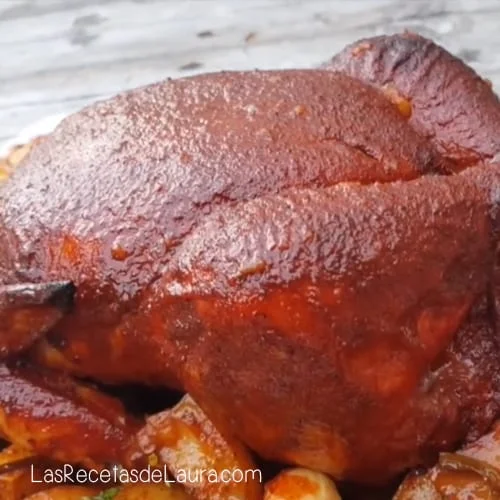
This Mexican-inspired roast chicken is marinated with orange, achiote and dried chillies, then baked over potatoes and onions. The marinade flavours the meat beneath the skin as well as the outside, while the vegetables cook in the roasting juices.
Ingredients
- 1 wholechicken
- 360 ml (1½ cups)orange juice, without seeds
- 100 gachiote paste
- 1 tspcumin
- 1 tspsalt
- 1 tsporegano
- 60 ml (¼ cup)white vinegar or cider vinegar
- 6guajillo chillies
- To tastepotatoes
- To tastespring onions
- 2 (optional)árbol chillies
- 2 clovesgarlic
- A littleolive oil
- To tastesalt for the potatoes and onions
Instructions
- 1
Soften the chillies
Bring water to the boil, then take it off the heat. Remove the guajillo chillies’ stems and any loose seeds, add the chillies to the hot water and leave them for about 5 minutes.
- 2
Add optional heat
If you like, add the two árbol chillies to the water with the guajillos. They are optional and can make the marinade too hot for children or anyone who prefers milder food.
- 3
Blend the marinade
Put the seedless orange juice in a blender. Add the cumin, vinegar, oregano, achiote paste and salt, followed by the softened chillies and two garlic cloves. Blend thoroughly.
- 4
Strain the mixture
Once smooth, strain the marinade well so you are left with the chilli pulp for marinating the chicken.
- 5
Prepare the chicken
Remove the chicken’s giblets, setting them aside rather than discarding them; they can be used for stock or another dish.
- 6
Season beneath the skin
Rinse the chicken and pat it dry with kitchen paper. Carefully use a spoon to loosen the skin without tearing it, then spread some marinade into the pocket between the skin and the meat, reaching as far as you can.
- 7
Marinate overnight
Put the chicken in a bag or dish and pour over the remaining marinade to coat the outside. Tie the bag and turn it from time to time. Marinate overnight if possible, or for at least 2 hours.
- 8
Cut the vegetables
Cut the potatoes as you prefer; quarters are suggested. Cut the spring onions into medium-sized pieces. Use plenty, as they will cook beneath the chicken.
- 9
Prepare the tray
Arrange the potatoes and onions in an oven tray. Add a little olive oil and salt to taste, then toss to coat.
- 10
Roast the chicken
Set the chicken on top of the potatoes and onions and tie its legs together for a neater shape. Spoon over more of the marinade left in the bag and bake at 180°C (360°F).
- 11
Baste after an hour
After the first hour, open the oven and baste the chicken again with marinade.
What is achiote-marinated roast chicken?
This is a Mexican-inspired roast centred on a whole chicken flavoured with achiote, guajillo chillies and citrus. Achiote paste, made with annatto and seasonings, gives the marinade its distinctive earthy flavour and deep colour.
The recipe builds flavour in two places: some marinade goes beneath the skin, and the rest coats the outside. Potatoes and onions roast underneath to catch the chicken’s juices.
Nutrition and macros by portion
The nutrition label shows one serving as written: 590 calories, 42g protein, 44g carbs, 26g fat.
| Portion | Adjustment | kcal | Protein | Carbs | Fat |
|---|---|---|---|---|---|
| Lighter | More vegetables, less potato | 413 kcal | 29g | 31g | 18g |
| This serving | As written | 590 kcal | 42g | 44g | 26g |
| Hungry | Extra potato and chicken | 885 kcal | 63g | 66g | 39g |
Chicken supplies most of the protein, while the potatoes contribute most of the carbohydrates. The chicken skin, olive oil and achiote paste contribute much of the fat; the exact balance depends on the size of the chicken and how many potatoes and onions you use. Pair a serving with extra vegetables or salad, and keep the amount of potato suited to your appetite.
Building the marinade
Chillies: soaking the guajillos in hot water for about 5 minutes softens them for blending. Removing the stems and loose seeds first makes them easier to handle.
Balance: orange juice brings sweetness and acidity, while vinegar, cumin, oregano, garlic and achiote add savoury depth. Straining the blended mixture leaves a smoother pulp for coating the chicken.
Getting flavour under the skin
Dry skin: patting the chicken dry helps you handle it without slipping. Work gently with the spoon so the skin loosens without tearing.
Marinade: push some of the mixture into the pocket beneath the skin, then coat the outside as well. Give it at least 2 hours to marinate; overnight is the suggested option.
Making the tray of vegetables
Potatoes: quarters are suggested, but pieces should be reasonably even so they cook at a similar pace. The recipe does not specify a quantity, so choose enough to cover the tray beneath the chicken.
Onions: cut them into medium-sized pieces and use a generous amount if you want a substantial bed for the bird. Toss both vegetables with a little olive oil and salt before adding the chicken.
Roasting and basting
Temperature: the method gives 180°C (360°F). It does not state a total roasting time, so check that the chicken is fully cooked before serving rather than relying on the listed 2-minute total time.
Basting: the recipe calls for another coating after the first hour. Because marinade that has touched raw chicken needs thorough cooking, boil it before using it as a baste, or use fresh reserved marinade.
Serving the chicken
Rest the cooked chicken briefly before carving so the juices are less likely to run out onto the board. Serve it with the potatoes and onions from the tray.
For a lighter plate, add a crisp green salad or steamed vegetables alongside. The giblets can be saved for stock or another dish, as the method suggests.
Recipe notes & tips
- Use a food-safe bag or covered dish while the chicken marinates in the fridge.
- Turn the chicken occasionally during marinating so the outside is coated more evenly.
- Keep the chicken in one piece while loosening the skin, and stop if the skin starts to tear.
- Cut the potatoes into similar-sized pieces to help them cook evenly.
- Use a food thermometer to check the thickest part of the chicken is cooked through.
- Do not use marinade that touched raw chicken for basting unless you boil it thoroughly first.
Variations
- Milder marinade: leave out the árbol chillies for less heat.
- More heat: include both árbol chillies with the guajillos.
- Cider vinegar: use cider vinegar in place of white vinegar as the recipe allows.
- Extra vegetables: add more potatoes and spring onions beneath the chicken.
- Save the giblets: simmer them separately for stock or use them in another dish.
Common mistakes to avoid
- Tearing the skin: loosen it gently with a spoon and avoid forcing it.
- Skipping the minimum marinade: allow at least 2 hours for the flavours to develop.
- Using uneven potato pieces: cut them to a similar size so they roast at a comparable rate.
- Basting with raw-chicken marinade: boil it thoroughly first or use fresh marinade kept separate.
- Relying on the stated total time: the method includes an hour before basting and gives no finishing time, so check the chicken for doneness.
How to store
Refrigerate leftover chicken and vegetables in a covered container within 2 hours of cooking and use within 3–4 days. Reheat until piping hot throughout; keep the chicken and vegetables separate if that makes reheating more even.
Frequently asked questions
How long should I marinate the chicken?
The method recommends overnight, turning the bag occasionally. If that is not possible, leave it for at least 2 hours.
Are the árbol chillies essential?
No, they are optional. Leave them out for a milder result, especially if serving people who do not enjoy much heat.
How much potato and onion should I use?
The ingredient list does not give quantities. Use enough to make a bed in your roasting tray, keeping in mind that the chicken will sit on top.
How long does the chicken take to roast?
The method gives a temperature of 180°C (360°F) and says to baste after the first hour, but it does not specify a total cooking time. Check the thickest part of the chicken with a food thermometer and cook until it reaches 74°C.
Can I baste with the marinade from the bag?
Only after bringing it to a thorough boil, since it has been in contact with raw chicken. Alternatively, set aside some clean marinade before adding it to the chicken.
Can I use cider vinegar instead of white vinegar?
Yes. The recipe lists white vinegar or cider vinegar as alternatives.
Cook it from the original
This recipe comes from lasrecetasdelaura.com. Their page has the author’s own photos, notes and tips — the best place to cook it from.
Open the recipe on lasrecetasdelaura.com