
Cappellacci with Sausage and Porcini Recipe
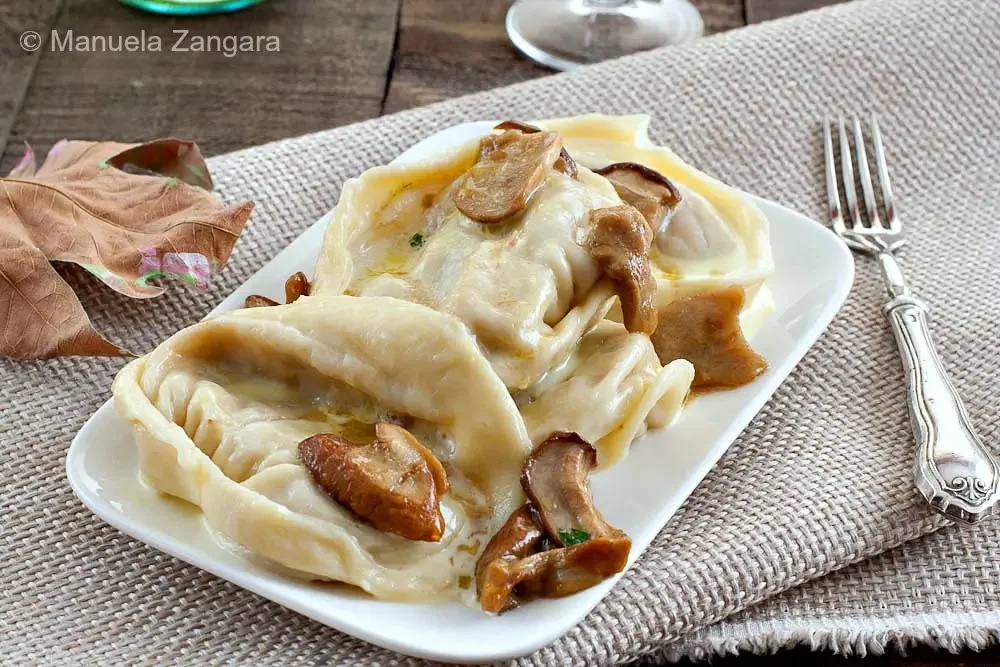
Cappellacci are filled pasta parcels served here with a creamy porcini sauce. Fennel sausage, potatoes and Parmigiano make a savoury filling for a special Italian-style dinner.
Ingredients
- 500 g (1.1 lb)porcini mushrooms, fresh or frozen, cleaned and sliced
- 3garlic cloves, halved
- 400 g (1 lb)pork sausage with fennel
- 2 tbspextra virgin olive oil
- 50 ml (1/4 cup), dividedwhite wine
- 2 tbspparsley
- 4 mediumpotatoes, boiled and roughly chopped
- 60 g (2 oz)Parmigiano Reggiano, finely grated
- to tastesalt and pepper
- 150 ml (3/4 cup)double cream
- to tasteParmigiano Reggiano, finely grated
- 2eggs
- 200 g (7 oz)plain flour
Instructions
- 1
Cook the mushrooms
For the filling, sauté the halved garlic in the olive oil for 1 minute. Add the sliced porcini and stir to combine.
- 2
Season the porcini
Pour in half of the white wine and season with salt. Once the alcohol has evaporated, stir in the parsley and turn off the heat.
- 3
Reserve some mushrooms
Take one-third of the porcini mixture, including all its liquid, out of the pan and set it aside for the sauce.
- 4
Brown the sausage
Put the remaining two-thirds of the porcini back over the heat. Remove the sausage casing, add the sausage and sauté until browned.
- 5
Blend the filling
Add the remaining white wine and let the alcohol evaporate, then turn off the heat. Transfer the mixture to a food processor with the boiled potatoes and blend roughly. Mix in the grated Parmigiano Reggiano, adjust the seasoning if needed and leave the filling to cool completely.
- 6
Make the pasta
Make the cappellacci using your usual cappellacci-making method.
- 7
Set them aside
Set the prepared cappellacci aside.
- 8
Prepare the sauce
Put the reserved cooked porcini and their liquid in a large pan. Add the cream and bring to the boil; taste and add salt if needed, then turn off the heat.
- 9
Cook the pasta
Cook the cappellacci using your usual al dente pasta method. The time will depend on the pasta's thickness and how long it has rested. Taste one and check the thicker joined area: it should be soft but still al dente.
- 10
Toss and serve
Drain the cooked pasta and add it to the pan of porcini and cream sauce. Stir in 3 tablespoons of grated Parmigiano Reggiano over low heat for 1 minute. Serve hot with a little finely grated Parmigiano Reggiano on top.
What are cappellacci?
Cappellacci are stuffed pasta parcels from the Emilia-Romagna tradition of northern Italy. Their name is often associated with a distinctive hat-like shape, and they are commonly served with a rich filling and sauce.
This version pairs fennel sausage and porcini with potato and Parmigiano in the filling, then uses reserved mushrooms and their cooking liquid to make a creamy sauce.
Nutrition and macros by portion
The nutrition label shows one serving as written: 190 calories, 8g protein, 13g carbs, 10g fat.
| Portion | Adjustment | kcal | Protein | Carbs | Fat |
|---|---|---|---|---|---|
| Lighter | Use less cream | 133 kcal | 6g | 9g | 7g |
| This serving | As written | 190 kcal | 8g | 13g | 10g |
| Hungry | Serve a larger portion | 285 kcal | 12g | 20g | 15g |
The potatoes and flour provide most of the carbohydrates, while the sausage, cream, olive oil and Parmigiano contribute much of the fat; the sausage, eggs and cheese provide protein. Balance a portion with a generous green salad or other vegetables.
Building the filling
Porcini first: cooking them with garlic, wine and parsley develops the mushroom flavour before some are reserved for the sauce.
Sausage and potato: browning the sausage adds savoury depth, while potato gives the filling body. Blend the mixture roughly rather than turning it into a completely smooth paste.
Shaping the pasta
The method refers to a separate cappellacci tutorial, so use your preferred fresh-pasta dough and shaping technique. Keep the filling cool before shaping, which makes it easier to handle.
Seal each parcel carefully and avoid trapping filling along the edges, where it can stop the pasta from closing securely.
Getting the sauce right
Reserved porcini: include their cooking liquid, as it carries the mushroom flavour into the sauce.
Cream: bring the sauce just to the boil, then take it off the heat. Once the pasta is added, a brief toss over low heat helps the sauce coat the parcels without prolonged simmering.
Checking doneness
Fresh pasta thickness and resting time affect how quickly the cappellacci cook, so follow the pasta method you normally use rather than relying on a fixed time.
Taste one parcel and check its thicker joined area. The pasta should be soft but retain a slight bite.
Serving the dish
Serve the cappellacci straight away while the sauce is hot and glossy. Add the final finely grated Parmigiano at the table or just before serving.
A crisp green salad or simply dressed vegetables make a fresh contrast to the sausage, cream and cheese.
Recipe notes & tips
- Let the filling cool completely before using it to shape the pasta.
- Reserve the porcini mixture together with all its liquid for the sauce.
- Blend the filling only roughly so it keeps some texture.
- Taste a cappellaccio at its thickest point to judge whether it is cooked.
- Toss the pasta with the sauce gently to help keep the parcels intact.
Variations
- Use another mushroom: Substitute a similar quantity of another flavourful mushroom if porcini are unavailable.
- Adjust the herbs: Add a little extra parsley for a brighter, more herbal filling.
- Make it meat-free: Replace the sausage with additional mushrooms and season the filling well.
- Add black pepper: Grind it over the finished dish for a sharper, more peppery finish.
Common mistakes to avoid
- Filling the pasta while warm: It can be harder to handle; let the mixture cool completely first.
- Leaving the parcels unsealed: Press the edges firmly together so the filling stays inside during cooking.
- Over-blending the filling: A smooth paste can lose the intended texture; pulse it only until roughly combined.
- Boiling the sauce for too long: The cream can reduce too much; take it off the heat once it reaches a boil.
- Cooking by time alone: Thickness and resting affect the result; taste a parcel and check the thicker join.
How to store
Store leftover cooked cappellacci in a covered container in the fridge and eat within 2 days. Reheat gently in a pan with a splash of water or cream, taking care not to break the pasta. Uncooked cappellacci are best cooked soon after shaping or frozen separately until firm, then transferred to a freezer-safe container.
Frequently asked questions
Can I use frozen porcini?
Yes. The ingredient list allows fresh or frozen porcini; thaw and drain them if needed, while keeping any useful mushroom liquid for the sauce.
Can I prepare the filling in advance?
Yes. Cool it fully, cover and refrigerate it, then use it to fill the pasta when ready.
How do I know when cappellacci are cooked?
Cooking time depends on their thickness and how long they have rested. Taste one and check the thicker joined area; it should be soft but still have a slight bite.
Can I make the cappellacci without a pasta tutorial?
The recipe calls for a separate cappellacci-making method and does not give detailed shaping instructions. Use a reliable fresh-pasta method to make and shape the parcels.
What can I serve with cappellacci?
A green salad or simply cooked vegetables are good alongside this rich, creamy pasta.
Can I reheat leftovers?
Yes. Reheat gently in a pan with a splash of water or cream, stirring carefully so the pasta parcels do not tear.
Cook it from the original
This recipe comes from manusmenu.com. Their page has the author’s own photos, notes and tips — the best place to cook it from.
Open the recipe on manusmenu.com