
Pear and thyme Tatin tart
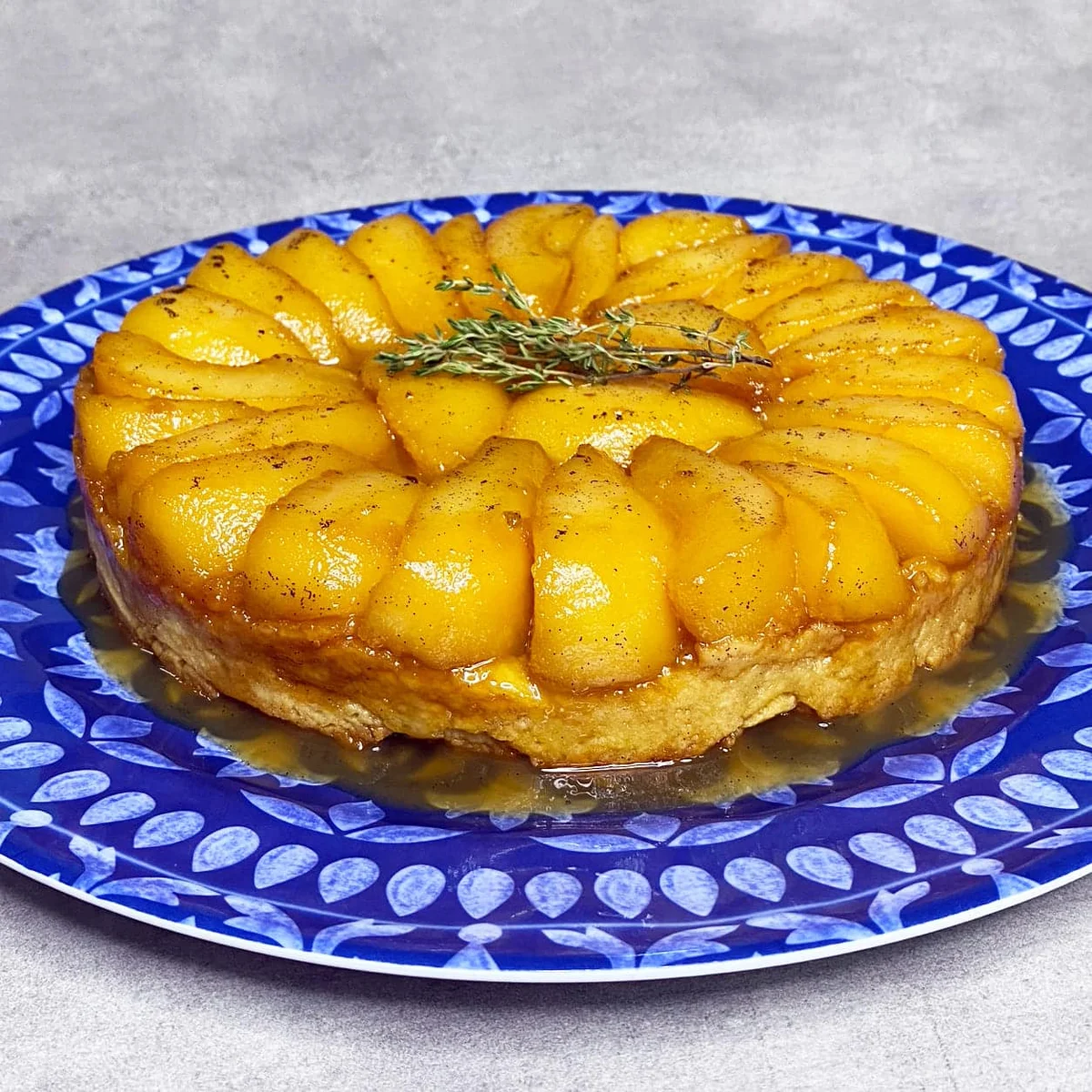
This pear and thyme Tatin is an upside-down tart with fruit cooked in buttery caramel beneath a crisp pastry lid. It makes a fragrant dessert for sharing, with thyme adding a savoury note to the sweet pears.
Ingredients
- 150 g (¾ cup)sugar
- 45 gbutter
- the seeds from 1 podvanilla
- 9pears, peeled, cored and quartered
- 250 gshortcrust pastry
- to tastethyme leaves
Instructions
- 1
Preheat the oven
Heat the oven to 180°C.
- 2
Cook the pears
Put the sugar in a frying pan over a medium heat and cook until it forms caramel. Add the butter, vanilla seeds and pear quarters, then cook gently for 20 minutes.
- 3
Arrange the pears
Pour the buttery caramel into a greased 25 cm round tin. Arrange the pear quarters all around the edge.
- 4
Roll the pastry
On a floured surface, roll out the shortcrust pastry until it is ½ cm thick.
- 5
Cover and bake
Cover the pears with the pastry and bake for 25 minutes, or until the pastry is lightly golden.
- 6
Turn out the tart
Leave the tart to cool, then turn it out and scatter thyme leaves over the top to taste.
What is a Tatin tart?
A Tatin is an upside-down French tart: fruit is cooked in caramel, covered with pastry and turned out after baking. Its creation is traditionally described as accidental, and the familiar version is made with apples.
Here, pears take the place of apples, while vanilla and thyme complement their sweetness. Cooking the fruit in caramel before baking helps build flavour and gives the tart its glossy finish.
Nutrition and macros by portion
The nutrition label shows one serving as written: 360 calories, 3g protein, 58g carbs, 17g fat.
| Portion | Adjustment | kcal | Protein | Carbs | Fat |
|---|---|---|---|---|---|
| Lighter | Smaller slice, more pears | 252 kcal | 2g | 41g | 12g |
| This serving | As written | 360 kcal | 3g | 58g | 17g |
| Hungry | Larger slice | 540 kcal | 5g | 87g | 26g |
The pears and sugar provide most of the carbohydrates, while the butter and shortcrust pastry contribute most of the fat; the pastry provides a little protein. Serve a slice with plain yoghurt or crème fraîche and, if making a meal of it, add fruit on the side.
Choosing the pears
Ripe but firm pears: they should hold their shape through the 20-minute stovetop cook and the time in the oven. Very soft fruit is more likely to collapse when the tart is turned out.
Even quarters: peel, core and cut the pears into similarly sized pieces so they cook at a similar rate. Arrange them closely to cover the base of the tin.
Making the caramel
Dry sugar: let it melt over a medium heat until it becomes caramel, watching closely as it can darken quickly. Avoid stirring vigorously; gently swirl the pan if the sugar needs help melting evenly.
Butter and vanilla: add them to the caramel, then add the pears and lower the heat. The mixture may bubble, so add the ingredients carefully.
Getting the pastry right
Even thickness: roll the pastry to ½ cm so it bakes evenly over the pears. A lightly floured surface helps prevent sticking without adding too much extra flour.
Cover the fruit: lay the pastry over the pears before baking. The recipe calls for a 25 cm round tin, so use one that can hold the fruit and caramel comfortably.
Checking when it is ready
Golden pastry: begin checking around the 25-minute mark. The pastry should be lightly golden, as specified in the method.
Cooling and turning: allow the tart to cool before turning it out, so the caramel has time to settle. Take care when handling the tin, as the caramel can remain hot.
Serving the tart
Thyme finish: scatter thyme leaves over the tart to taste after turning it out. Start with a small amount so the herb does not overpower the pears and vanilla.
Serve the tart on its own or with a spoonful of crème fraîche or yoghurt. A lightly tangy accompaniment works well alongside the sweet caramel.
Recipe notes & tips
- Use pears that are ripe but still firm enough to quarter cleanly.
- Keep a close eye on the sugar as it melts, since caramel can darken quickly.
- Lower the heat before cooking the pears in the caramel.
- Roll the pastry evenly to ½ cm for consistent baking.
- Let the tart cool before turning it out.
- Add the thyme gradually and taste as you go.
Variations
- Add lemon zest: mix a little into the pears for a citrus note.
- Use apples: replace the pears with peeled, cored and quartered apples.
- Try rosemary: use a small amount in place of the thyme for a different herbal finish.
- Add cinnamon: stir a pinch into the caramel for gentle warmth.
- Serve with crème fraîche: add a spoonful alongside each slice for a tangy contrast.
Common mistakes to avoid
- Burnt caramel: watch the sugar closely and take it off the heat once it has caramelised.
- Overcooked pears: keep the heat low during the 20-minute cook and check that the fruit stays intact.
- Uneven pastry: roll it to a consistent ½ cm thickness.
- Pears packed loosely: arrange the quarters closely around the tin so the base is covered.
- Turning it out too soon: let the tart cool before flipping it.
- Too much thyme: scatter it sparingly, then add more only if needed.
How to store
Cover and refrigerate leftovers for up to 3 days. Reheat portions in a low oven until warmed through; the pastry may soften during storage.
Frequently asked questions
Can I make the tart ahead?
You can bake it ahead and refrigerate it once cool. Reheat it gently before serving, then add the thyme.
How do I stop the caramel burning?
Use a medium heat and watch the sugar as it melts. Remove it from the heat once it has formed caramel, before it turns very dark.
Can I use ready-rolled pastry?
Yes, provided you can roll or adjust it to cover the pears and reach about ½ cm thick.
How can I tell when the tart is baked?
The pastry should be lightly golden after about 25 minutes. If it needs longer, continue baking until it reaches that colour.
Why should the tart cool before turning it out?
Cooling gives the caramel time to settle and makes the tart easier to turn out. Handle the tin carefully, as the caramel can stay hot.
What can I serve with pear Tatin?
Serve it plain, or add crème fraîche or yoghurt for a tangy contrast to the caramelised fruit.
Cook it from the original
This recipe comes from laroussecocina.mx. Their page has the author’s own photos, notes and tips — the best place to cook it from.
Open the recipe on laroussecocina.mx