
Apple and Dulce de Leche Tart
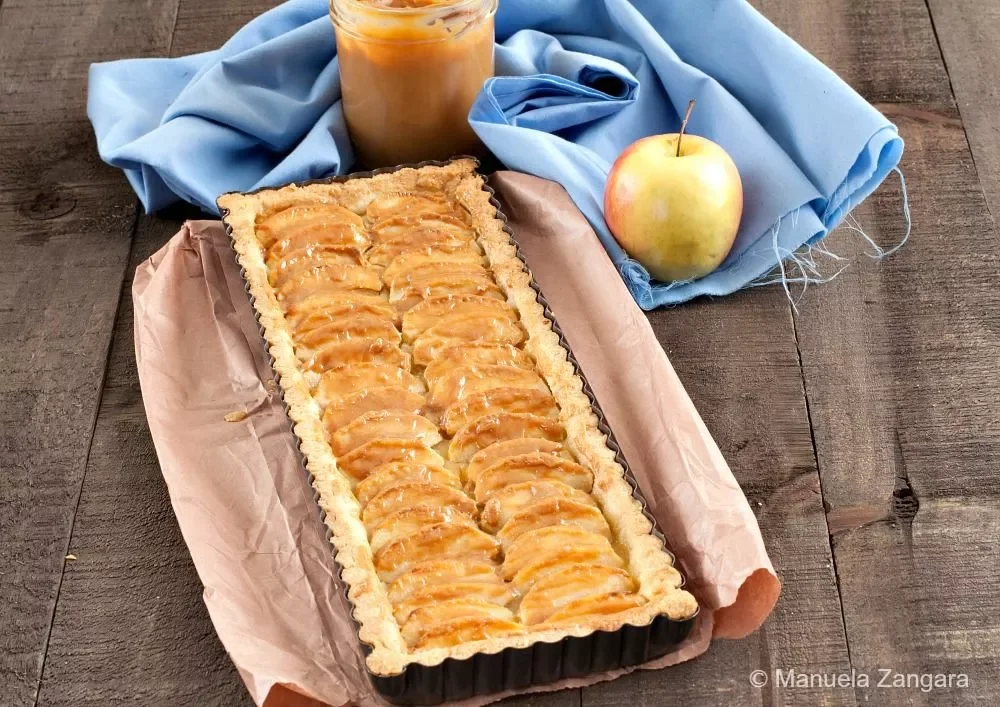
This apple and dulce de leche tart pairs a crisp, buttery pastry base with tender apple slices and a creamy caramel-like topping. It makes a warming autumn dessert, with a simple method and a golden finish.
Ingredients
- 250 g (8.8 oz)plain flour
- 125 g (4.4 oz)sugar
- 125 g (4.4 oz)unsalted butter, softened
- 1egg
- 1 pinchsalt
- 2 or 3apples
- 30 ml (2 tbsp)butter, chopped
- 25 g (2 tbsp)sugar
- 60–120 ml (¼–½ cup)dulce de leche, shop-bought or homemade
Instructions
- 1
Make the dough
Knead the flour, 125 g sugar, softened butter, egg and salt together until you have a smooth dough.
- 2
Chill the dough
Wrap the dough in cling film and refrigerate it for 30 minutes.
- 3
Roll the pastry
Remove the dough from the fridge, set it on a sheet of baking paper and roll it into a rectangular sheet about 1 cm thick.
- 4
Line the tin
Cut the pastry to roughly the size of your tart tin. Place it in the greased tin and press it firmly into the base and up the sides.
- 5
Prepare the apples
Peel the apples, quarter them and remove the cores. Cut each quarter into 4 or 5 slices, then arrange the slices over the pastry, leaving as few gaps as possible.
- 6
Add the topping
Sprinkle the apples with 2 tbsp sugar and dot the chopped butter over the top.
- 7
Bake the tart
Bake in an oven preheated to 180°C (355°F) for about 35 minutes, until golden brown and cooked through.
- 8
Brush with dulce
Brush the tart with the dulce de leche and return it to the oven for another 5 minutes.
- 9
Cool and serve
Let the tart cool completely before taking it out of the tin and serving.
What is apple and dulce de leche tart?
This is a fruit tart made with a sweet, short pastry base, sliced apples and a topping of dulce de leche. Dulce de leche is a milk-based caramel spread associated with Latin American cooking, while fruit tarts in many forms are enjoyed across Europe and beyond.
Here, the apples bake directly on the pastry, then the dulce de leche goes on near the end. That timing gives the fruit time to soften while keeping the topping creamy and distinct.
Nutrition and macros by portion
The nutrition label shows one serving as written: 779 calories, 10g protein, 106g carbs, 37g fat.
| Portion | Adjustment | kcal | Protein | Carbs | Fat |
|---|---|---|---|---|---|
| Lighter | Use less dulce de leche | 545 kcal | 7g | 74g | 26g |
| This serving | As written | 779 kcal | 10g | 106g | 37g |
| Hungry | Serve a larger slice | 1169 kcal | 15g | 159g | 56g |
The flour and sugar provide most of the carbohydrates, while the pastry butter and dulce de leche contribute much of the fat. The egg adds some protein, with smaller amounts from the flour and dairy-based topping. Balance a slice with plain yoghurt and fresh fruit, or serve it after a meal with plenty of vegetables.
A simple butter pastry
Softened butter makes the dough easier to bring together by hand. Knead just until it looks smooth; prolonged kneading can make a pastry base tougher.
Chilling for 30 minutes firms the butter and makes the dough easier to roll and fit into the tin. Keep the dough wrapped while it chills so the surface does not dry out.
Choose and slice the apples
Apple choice: Use apples that hold their shape reasonably well when baked, rather than very soft ones that quickly collapse.
Even slices: Cutting each quarter into 4 or 5 pieces helps the apples cook at a similar rate. Arrange them closely so the pastry is covered without piling the slices too high.
Getting the pastry into the tin
Roll the dough on baking paper to make it easier to move. If it cracks as you fit it, press the pieces back together and smooth the join with your fingers.
Press the pastry into the base and sides of the greased tin, as directed, so the filling sits within an even shell. The recipe does not specify a tin size, so use one that suits the rolled rectangle without stretching the dough.
Look for golden pastry
Bake the tart at 180°C for about 35 minutes, checking for a golden surface and pastry that looks cooked through. The exact time can vary with the tin and the thickness of the pastry.
The final 5 minutes with dulce de leche are for warming and setting the topping, not for baking it from the start. Allow the tart to cool completely before unmoulding, as the pastry is more fragile while hot.
Serving the tart
Serve the tart at room temperature once it has cooled and set. A little extra dulce de leche can be offered at the table if you want a sweeter finish.
For contrast, pair a slice with plain yoghurt or crème fraîche, or serve it after a lighter main course. The tart is rich, so modest slices can still feel satisfying.
Recipe notes & tips
- Measure the dough thickness as you roll it so the base and sides bake evenly.
- Arrange the apple slices close together to cover the pastry without leaving large gaps.
- If the dough softens while you work, chill it briefly before lining the tin.
- Check the tart near the end of the 35-minute bake, since oven and tin differences can affect browning.
- Wait until the tart is completely cool before unmoulding to help the pastry hold together.
Variations
- Add cinnamon: Sprinkle a little over the apples before baking for a warm spice note.
- Try pears: Replace some or all of the apples with sliced pears.
- Use lemon zest: Add finely grated zest to the dough for a fresh citrus accent.
- Finish with nuts: Scatter chopped toasted hazelnuts over the dulce de leche after baking.
- Serve with yoghurt: Add a spoonful of plain yoghurt alongside each slice for a tangy contrast.
Common mistakes to avoid
- Overworking the dough: Knead only until smooth so the pastry does not become tough.
- Skipping the chill: Refrigerate for the full 30 minutes to make the dough easier to handle.
- Stretching the pastry: Fit it gently into the tin and patch cracks rather than pulling the dough.
- Leaving wide gaps: Arrange the apple slices closely so the filling covers the base evenly.
- Adding dulce too early: Brush it on after the initial 35-minute bake so it does not overcook.
- Unmoulding while hot: Let the tart cool completely first to reduce the chance of it breaking.
How to store
Keep the cooled tart covered in the fridge for up to 3 days. Bring a slice to room temperature or warm it gently in a low oven before serving.
Frequently asked questions
Can I make the pastry ahead?
Yes. Wrap the dough well and refrigerate it, then let it soften just enough to roll. The recipe calls for a 30-minute chill before shaping.
Do I need to pre-cook the apples?
No. The recipe places the raw apple slices directly on the pastry, where they cook during the 35-minute bake.
How much dulce de leche should I use?
The recipe gives a range of 60–120 ml (¼–½ cup). Use the smaller amount for a lighter coating or the larger amount for a more pronounced topping.
How can I tell when the tart is ready?
After about 35 minutes at 180°C, look for golden pastry and apples that are cooked through. It then gets another 5 minutes in the oven after you brush on the dulce de leche.
Why should the tart cool before I unmould it?
Cooling lets the pastry firm up, making it less likely to crack or break when you remove the tart from its tin.
Cook it from the original
This recipe comes from manusmenu.com. Their page has the author’s own photos, notes and tips — the best place to cook it from.
Open the recipe on manusmenu.com