
Chiles for snacking
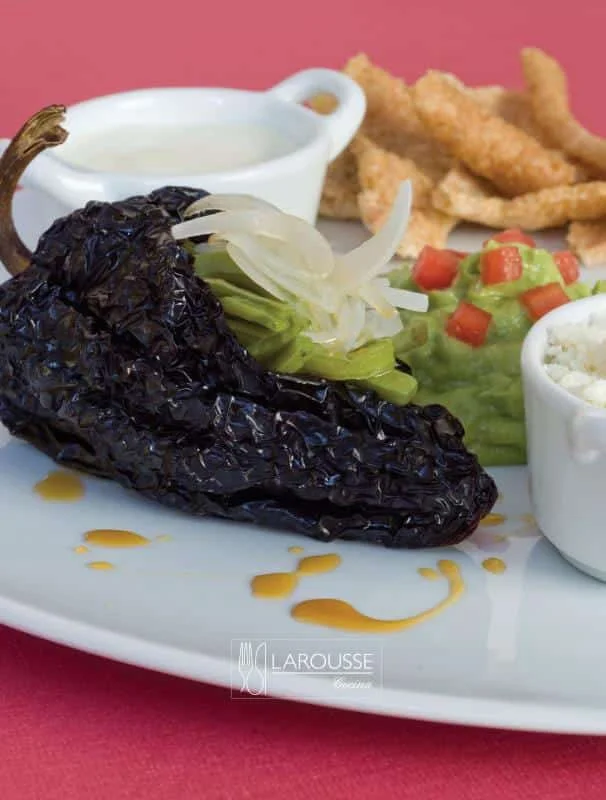
These Mexican ancho chillies are filled with oregano-marinated nopales and served with guacamole, pork crackling, cream and fresh cheese. They make a colourful sharing platter for a snack or an accompaniment.
Ingredients
- 2 Lwater
- 1 tablespoon + ½ teaspoonsalt
- 1.5 kgbaby nopales (cactus pads), cut into thin strips
- ½ teaspoonfreshly ground black pepper
- 2 tablespoonsdried oregano
- 60 ml (¼ cup)white vinegar
- 60 ml (¼ cup)olive oil
- 1 Lwater
- 80 ml (⅓ cup)vinegar
- ½ cup (about 75 g)white onion, thinly sliced
- 10small ancho chillies
- 1 teaspoonsalt
- 60 ml (¼ cup)sugar or piloncillo
- 1 Lhot water
- 4 mediumHass avocados
- 1 tablespoonlime juice
- ½ cup (about 90 g)tomato, deseeded and cut into small dice
- ½ cup (about 75 g)onion, finely chopped
- 3 tablespoonscoriander, chopped
- to tastesalt
- 60 ml (¼ cup)chopped tomato
- 250 gpork crackling, broken into pieces
- 240 ml (1 cup)double cream
- 250 gqueso fresco
Instructions
- 1
Cook the nopales
Bring 2 L of water to the boil, add 1 tablespoon of salt and cook the nopales for 10 minutes. If using larger nopales, cook them for 20 minutes instead. Drain and set aside.
- 2
Dress the nopales
Mix the remaining ½ teaspoon of salt with the pepper, oregano and white vinegar. Slowly whisk in the olive oil, then fold in the nopales and set aside.
- 3
Soften the onion
Bring 1 L of water and the ⅓ cup of vinegar to the boil. Add the sliced onion and boil for 2 minutes to soften its sharpness. Lift it out and set aside.
- 4
Prepare the chillies
Lightly toast the chillies on both sides. Cut each one lengthways and remove the seeds and veins, taking care not to split the chillies.
- 5
Simmer and fill
Dissolve 1 teaspoon of salt and the sugar or piloncillo in the hot water. Put it over the heat, add the chillies and boil for 3 minutes. Remove from the heat and leave them to stand for 5 minutes. Drain and pat dry with paper towels, then fill with the nopales.
- 6
Make the guacamole
Scoop the avocado flesh into a bowl and mash it. Mix in the lime juice, diced tomato, chopped onion, coriander and salt to taste; set aside.
- 7
Arrange the platter
Spoon the guacamole into the centre of a serving platter and scatter the ¼ cup of chopped tomato over it. Arrange the stuffed chillies around it, alternating them with the pork crackling, softened onion, cream and queso fresco.
What are stuffed ancho chillies?
Ancho chillies are dried poblano peppers, commonly used in Mexican cooking for their mild, rounded flavour. Here they are softened and filled with nopales, the edible pads of the prickly pear cactus.
The platter brings together tangy, herb-seasoned cactus, rich guacamole and creamy, salty accompaniments. Preparing the chillies and fillings separately lets each element keep its own texture.
Nutrition and macros by portion
The nutrition label shows one serving as written: 500 calories, 22g protein, 23g carbs, 41g fat.
| Portion | Adjustment | kcal | Protein | Carbs | Fat |
|---|---|---|---|---|---|
| Lighter | Less cream and crackling | 350 kcal | 15g | 16g | 29g |
| This serving | As written | 500 kcal | 22g | 23g | 41g |
| Hungry | Add extra nopales | 750 kcal | 33g | 35g | 62g |
The avocado, olive oil, cream and pork crackling contribute much of the fat, while the nopales, onion and tomatoes provide most of the vegetables and some carbohydrates; the sugar or piloncillo adds a little more. The pork crackling and queso fresco contribute protein. Pair a serving with a fresh salad or other vegetables to round out the plate.
Why marinate the nopales?
Boiling the nopales first cooks them until tender, while the vinegar, oregano and pepper give them a sharp, savoury dressing. Slowly whisking in the oil helps it combine with the vinegar rather than sitting in a separate layer.
Thin strips are useful here because they fit into the chillies more easily. Let them drain well before mixing so the dressing does not become diluted.
How to handle the chillies
Lightly toasting the chillies on both sides warms them and makes them easier to work with. Keep the heat gentle; the aim is to soften them, not to char them heavily.
Seed carefully: slice lengthways and remove the seeds and veins while keeping the outer walls intact. A small tear can make filling awkward, so avoid pressing hard as you scrape.
What the short simmer does
The chillies simmer for just 3 minutes in water with salt and sugar or piloncillo, then rest off the heat for 5 minutes. This gives them time to soften without making them too fragile to fill.
Drain them thoroughly and pat them dry before adding the nopales. Excess liquid can make the filling slip out and leave the platter watery.
Balancing the guacamole
Mash the avocado until it is as smooth or as chunky as you like, then fold in the lime, tomato, onion and coriander. The lime brings acidity to balance the avocado's richness.
Add salt to taste after mixing, since the platter also includes salty pork crackling and queso fresco. Keep the guacamole covered while you finish assembling the other components.
Serving the platter
The recipe centres the guacamole on a platter and arranges the filled chillies and toppings around it. That layout makes the components easy to pick up and share.
Serve it as a snack or alongside a main meal. Warm tortillas or a simple salad can accompany it, though neither is part of the listed recipe.
Recipe notes & tips
- Drain the cooked nopales well before dressing them so the marinade stays flavourful.
- Whisk the oil into the vinegar gradually for a more evenly mixed dressing.
- Use a gentle heat when toasting the chillies to help keep their skins intact.
- Pat the chillies dry before filling to help the nopales stay in place.
- Taste the guacamole for salt only after adding the other ingredients.
- Assemble the platter shortly before serving so the pork crackling keeps its crunch.
Variations
- Milder chillies: Use fewer chillies or serve the filling alongside them for guests who prefer a gentler bite.
- Piloncillo option: Choose piloncillo instead of sugar for a more rounded sweetness in the simmering liquid.
- Fresh herbs: Add extra coriander to the guacamole for a stronger herbal note.
- Tangier guacamole: Add a little more lime juice, tasting as you go.
- Crisp topping: Keep the pork crackling separate until serving so it stays crunchy.
Common mistakes to avoid
- Overcooking the nopales: They can become too soft to fill; use the 10-minute cooking time for thin strips.
- Splitting the chillies: Cut and deseed them gently, leaving the outer walls intact.
- Skipping the resting time: Leave the chillies off the heat for 5 minutes so they soften after simmering.
- Filling wet chillies: Pat them dry first to reduce excess moisture on the platter.
- Adding salt too early to the guacamole: Taste after mixing in the salty accompaniments and season to taste.
- Assembling too far ahead: Add the pork crackling close to serving so it does not soften.
How to store
Store leftover components separately in airtight containers in the fridge and use within 2 days. The guacamole may darken at the surface; press food-safe wrap directly onto it before chilling. Serve the chillies cold or bring them to room temperature; avoid reheating the assembled platter, as the cream, guacamole and crackling do not reheat well.
Frequently asked questions
Can I prepare the components ahead?
Yes. Cook and marinate the nopales, soften the onion and prepare the chillies ahead, then refrigerate them separately. Make the guacamole and assemble the platter nearer to serving.
Can I use larger nopales?
Yes. The method specifies cooking larger nopales for 20 minutes rather than 10, then draining them before dressing.
How can I tell when the chillies are ready?
After the 3-minute boil and 5-minute rest, they should be pliable enough to fill while still holding their shape. Drain and dry them before stuffing.
What is piloncillo?
Piloncillo is an unrefined cane sugar sold in solid cones or blocks. It is an alternative to the sugar listed for the simmering liquid.
What can I use instead of queso fresco?
Use another mild, crumbly fresh cheese if queso fresco is not available. Choose one that can be served in pieces alongside the other toppings.
Should I serve the platter hot or cold?
The recipe does not specify a serving temperature. It is practical to serve the components at room temperature or chilled, rather than reheating the completed platter.
Cook it from the original
This recipe comes from laroussecocina.mx. Their page has the author’s own photos, notes and tips — the best place to cook it from.
Open the recipe on laroussecocina.mx