
Hake stuffed with mussels and langoustines
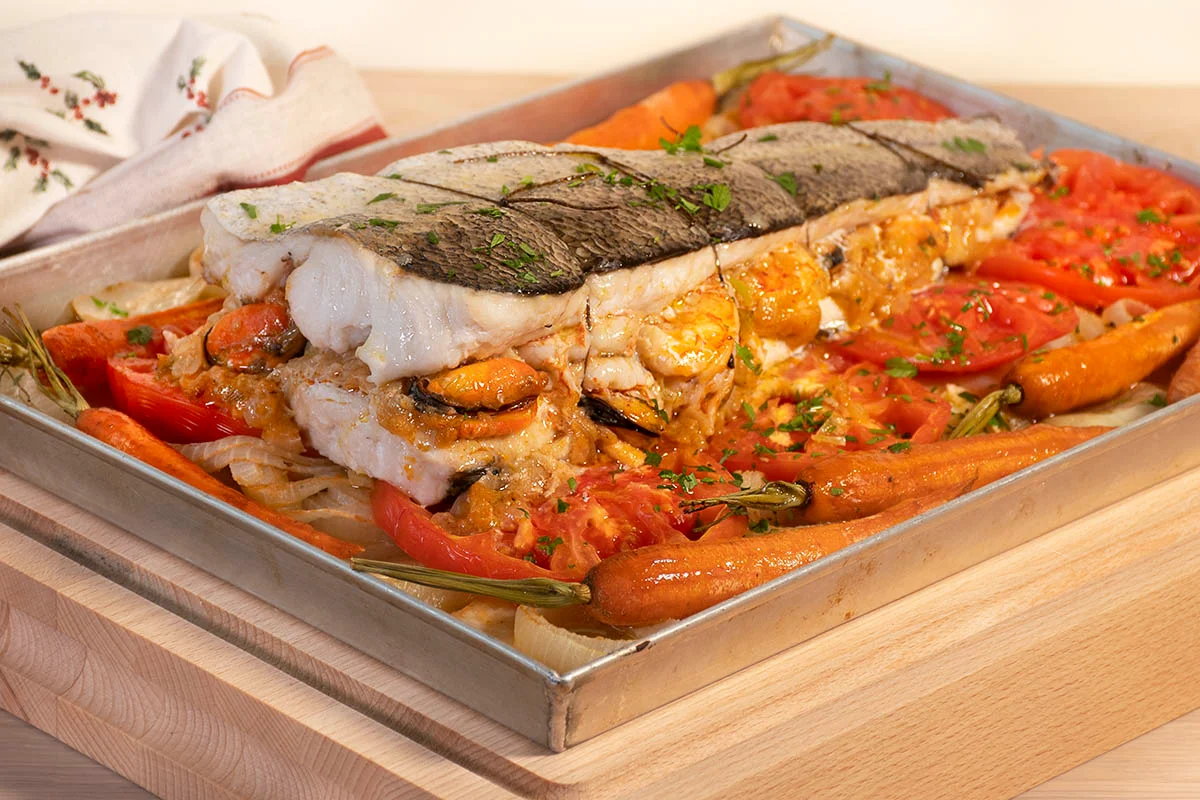
This Spanish-style baked hake is filled with mussels and langoustines, then served over potatoes, onion and tomato. It makes a generous centrepiece for a special meal, with a shellfish stock bringing the filling and vegetables together.
Ingredients
- 2 fillets, about 800 g eachhake, boneless (from a whole fish of about 2,500 g)
- 12fresh mussels, cooked
- 10langoustines, peeled and headless
- 130 mlfish stock
- 30 gheaped tablespoon plain flour
- 2 clovesgarlic
- 2spring onions (or leek)
- To tastesalt and black pepper
- To tasteextra-virgin olive oil
- To tastewhite wine (the original uses Albariño)
- 30 mlolive oil
- 300 glangoustine shells and heads, fresh or frozen
- 750 mlwater
- 2 clovesgarlic
- 50 mlbrandy
- 100 mlwhite wine
- To tastesalt and freshly ground pepper
- 3potatoes
- 1 largeonion
- 2 largetomatoes
- 6 small, optionalyoung carrots
- To tastefresh parsley, finely chopped
Instructions
- 1
Prepare the hake
Ask the fishmonger to split the hake into two fillets and remove the central and side bones. Check that the fillets are thoroughly boneless, then set them aside.
- 2
Open the mussels
Put the mussels in a pan with ½ glass of water and bring to the boil. As soon as they open, turn off the heat, uncover the pan and remove the meat from 12 mussels for this recipe. Discard any mussels that remain closed.
- 3
Peel the langoustines
Peel the langoustines and reserve the tails for the filling. Keep the shells and heads to make the stock.
- 4
Start the stock
Heat 30 ml olive oil in a pan over a high heat. Add the chopped garlic and onion and brown them, then add the langoustine shells and heads, the brandy and 100 ml white wine. Let the alcohol evaporate.
- 5
Season the stock
Add salt and pepper.
- 6
Release the juices
Stir, pressing the shells lightly with a spatula or wooden spoon to release their juices.
- 7
Simmer the stock
Add 750 ml water and simmer over a medium-low heat for 30 minutes.
- 8
Blend the stock
Put a hand blender into the pan and blend the mixture thoroughly.
- 9
Strain the stock
Pass the mixture through a fine-mesh sieve.
- 10
Set aside stock
The stock is ready to use.
- 11
Prepare the garnish
Begin the potato and onion garnish.
- 12
Bake the potatoes
Cut the potatoes into ½ cm slices and cover them with the onion, thinly sliced and separated into rings. Season with salt and pepper, add a drizzle of oil and 3 or 4 tablespoons of stock. Bake at 180°C with top and bottom heat for about 40 minutes.
- 13
Begin the filling
While the potatoes bake, prepare the hake filling.
- 14
Sear the langoustines
Heat a little oil in a frying pan. When it is hot, sear the langoustines for a few seconds on each side, then remove them.
- 15
Cook the aromatics
Chop the garlic and spring onions, then season them with salt and pepper. In the same pan, soften the garlic first, then add the spring onions and cook for a few minutes, until their colour changes.
- 16
Thicken the filling
Push the spring onions and garlic to the sides of the pan. Add the flour to the centre and stir to toast it, then add about 150 ml stock to make a thick béchamel-like sauce that will bind the filling. Mix well, season with a little salt and taste; if it is well seasoned, turn off the heat.
- 17
Mix the filling
Add the mussels, halving the larger ones and leaving the smaller ones whole. Do the same with the langoustines, halving most and keeping a few whole. Mix, transfer to a plate and leave to cool.
- 18
Slice the tomatoes
Cut the tomatoes into slices and set them aside on a plate.
- 19
Fill the hake
Lay one hake fillet open on a board and season it with salt. Spread the filling over it and place the second fillet on top like a lid. Tie the fish in four places with kitchen string. The filling does not need to be completely enclosed; any that escapes will fall onto the garnish.
- 20
Check the potatoes
When the potatoes are tender but still offer some resistance when pierced, remove the tray from the oven.
- 21
Bake the hake
Arrange the tomato slices on the tray, season them with salt and drizzle with oil. Carefully place the stuffed hake on top, pour over a glass of your chosen white wine and add another drizzle of oil. Raise the oven temperature to 190°C and bake for about 40 minutes.
- 22
Serve the fish
Take the tray from the oven and cut away the string. Slice the hake into portions and transfer them to a serving dish in the same order. Arrange the vegetables around it, scatter over finely chopped fresh parsley and serve.
What is stuffed hake?
Hake is a mild white fish widely used in Spanish cooking, where it is often baked or served with seafood and a light sauce. In this version, two boneless fillets enclose a filling of mussels and langoustines, making the fish a substantial dish for sharing.
The method layers several flavours without making the fish itself complicated: shellfish stock enriches the filling and baking vegetables, while tomato adds freshness alongside the potatoes and onion.
Nutrition and macros by portion
The nutrition label shows one serving as written: 610 calories, 76g protein, 38g carbs, 17g fat.
| Portion | Adjustment | kcal | Protein | Carbs | Fat |
|---|---|---|---|---|---|
| Lighter | More vegetables, less potato | 427 kcal | 53g | 27g | 12g |
| This serving | As written | 610 kcal | 76g | 38g | 17g |
| Hungry | Add an extra potato | 915 kcal | 114g | 57g | 26g |
The hake, langoustines and mussels provide most of the protein, while the potatoes and flour contribute most of the carbohydrates. Olive oil and the shellfish filling account for much of the fat. To balance the plate, serve a portion with a generous helping of green vegetables or salad.
The shellfish stock
Shells and heads: browning them with garlic, onion, brandy and white wine develops the base for the stock. Pressing them gently as they cook helps release their juices.
Straining: after blending, pass the stock through a fine sieve so shell fragments do not carry through into the filling or garnish.
Build a filling that holds
Flour and stock: toast the flour briefly in the pan with the softened aromatics, then add the stock gradually. The aim is a thick binder rather than a loose sauce, so the shellfish stays in place between the fillets.
Cool before filling: let the mixture cool on a plate before spreading it over the hake. This makes it easier to handle and avoids placing hot filling directly onto the raw fish.
Get the garnish ready
Potatoes and onion: slice the potatoes evenly, about ½ cm thick, so they cook at a similar rate. The first oven stage gives them a head start before the fish goes on the tray.
Stock in the tray: a few spoonfuls add flavour and moisture as the potatoes bake. The tomato slices go in later with the fish, rather than sharing the full initial bake.
Tie and bake the hake
Kitchen string: tie the fillets in four places to keep the filling enclosed as much as possible. A little filling escaping is expected and can mingle with the vegetables.
Doneness: the recipe gives about 40 minutes at 190°C for the stuffed fish. Since fillet thickness can vary, check that the fish is opaque and flakes easily at its thickest point.
Timing the two oven stages
Start with the potatoes at 180°C for about 40 minutes. Take the tray out when they are tender but still slightly firm when pierced, then add the tomatoes and stuffed hake.
Raise the oven to 190°C for the final bake, which the recipe gives as about 40 minutes. Allow for some variation according to the size and thickness of the fish.
Serving the finished dish
Keep the portions in their original order when transferring them to a serving dish, as the fillets can be delicate once sliced. Spoon some of the potatoes, onion, tomato and any escaped filling around the fish.
Serve with the chopped parsley on top. A simple green salad or another lightly dressed vegetable can balance the rich seafood filling and potato garnish.
Recipe notes & tips
- Ask the fishmonger to remove both the central and side bones, then check the fillets again before filling.
- Discard any mussels that do not open during cooking.
- Keep a few langoustine tails whole for the filling, as described, and halve the rest.
- Add the stock to the flour gradually so you can keep the filling thick enough to bind.
- Wait until the filling has cooled before spreading it over the hake.
- Use the potatoes’ tenderness as the cue to add the fish, rather than relying only on the initial baking time.
Variations
- Use leek: replace the spring onions with leek, as suggested in the ingredient list.
- Choose another white wine: use a dry white wine in place of Albariño.
- Add the optional carrots: arrange the young carrots with the potato garnish.
- Adjust the shellfish pieces: leave smaller mussels whole and halve larger ones for a more even filling.
- Make the stock ahead: prepare and strain it before starting the potato and fish stages.
Common mistakes to avoid
- Skipping the sieve: blended shells can leave grit in the stock, so strain it through a fine-mesh sieve.
- Leaving closed mussels in: discard any that have not opened after cooking.
- Making the binder too thin: add stock gradually and stop when the sauce is thick enough to hold the shellfish.
- Filling the fish while hot: cool the mixture first so it is easier to spread and handle.
- Adding the hake too early: wait until the potatoes are tender but still slightly firm when pierced.
- Overbaking without checking: use the fish’s opaque, easily flaking texture as a doneness cue.
How to store
Refrigerate leftovers in a covered container and eat within 1–2 days. Reheat gently in a covered ovenproof dish at 160°C until piping hot, taking care not to dry out the fish; remove any kitchen string before serving.
Frequently asked questions
Can I make the stock ahead?
Yes. Prepare and strain the stock in advance, then refrigerate it until you are ready to make the filling and bake the garnish.
Can I use leek instead of spring onions?
Yes. The ingredient list suggests leek as an alternative; chop it and soften it in the pan with the garlic.
How do I know when the potatoes are ready for the fish?
They should be tender but still offer some resistance when pierced. They will continue cooking with the hake in the second oven stage.
How can I tell when the hake is cooked?
Check the thickest part: the fish should be opaque and flake easily. The recipe gives about 40 minutes at 190°C, but thickness affects the timing.
Does the filling need to stay completely inside the fish?
No. Tie the fillets in four places, but a little filling escaping is expected and will land on the potato garnish.
Can I use frozen langoustines?
The recipe specifies fresh or frozen langoustine shells and heads for the stock. The tails are listed separately for the filling.
Cook it from the original
This recipe comes from lacocinadefrabisa.lavozdegalicia.es. Their page has the author’s own photos, notes and tips — the best place to cook it from.
Open the recipe on lacocinadefrabisa.lavozdegalicia.es