
Sacher-style cake with dulce de leche and brownie
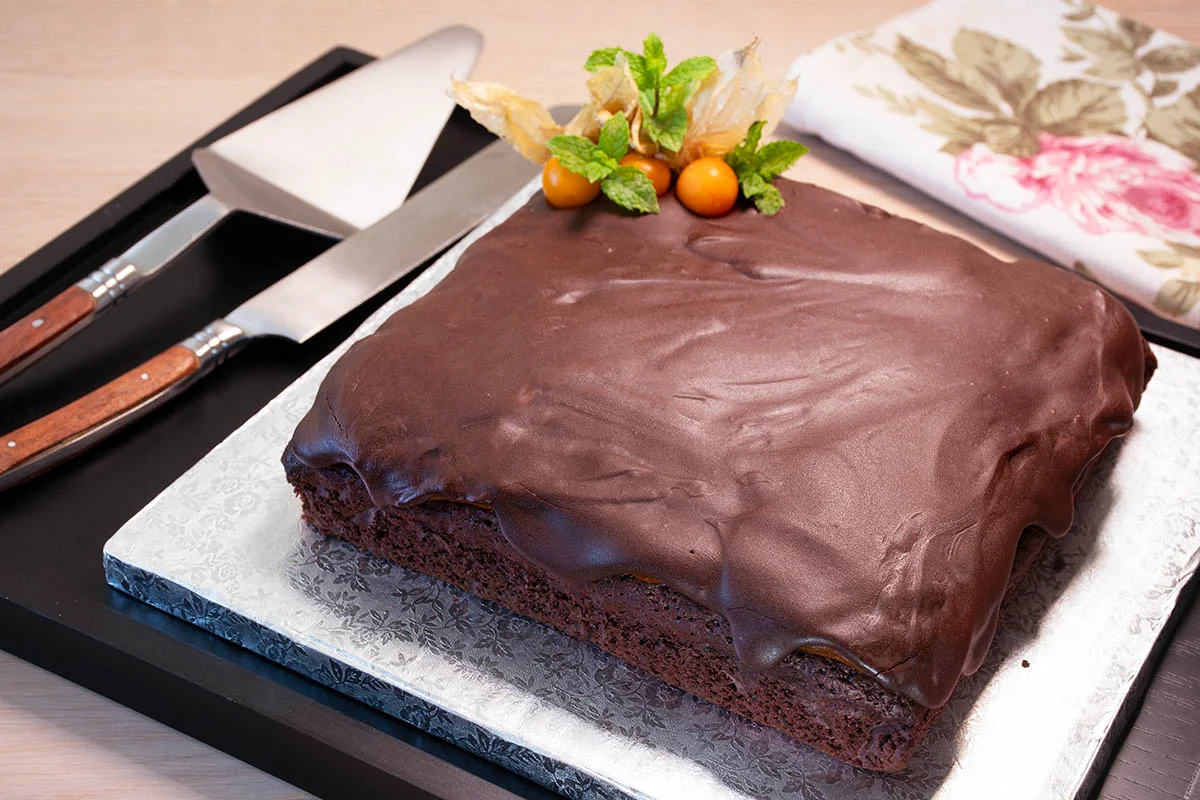
A rich chocolate cake layered with dulce de leche and finished with a smooth chocolate topping, in the spirit of a Sacher torte. It makes a celebratory dessert with contrasting chocolate and caramel-like layers.
Ingredients
- 200 g70% dark chocolate (milk chocolate can also be used)
- 100 gbutter
- 4 largeeggs
- 60 gwhite sugar
- 40 gbrown sugar
- 40 gplain flour
- 1 tsp (5 ml)baking powder
- 35 gunsweetened cocoa powder
- 1 tsp (5 ml)vanilla
- 500 gdulce de leche for baking
- 140 g70% unsweetened dark chocolate
- 140 gdouble cream (35% fat)
- 1 walnut-sized knobbutter
- to tastephysalis for decoration and mint leaves
Instructions
- 1
Melt the chocolate
Put the chocolate and butter in a bowl and melt them over a bain-marie, or in a 700 W microwave in 40-second bursts, stirring after each burst. Mix well and set aside.
- 2
Mix eggs and sugar
Whisk both sugars with the eggs until thoroughly combined, then add the vanilla.
- 3
Combine the chocolate
Add the melted chocolate and butter to the egg mixture and mix until incorporated.
- 4
Fold in dry ingredients
Sift the flour, cocoa and baking powder together. Add them in two batches, folding gently to combine.
- 5
Bake the cake
Pour the mixture into a cake tin and bake in a preheated oven at 180°C, with heat from above and below, for about 40–45 minutes, depending on the oven.
- 6
Cool before turning
Remove the cake from the oven and wait until it is almost cool before turning it out, so it is less likely to break while hot.
- 7
Make the topping
Melt the chocolate with the cream over a bain-marie, or in a microwave in 40-second bursts, stirring each time. Once smooth, add the knob of butter and mix vigorously. Set aside.
- 8
Add dulce de leche
Spread the dulce de leche evenly over the surface of the cake.
- 9
Cover with chocolate
Pour the chocolate mixture over the dulce de leche and spread it evenly.
- 10
Decorate the cake
Wait for the chocolate to set, then decorate with physalis and a few mint leaves.
- 11
Serve the cake
Serve.
What is a Sacher-style cake?
A Sacher-style cake takes inspiration from the Viennese chocolate torte, traditionally known for its chocolate sponge and apricot layer. This version swaps in dulce de leche and adds a chocolate-and-cream topping.
The result is a rich cake with distinct layers: a cocoa sponge, a sweet milk-caramel filling and a smooth chocolate finish.
Nutrition and macros by portion
The nutrition label shows one serving as written: 1450 calories, 20g protein, 145g carbs, 88g fat.
| Portion | Adjustment | kcal | Protein | Carbs | Fat |
|---|---|---|---|---|---|
| Lighter | Use less dulce de leche | 1015 kcal | 14g | 102g | 62g |
| This serving | As written | 1450 kcal | 20g | 145g | 88g |
| Hungry | Serve a larger slice | 2175 kcal | 30g | 218g | 132g |
The flour, sugars and dulce de leche provide most of the carbohydrates, while chocolate, butter and cream contribute much of the fat. Eggs and chocolate add some protein. Balance a slice with fresh fruit, or serve it after a meal that includes vegetables and a lean protein source.
Building the chocolate sponge
Chocolate and butter: melt them gently, stirring until smooth, then let the mixture stand while you beat the eggs and sugars.
Dry ingredients: sift the flour, cocoa and baking powder together, then fold them in batches. A light hand helps avoid knocking too much air out of the batter.
Getting the bake right
Oven: bake at 180°C for around 40–45 minutes, as the recipe directs; the exact time depends on your oven.
Cooling: leave the cake until almost cool before turning it out. A warm cake is more delicate and may break when handled.
Layering and topping
Dulce de leche: spread it in an even layer over the cooled cake so each slice gets a consistent filling.
Chocolate topping: pour it over the dulce de leche and distribute it evenly. Let it set before adding the physalis and mint.
Serving and balance
The cake is rich, so small slices work well after a meal; fresh fruit alongside can bring a lighter, tart contrast.
For a clean finish, wait until the chocolate topping has set before slicing, and wipe the knife between cuts.
Recipe notes & tips
- Stir the chocolate mixture after every 40-second microwave burst to help it melt evenly.
- Add the sifted dry ingredients in two batches and fold gently.
- Use the 40–45 minute baking time as a guide, since ovens vary.
- Let the cake become almost cool before turning it out of the tin.
- Spread the dulce de leche evenly before adding the chocolate topping.
- Wait for the topping to set before decorating and slicing.
Variations
- Milk chocolate: use milk chocolate for the sponge if you prefer a sweeter chocolate flavour.
- Citrus garnish: add a little finely grated orange zest to the topping for a fragrant note.
- Berry topping: decorate with fresh berries instead of physalis.
- Nut finish: scatter chopped toasted hazelnuts over the topping before it sets.
- Mint accent: keep the mint leaves as the fresh garnish and leave out the physalis.
Common mistakes to avoid
- Overheating chocolate: use short bursts and stir between them so it does not scorch.
- Rushing the folding: add the dry ingredients in two batches and fold gently to keep the batter light.
- Turning it out too soon: wait until the cake is almost cool to reduce the chance of breakage.
- Uneven filling: spread the dulce de leche right to the surface edges in a level layer.
- Topping too soon: allow the chocolate topping to set before adding the garnish.
How to store
Keep the cake covered in the refrigerator because it contains cream and dulce de leche, and eat it within 3–4 days. Let slices stand briefly at room temperature before serving, or warm them gently if you prefer a softer texture.
Frequently asked questions
Can I use milk chocolate in the sponge?
Yes. The ingredient list specifically allows milk chocolate in place of the 70% dark chocolate; the cake will taste sweeter and less bitter.
Can I melt the chocolate in the microwave?
Yes. Use 700 W power for the sponge chocolate and butter, and melt in 40-second bursts, stirring each time. The topping is also melted in 40-second bursts.
How do I know when the cake is done?
The recipe gives a baking time of about 40–45 minutes at 180°C, depending on your oven. It does not specify a separate doneness test, so keep an eye on it as it approaches that time.
Why should I wait before turning out the cake?
The cake is fragile while hot and may break if turned out too soon. Let it cool until almost cold first.
When should I add the physalis and mint?
Add them after the chocolate topping has set, just before serving or once the cake is ready to present.
Can I make the cake ahead?
Yes. Once assembled, cover and refrigerate it, then allow time for the topping to set. Keep it chilled until serving.
Cook it from the original
This recipe comes from lacocinadefrabisa.lavozdegalicia.es. Their page has the author’s own photos, notes and tips — the best place to cook it from.
Open the recipe on lacocinadefrabisa.lavozdegalicia.es