
Lighter Russian salad
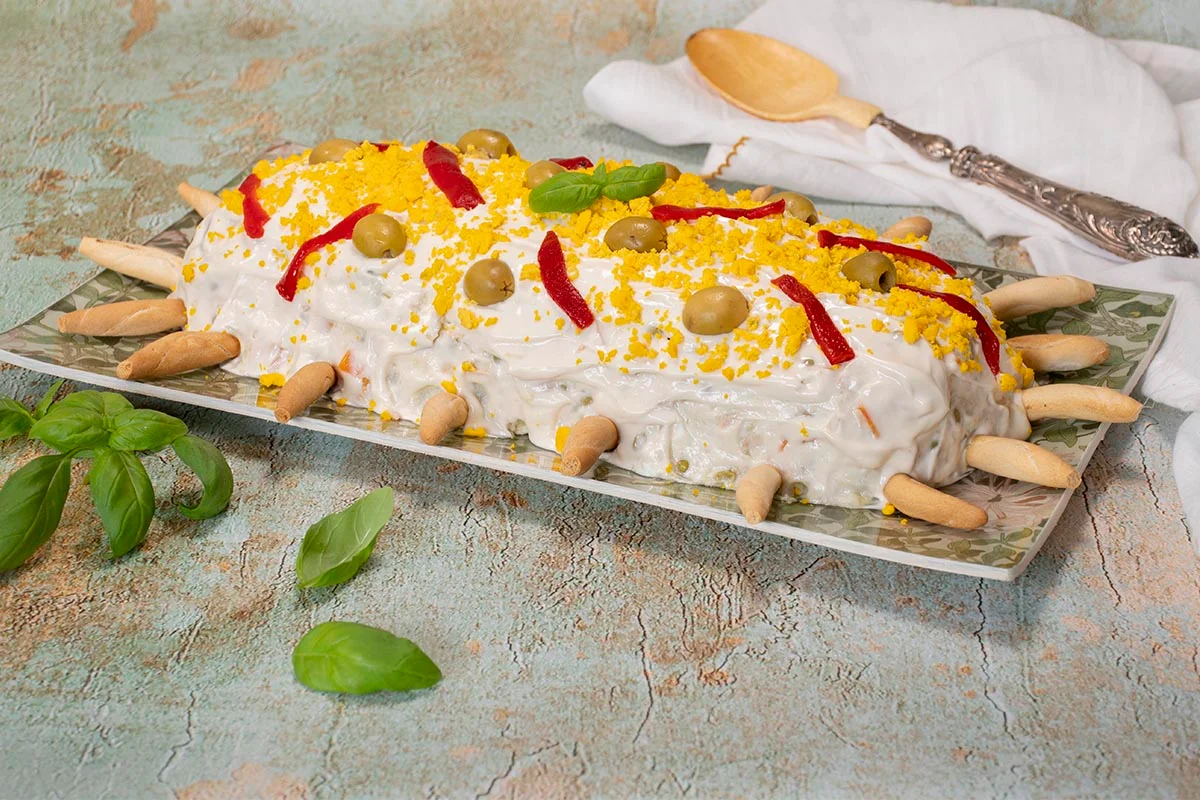
This lighter Russian salad combines potatoes, vegetables, eggs and tuna with a tangy dressing made from yoghurt and light mayonnaise. It makes a substantial dish for a shared table, with olives and red pepper adding a savoury finish.
Ingredients
- 4 mediumpotatoes
- 1 handfulolives (reserve some for decoration)
- 3hard-boiled eggs (reserve one yolk for decoration)
- 3young carrots
- 140 g drained weighttinned peas
- 200 g drainedtuna
- to tastered pepper pieces, for decoration
- to tastesalt
- a drizzleextra-virgin olive oil
- 2 tablespoonsvinegar
- Yoghurt mayonnaise for the salad:
- 120 g (1 pot)plain, unsweetened Greek yoghurt
- 4 heaped tablespoonslight mayonnaise
- a pinchsalt
- Yoghurt mayonnaise to cover the salad:
- 3 tablespoonsplain, unsweetened Greek yoghurt
- 2 heaped tablespoonslight mayonnaise
- a pinchsalt
Instructions
- 1
Boil the eggs
Cook the eggs in salted water with a splash of vinegar for 12 minutes, timing from when the water begins to boil.
- 2
Cook the vegetables
Wash the potatoes. Cook them in water with the trimmed, peeled carrots until tender.
- 3
Mash the potatoes
While the potatoes are still warm, peel them and put them in a bowl. Mash until almost smooth.
- 4
Chop the carrots
Cut the carrots into small pieces and add them to the bowl.
- 5
Chop the eggs
Chop the eggs, setting aside one yolk for decorating.
- 6
Add peas and olives
Add the peas and finely chopped olives, reserving a few olives for decoration.
- 7
Add the tuna
Drain and flake the tuna, then add it to the bowl.
- 8
Mix the salad
Season with salt, a drizzle of extra-virgin olive oil and 2 tablespoons of vinegar. Add the yoghurt and mayonnaise mixture, combine well and transfer to a serving dish.
- 9
Cover and decorate
Spread over the yoghurt and mayonnaise mixture prepared for the topping. Decorate with the mashed egg yolk, reserved olives and strips of red pepper.
- 10
Serve the salad
Serve.
What is Russian salad?
Russian salad, often called ensaladilla rusa in Spain, is a chilled or room-temperature potato salad with vegetables and a creamy dressing. It has become a familiar dish on Spanish tables, where tuna, peas and olives are common additions.
This version keeps the classic combination but mixes yoghurt with light mayonnaise for both the filling and its smooth outer layer. The mashed potato helps the ingredients bind, while the chopped vegetables and tuna give each portion texture.
Nutrition and macros by portion
The nutrition label shows one serving as written: 406 calories, 29g protein, 50g carbs, 13g fat.
| Portion | Adjustment | kcal | Protein | Carbs | Fat |
|---|---|---|---|---|---|
| Lighter | Use less topping | 284 kcal | 20g | 35g | 9g |
| This serving | As written | 406 kcal | 29g | 50g | 13g |
| Hungry | Serve a larger portion | 609 kcal | 44g | 75g | 20g |
Potatoes and peas provide most of the carbohydrates, while tuna and eggs supply much of the protein. The mayonnaise, egg yolks and olive oil contribute most of the fat. Pair a portion with a generous serving of fresh vegetables for a more balanced plate.
The potato base
Potatoes: cook them whole until tender, then peel while warm, when the skin is easier to remove. Mash them almost completely so they hold the salad together without turning it entirely smooth.
Carrots: cook them alongside the potatoes, but check tenderness as they may be ready at a different time. Chop them small so they are evenly distributed through the mixture.
Getting the dressing right
Filling: mix the Greek yoghurt and light mayonnaise before stirring them into the potato mixture. Add the dressing gradually if you prefer a firmer salad.
Topping: the separate yoghurt-mayonnaise mixture is spread over the finished salad. Smooth it gently across the surface, then add the reserved yolk, olives and red pepper.
Eggs and vegetables
Eggs: start timing the 12-minute boil once the water is bubbling. Set aside one yolk before chopping the rest, so it is ready to crumble over the top.
Peas and olives: drain the peas well and chop the olives finely. This keeps excess liquid out of the salad and helps the salty olive flavour spread through it.
Tuna and seasoning
Tuna: drain it thoroughly and flake it into small pieces before adding it to the bowl. This makes it easier to mix evenly without leaving large, dense chunks.
Seasoning: the recipe uses salt, a drizzle of olive oil and 2 tablespoons of vinegar. Taste the mixture before serving, bearing in mind that olives and mayonnaise can already contribute saltiness.
Serving and texture
Transfer the mixture to a serving dish before adding the smooth topping and decorations. A little chilling can help it firm up, though the method does not specify a chilling time.
Serve it as part of a shared meal, alongside leafy salad or sliced tomatoes. It also works as a filling side with grilled vegetables or bread.
Recipe notes & tips
- Drain the peas and tuna well to keep the salad from becoming watery.
- Peel the potatoes while they are warm, but handle them carefully.
- Mash the potatoes while they are still warm for an easy-to-combine base.
- Keep the reserved olives and egg yolk aside until the salad is ready to decorate.
- Taste before adding extra salt, as the olives and mayonnaise are already savoury.
Variations
- Fresh herbs: fold chopped parsley into the salad for a fresh note.
- More crunch: add finely diced cooked green beans alongside the carrots.
- Olive choice: use green or black olives, depending on the flavour you prefer.
- Extra vegetables: add chopped cooked pepper to the filling as well as the topping.
- Tangier dressing: add a little more vinegar to the filling, tasting as you go.
Common mistakes to avoid
- Overcooked vegetables: check the potatoes and carrots for tenderness separately and remove each when ready.
- Watery filling: drain the peas and tuna thoroughly before mixing them in.
- Lumpy potato base: mash the potatoes while warm and break up large pieces before adding the other ingredients.
- Too much dressing at once: mix it in gradually so the salad keeps the consistency you want.
- Missing decoration: reserve the yolk and some olives before chopping or mixing the rest.
How to store
Cover and refrigerate leftovers promptly, and use them within 2–3 days. Keep the salad chilled and do not leave it at room temperature for an extended period; it is best served cold or cool rather than reheated.
Frequently asked questions
Can I make the salad ahead?
Yes. Prepare it ahead and keep it covered in the fridge. Add or refresh the decoration shortly before serving.
How do I know when the potatoes are tender?
Pierce one with a knife or skewer; it should pass through easily. The recipe gives no cooking time, so check them as they cook.
Can I use fresh peas?
Yes, but cook them until tender and drain them well before adding them. The recipe uses 140 g of drained tinned peas.
Can I use full-fat mayonnaise?
Yes, though the flavour and richness will differ from the light mayonnaise specified. Keep the quantities the same if you want to preserve the recipe's proportions.
Why is yoghurt used with the mayonnaise?
It makes up part of both the filling and the coating, giving the dressing a tangy flavour. Mix each yoghurt and mayonnaise portion separately as listed.
Cook it from the original
This recipe comes from lacocinadefrabisa.lavozdegalicia.es. Their page has the author’s own photos, notes and tips — the best place to cook it from.
Open the recipe on lacocinadefrabisa.lavozdegalicia.es