
32 Mouth-Watering Foods that start with Y
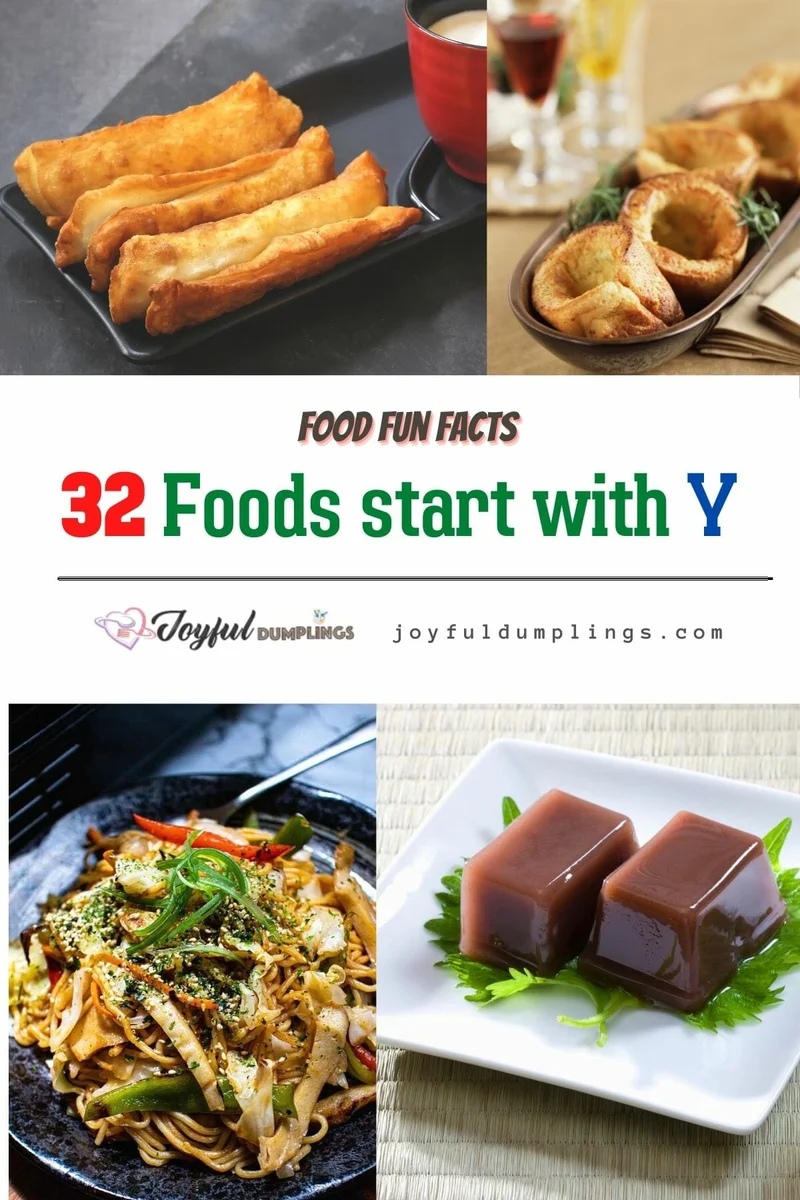
A curious A-to-Z-style roundup of 32 foods whose names begin with Y, from familiar yams and yoghurt to yuba, youtiao and yōkan. It is a list of ideas to explore rather than a single dish or a cookable recipe.
Ingredients
- to tasteYams
- to tasteYam bean (jícama)
- to tasteYardlong beans (snake beans)
- to tasteYangmei fruit (Chinese bayberry)
- to tasteYellow apple
- to tasteYuzu
- to tasteYuba (tofu skin)
- to tasteYaki sushi nori
- to tasteYaki onigiri (grilled rice balls)
- to tasteYakisoba
- to tasteYaki udon
- to tasteYakhni pulao
- to tasteYeast
- to tasteYoghurt
- to tasteYakult
- to tasteYorkshire pudding
- to tasteYukon Gold potatoes
- to tasteYellow cornmeal
- to tasteYassa
- to tasteYacon
- to tasteYellow bell pepper
- to tasteYucca fruit
- to tasteYuca root (cassava root)
- to tasteYōkan (羊羹/wagashi)
- to tasteYali pear
- to tasteYiros (gyros)
- to tasteYellow eye bean
- to tasteYoungberry
- to tasteYoutiao (Chinese fried dough or Chinese cruller)
- to tasteYan-tao (star fruit)
- to tasteYemenite spicy pesto
- to tasteYodels
Instructions
- 1
Explore the list
There are many foods that begin with Y; if one catches your interest, consider trying it.
What are foods that start with Y?
This is a collection of food names beginning with the letter Y, not a recipe with a shared origin or preparation. The list ranges from produce and ingredients to prepared dishes and packaged sweets, drawing on food traditions from different places.
That variety is what makes the roundup useful: it offers starting points for discovering unfamiliar names alongside more recognisable foods. The entries are not meant to be combined into one meal.
A varied collection
Produce: yams, yacon, yuzu, pears and berries represent very different flavours and uses; some are eaten fresh, while others are more often cooked or used as ingredients.
Prepared foods: dishes such as yakisoba, yaki udon and yakhni pulao are complete preparations, rather than single ingredients. Their recipes and ingredients can differ from one cook or region to another.
Names and spellings
Translations: some entries include a familiar alternative name, such as jícama for yam bean or cassava for yuca. These names can vary by country and market, so checking the label or asking a shopkeeper can help.
Transliteration: names such as yōkan and youtiao are written in English using spellings drawn from other languages. You may see alternate spellings when searching for them.
How to choose something to try
Start with the format: choose a fruit or vegetable for a simple tasting, or a prepared dish if you want a more substantial introduction. A specialist grocer or restaurant may be the easiest place to find less familiar entries.
Check the specific item before buying: some names refer to fresh produce, while others describe dried, packaged or ready-made foods. The list does not provide recipes or instructions for preparing them.
Building a meal around an entry
Pairings depend on which food you choose, since the list includes everything from fruit to savoury meals and sweets. For a complete plate, serve a chosen main dish with vegetables or fruit that suit its cuisine and preparation.
If you are sampling a new ingredient, try a small amount alongside familiar foods first. That makes it easier to notice its flavour and texture without treating all 32 entries as one menu.
Recipe notes & tips
- Treat the entries as ideas to explore, not as ingredients for one recipe.
- Look for alternate spellings when searching for less familiar foods.
- Ask a grocer whether an unfamiliar produce item is ripe or needs cooking.
- Try unfamiliar flavours alongside foods you already enjoy.
- Check product labels for packaged items such as yuba or Yakult.
Variations
- Fresh produce: Explore options such as yuzu, yali pear, yacon or youngberry.
- Noodle dishes: Look for yakisoba or yaki udon as prepared meals.
- Rice dishes: Try yaki onigiri or seek out yakhni pulao.
- Savoury accompaniments: Explore yuba, nori or Yemenite spicy pesto.
- Sweet options: Look for yōkan, Yorkshire pudding or Yodels, noting that they are very different foods.
Common mistakes to avoid
- Treating the list as a recipe: the names are not a measured ingredient combination; choose one item to explore.
- Assuming similar names mean similar foods: check descriptions because entries range from produce to prepared dishes.
- Expecting one spelling: search a recognised alternative name or transliteration if the first search is unsuccessful.
- Buying an unfamiliar fresh item without checking its use: ask whether it is eaten raw, cooked or prepared another way.
- Assuming every entry is available in one shop: try specialist grocers or restaurants for less common foods.
How to store
There is no prepared dish to store. Follow the packaging or produce guidance for whichever individual food you choose; storage needs vary widely across this list.
Frequently asked questions
Is this a recipe for all 32 foods?
No. It is a roundup of names beginning with Y, and the entries are not intended to be cooked or eaten together.
What is the best food on the list to try first?
Choose according to what you can find and what you enjoy: a familiar fruit or potato is an accessible starting point, while a prepared dish offers a fuller introduction to its cuisine.
Are yam bean and yuca the same thing?
No. Yam bean is also called jícama, while yuca is cassava root; despite their similar names, they are different foods.
Where can I find the less familiar entries?
Specialist grocers and restaurants may stock or serve items such as yuba, youtiao or yakhni pulao. Availability varies by location.
Can I calculate nutrition for this list?
Not as a single serving: the list contains unrelated foods and gives no serving sizes or preparation details. Nutrition would need to be calculated for a specific item and portion.
Cook it from the original
This recipe comes from joyfuldumplings.com. Their page has the author’s own photos, notes and tips — the best place to cook it from.
Open the recipe on joyfuldumplings.com