
Creamy mustard and asparagus chicken
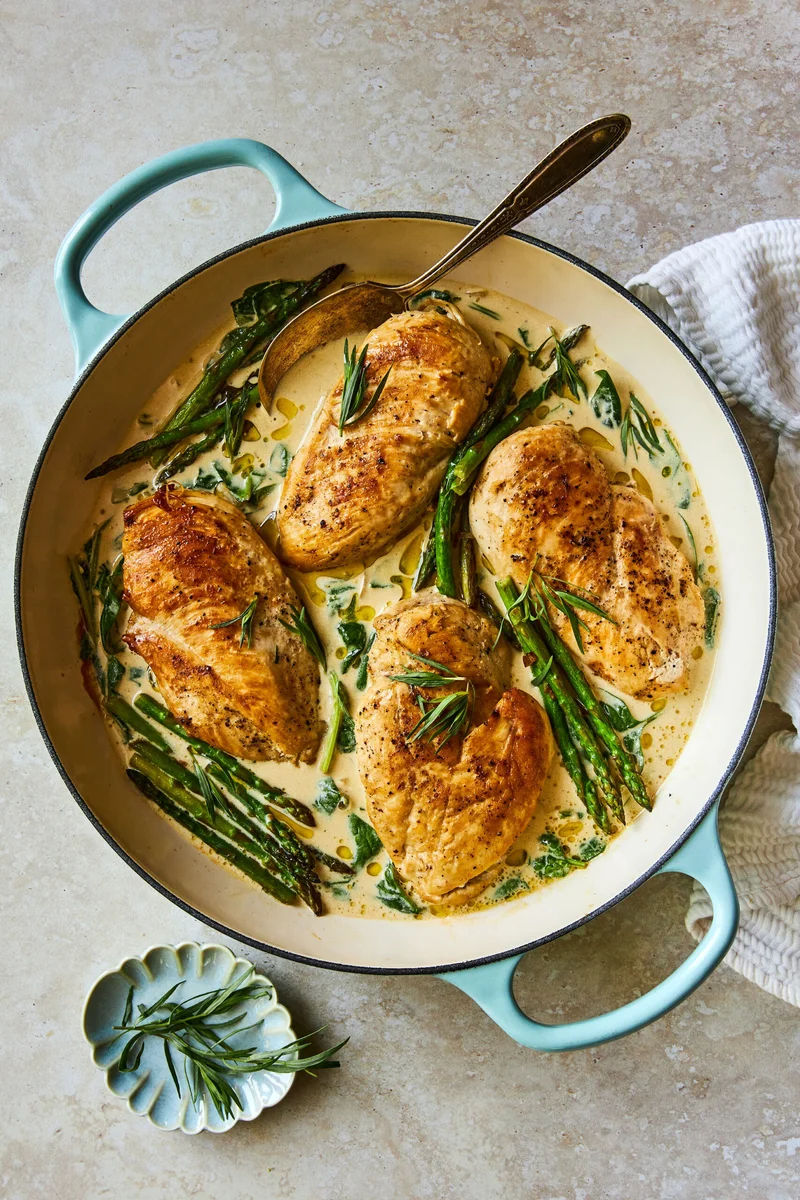
This one-pan chicken pairs golden chicken breasts and asparagus with a creamy Dijon sauce brightened with herbs and wine. It is a comforting way to make the most of spring asparagus, with minimal washing-up.
Ingredients
- 4boneless, skinless chicken breasts
- to tastesalt and black pepper
- 30 ml + 30 mlolive oil
- 1 bunch (325 g)asparagus, cut into thirds
- 60 gFrench shallots, thinly sliced
- 3 clovesgarlic, chopped
- 10 mlfresh rosemary, chopped
- 5 mlcrushed fennel seeds
- 30 mlsherry vinegar or red wine vinegar
- 60 mldry white wine
- 375 mlchicken stock
- 45 mlDijon mustard
- 45 mlnutritional yeast, vegan Parmesan or regular Parmesan
- 2.5 mlsalt
- 75 gbaby spinach
- 250 ml + 60 mlsoya or oat cream, plus very hot water
- 30 mlfresh tarragon, roughly chopped
- to tasteflaky sea salt
Instructions
- 1
Brown the chicken
Season the chicken breasts with salt and pepper. Heat 30 ml of olive oil in a large enamelled cast-iron or non-stick frying pan over medium-high heat. Sear the chicken for 4 minutes on each side, until well browned, then transfer it to a plate.
- 2
Cook the asparagus
In the same pan, heat the remaining 30 ml of oil over high heat. Stir-fry the asparagus for no more than 2 minutes, then transfer it to the plate with the chicken.
- 3
Build the flavour
Reduce the heat to medium and add the shallots. Cook for about 3 minutes, stirring often. Add the garlic, rosemary and fennel seeds; cook for 1 minute, stirring. Pour in the vinegar and white wine and cook for 2 minutes, stirring, until almost all the liquid has evaporated.
- 4
Simmer the chicken
Whisk in the chicken stock, Dijon mustard, nutritional yeast and 2.5 ml of salt. Return the chicken to the pan, cover and cook for 5 minutes, or until the chicken is cooked through.
- 5
Finish the sauce
Stir in the spinach and the soya or oat cream mixed with the hot water. Return the asparagus to the pan and cook for 2 minutes, until the spinach has wilted and the sauce has thickened. Add pepper, scatter over the tarragon and finish with flaky sea salt.
What is creamy mustard and asparagus chicken?
This is a one-pan chicken supper in which seared chicken and briefly cooked asparagus finish in a mustard-led creamy sauce. The recipe celebrates Quebec asparagus, pairing it with aromatics, herbs and a splash of wine.
The method has the practical feel of a French-inspired braise: brown the main ingredients, build a pan sauce and bring everything together at the end. Plant-based cream and nutritional yeast can keep it dairy-free, while Parmesan is an optional alternative.
Nutrition and macros by portion
The nutrition label shows one serving as written: 430 calories, 48g protein, 15g carbs, 21g fat.
| Portion | Adjustment | kcal | Protein | Carbs | Fat |
|---|---|---|---|---|---|
| Lighter | Use less cream | 301 kcal | 34g | 11g | 15g |
| This serving | As written | 430 kcal | 48g | 15g | 21g |
| Hungry | Add potatoes or rice | 645 kcal | 72g | 23g | 32g |
The chicken supplies most of the protein, while the cream and olive oil contribute much of the fat. The asparagus, shallots, spinach and wine provide some carbohydrate, though the dish is not especially carbohydrate-heavy; serve it with potatoes or rice if you want a more balanced, filling plate.
Choose the key ingredients
Chicken breasts: Boneless, skinless breasts cook quickly, so keep an eye on them during the covered simmer. If they vary greatly in thickness, the thinner pieces may finish first.
Asparagus: Cut the spears into thirds so they are easy to serve and cook quickly. The short first sauté preserves some bite before they return to the sauce.
Cream: Soya or oat cream gives the sauce its creamy body. Mixing it with very hot water before adding helps it blend into the pan more smoothly.
Build flavour in the pan
Brown the chicken well before setting it aside; the browned bits left in the pan help flavour the sauce. Use the same pan for the asparagus and aromatics so those flavours carry through.
Shallots soften before the garlic, rosemary and crushed fennel are added. The brief cook with vinegar and wine lets the sharpness mellow and the liquid reduce before the stock goes in.
Keep the asparagus tender
Asparagus needs only up to 2 minutes over high heat at the start, with frequent stirring. It will cook a little more when returned to the pan, so avoid leaving it in for longer than instructed.
The spinach goes in with the cream near the end. Once it has wilted and the sauce has thickened, finish the dish rather than continuing to simmer it.
Check the chicken and sauce
The recipe gives a 5-minute covered simmer after the chicken returns to the pan, but the breasts should be cooked through before serving. Check the thickest part of a breast; a food thermometer should read 74°C.
The sauce should coat the chicken lightly after the final 2-minute cook. If it still looks thin, give it a little more time in the pan while watching the asparagus so it does not overcook.
Serve it as a complete meal
Serve the chicken with plenty of sauce and asparagus, with a simple green salad or steamed vegetables alongside. For a more filling plate, add rice, potatoes or crusty bread to catch the sauce.
Taste before adding the flaky salt, since the stock, mustard and any Parmesan can already bring saltiness. A little extra black pepper works well with the creamy, herb-scented sauce.
Recipe notes & tips
- Pat the chicken dry before seasoning to help it brown in the pan.
- Use a pan large enough to fit the chicken and asparagus without crowding.
- Stir the asparagus frequently during its brief, high-heat sauté.
- Let the vinegar and wine reduce until almost evaporated before adding the stock.
- Mix the cream with very hot water just before adding it to the pan.
- Taste the sauce before finishing with flaky salt.
Variations
- Use fresh herbs: Swap the rosemary or tarragon for another fresh herb that suits the sauce.
- Choose the vinegar: Use red wine vinegar in place of sherry vinegar for a slightly different sharpness.
- Make it dairy-free: Choose soya or oat cream and nutritional yeast, checking the product labels.
- Add Parmesan: Use regular Parmesan instead of nutritional yeast if dairy is suitable for your meal.
- Serve with grains: Spoon the chicken and sauce over rice or another cooked grain.
Common mistakes to avoid
- Crowding the pan: The chicken may steam rather than brown, so use a pan with room for each breast.
- Overcooking the asparagus: It continues cooking in the sauce, so limit the initial sauté to 2 minutes.
- Adding garlic too early: It can burn while the shallots cook; add it with the rosemary and fennel seeds.
- Skipping the reduction: Adding stock before the vinegar and wine have nearly evaporated leaves the sauce sharper and thinner.
- Guessing the chicken is done: Check the thickest part and cook until it reaches 74°C.
- Salting too soon at the end: Taste first, then add flaky salt to account for the stock and any Parmesan.
How to store
Refrigerate leftovers in an airtight container for up to 3 days. Reheat gently in a covered pan over low heat until piping hot, adding a splash of water if the sauce has thickened; avoid prolonged heating, which can toughen the chicken and soften the asparagus.
Frequently asked questions
Can I use chicken thighs instead of breasts?
Yes, boneless, skinless thighs can be used, but they may need longer to cook. Check that the thickest pieces reach 74°C before serving.
How can I tell when the chicken is cooked?
Check the thickest part of a breast with a food thermometer; it should reach 74°C. If needed, cover and cook for a little longer before adding the spinach and cream.
Can I make this recipe dairy-free?
Yes. Use soya or oat cream and nutritional yeast, and check that your stock and other packaged ingredients are dairy-free. The listed Parmesan alternatives contain dairy if you choose regular Parmesan.
Can I prepare it ahead?
For the best asparagus texture, cook the dish shortly before serving. You can prepare the vegetables and measure the sauce ingredients ahead, then refrigerate them separately.
What can I serve with the chicken?
Rice, potatoes or bread work well with the creamy mustard sauce. A simple salad or extra vegetables make a lighter accompaniment.
Can I use frozen asparagus?
Fresh asparagus is best for the brief sauté and tender texture in this method. Frozen asparagus can be softer and release extra water, so thaw and drain it first and add it near the end.
Cook it from the original
This recipe comes from kpourkatrine.com. Their page has the author’s own photos, notes and tips — the best place to cook it from.
Open the recipe on kpourkatrine.com