
Dinner Rolls
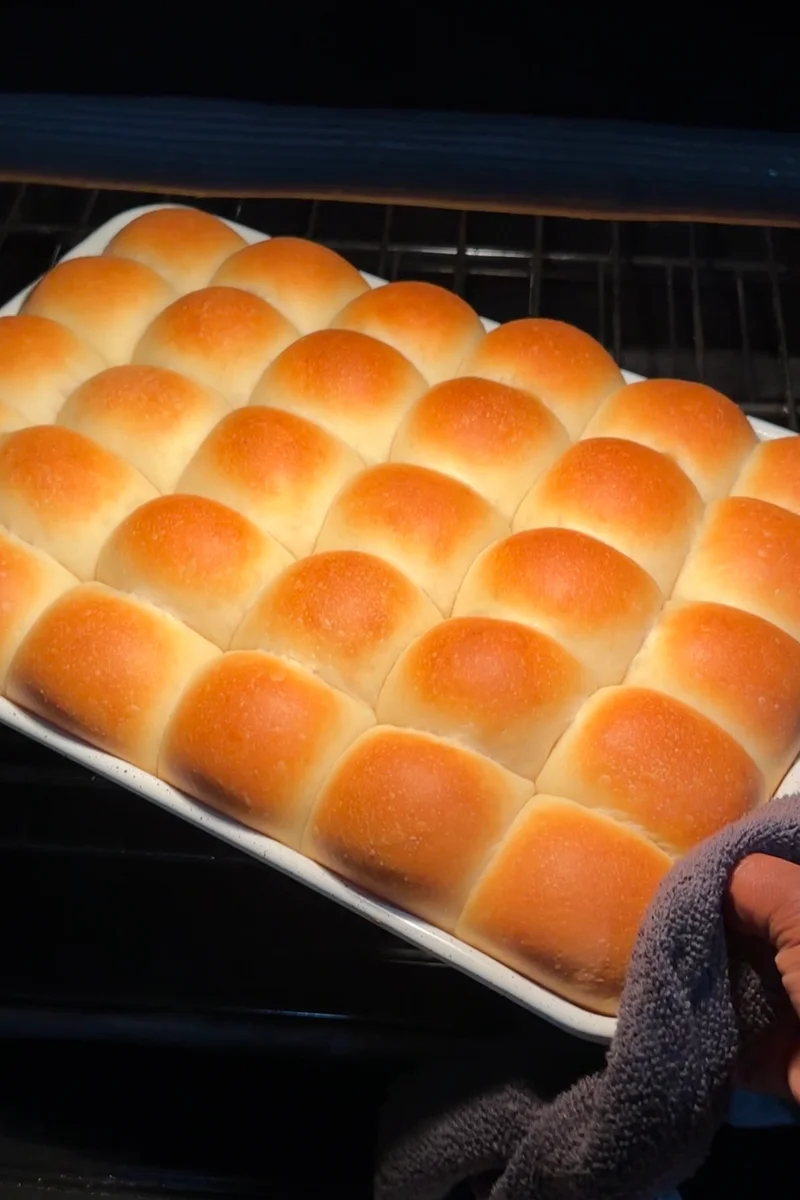
These soft, lightly sweet dinner rolls are made with milk powder, eggs and butter for a tender, enriched dough. They suit a shared meal, and the recipe makes 30 rolls for a crowd or to freeze for later.
Ingredients
- 50 gpowdered milk
- 240 mlwater
- 7 ginstant yeast
- 100 gsugar
- 2 medium eggs (110 g without shells)eggs
- 600 gbread flour
- 9 gsalt
- 115 gsoftened butter
- 10 goil
Instructions
- 1
Mix the liquids
Combine the powdered milk, water, sugar and instant yeast, stirring until mixed. If using active dry yeast, follow Note 1.
- 2
Add dry ingredients
Add the eggs, bread flour and salt. Mix on Speed 2, or stir, for 2 minutes until the dough begins to come together. For hand kneading, see Note 4.
- 3
Knead the dough
Raise the mixer to Speed 4 and knead for 2 minutes.
- 4
Work in fats
Add the softened butter and oil, then knead on Speed 4 for a further 4 minutes.
- 5
Finish kneading
Increase the mixer to Speed 6 and knead for another 2 minutes, until the dough is smooth and elastic.
- 6
Grease the bowl
Move the dough to a lightly greased bowl and turn it so its surface is coated.
- 7
Cover and rise
Cover with a clean kitchen napkin or plastic wrap. Leave in a warm place for 1 to 1½ hours, until doubled in size. See Note 2 for tips on finding a warm spot.
- 8
Release the air
Punch down the dough to let out the air bubbles.
- 9
Shape the rolls
Divide the dough into equal portions. Tuck the edges of each piece underneath and roll it gently in your palm or on the worktop to make a smooth ball. See Note 3 for tips on portioning evenly.
- 10
Arrange on tray
Set the rolls on a greased or parchment-lined baking tray, leaving space between them.
- 11
Cover and prove
Cover the rolls with plastic wrap or a clean kitchen napkin.
- 12
Let rolls rise
Leave them for 40–60 minutes, until puffy and doubled in size.
- 13
Heat the oven
Preheat the oven to 175°C (350°F).
- 14
Bake until golden
Bake for 18–20 minutes, until the rolls are golden brown.
What are dinner rolls?
Dinner rolls are small, portioned loaves served alongside a meal or as part of a shared table. This recipe is listed as African cuisine; bread traditions vary widely across the continent, so these rolls are best understood as one soft, enriched option rather than a representation of every regional style.
Powdered milk, eggs and butter make the dough richer and more tender than a basic flour-and-water loaf. The method builds that texture through two rises and careful shaping.
Nutrition and macros by portion
The nutrition label shows one serving as written: 128 calories, 4g protein, 20g carbs, 4g fat.
| Portion | Adjustment | kcal | Protein | Carbs | Fat |
|---|---|---|---|---|---|
| Lighter | Serve fewer rolls | 90 kcal | 3g | 14g | 3g |
| This serving | As written | 128 kcal | 4g | 20g | 4g |
| Hungry | Add another roll | 192 kcal | 5g | 29g | 6g |
The flour and sugar provide most of the carbohydrates, while butter and oil account for much of the fat. Eggs, bread flour and powdered milk contribute protein. Pair a roll or two with a protein-rich main and vegetables for a more balanced plate.
Why these ingredients work
Milk powder: it adds dairy flavour without changing the measured amount of liquid in the dough. Mix it thoroughly with the water at the start to help distribute it.
Bread flour: its stronger structure helps the rolls hold their shape through kneading and rising. Salt and sugar round out the flavour, while yeast leavens the dough.
Butter and oil: these go in after the initial kneading, as directed. Softened butter is easier to work into the dough than cold butter.
Kneading and dough texture
Mixer stages: the recipe gradually increases the speed, giving the dough time to come together before the fats are added. Follow the stated timings and speeds if using a mixer.
Doneness cue: after the final 2 minutes at Speed 6, the dough should look smooth and feel elastic. If kneading by hand, the recipe refers you to Note 4 for its guidance.
The two rises
First rise: cover the greased dough and leave it somewhere warm for 1 to 1½ hours, or until doubled. A warm place supports the rise, but the dough’s size is a more useful cue than the clock alone.
Second rise: after shaping, give the rolls 40–60 minutes, until puffy and doubled. Covering them helps keep their surfaces from drying while they rise.
Shaping even rolls
Equal portions: divide the dough as evenly as you can so the rolls bake at a similar rate. The recipe’s Note 3 has additional portioning guidance.
Smooth tops: tuck the edges underneath each piece and roll gently to form a ball. Arrange the balls with space between them on the tray.
Serving the rolls
Serve these rolls warm alongside a main meal, or split them for sandwiches. Their mild sweetness also works well with savoury soups, stews and spreads.
For a shared meal, place them in a basket or on a platter soon after baking. Let them cool enough to handle before splitting.
Recipe notes & tips
- Weigh the flour and other ingredients for consistent results.
- Use softened butter so it incorporates more readily into the dough.
- Let the dough rise until doubled rather than relying only on the stated time.
- Keep the rolls spaced apart on the tray as directed.
- Watch for a golden-brown surface at the end of baking, within the 18–20-minute window.
Variations
- Seeded tops: scatter seeds over the rolls before baking.
- Herb pairing: serve the baked rolls with an herby butter or spread.
- Garlic serving: brush or serve with garlic butter for a savoury finish.
- Sandwich rolls: split cooled rolls and fill them with your choice of sandwich ingredients.
Common mistakes to avoid
- Adding cold butter: use softened butter so it is easier to knead into the dough.
- Stopping the first rise early: wait until the dough has doubled in size.
- Uneven portions: divide the dough as evenly as possible so the rolls bake consistently.
- Skipping the second rise: let the shaped rolls become puffy and doubled before baking.
- Overbaking: check for golden-brown rolls at 18 minutes and use the recipe’s 18–20-minute range.
How to store
Once cool, store the rolls in an airtight container at room temperature for up to 2 days, or freeze them for up to 2 months. Thaw frozen rolls and warm them briefly in a low oven before serving.
Frequently asked questions
Can I use active dry yeast instead of instant yeast?
The recipe mentions active dry yeast but directs you to Note 1 for instructions. That note was not provided here, so consult the original recipe’s guidance before substituting.
Can I knead the dough by hand?
Yes, the method allows for hand kneading and refers to Note 4 for details. The note itself was not included, so follow the original recipe’s hand-kneading guidance.
How do I know when the first rise is finished?
The dough should be doubled in size. The stated time is 1 to 1½ hours, but the rise cue is the key check.
How long should the shaped rolls rise?
Allow 40–60 minutes, until the rolls look puffy and have doubled in size.
Can I make the rolls ahead?
You can bake them ahead and freeze them once cool. Thaw and warm them before serving.
How many rolls does the recipe make?
It serves 30, so divide the dough into 30 equal portions for the stated yield.
Cook it from the original
This recipe comes from kikifoodies.com. Their page has the author’s own photos, notes and tips — the best place to cook it from.
Open the recipe on kikifoodies.com