
Pasta puttanesca
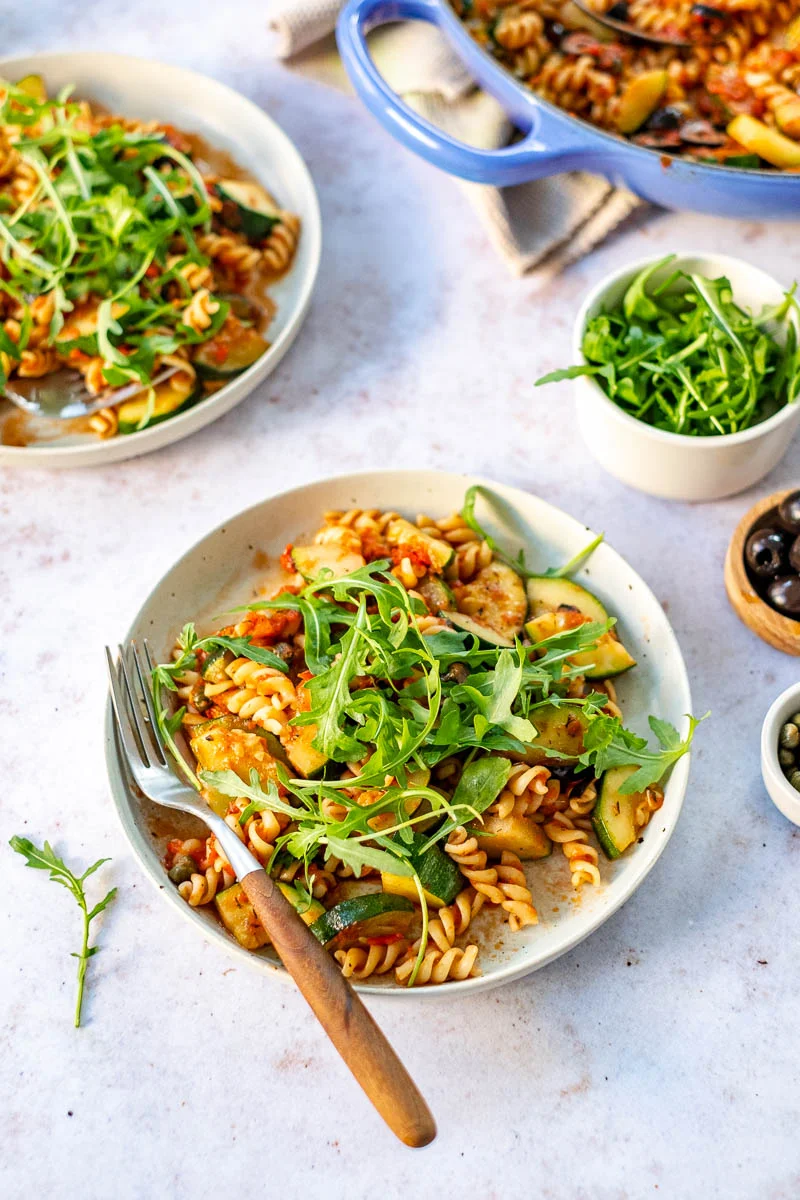
Pasta puttanesca is a quick tomato pasta with briny capers, anchovies and olives, here with courgette for extra texture. It comes together in about 15 minutes, making it a useful choice for a speedy, flavour-packed dinner.
Ingredients
- 400 gpasta
- 1 tablespooncapers
- 50 ganchovy fillets
- 1courgette
- 1 tintomato pulp or chopped tomatoes
- 2 tablespoonsblack olives, sliced into rings
- 1 tablespoon (optional)Italian herbs
Instructions
- 1
Cook the pasta
Bring a pan of water to the boil and cook the pasta for the time stated on its packet.
- 2
Fry the anchovies
Add the anchovy fillets to a pan with a little of their oil and fry for 1 minute.
- 3
Add the capers
Stir in the capers and let them fry briefly. Meanwhile, wash the courgette and cut it into quarters.
- 4
Brown the courgette
Add the courgette pieces to the pan and fry for 2–3 minutes, until golden.
- 5
Add the tomatoes
Add the chopped tomatoes, olives and, if using, Italian herbs. If the tomatoes taste rather sharp, add 1 teaspoon of sugar to balance the flavour.
- 6
Simmer the sauce
Simmer over a medium heat until the pasta is cooked. Be sure to reserve a cup of pasta water (200 ml).
- 7
Adjust the sauce
Stir half of the reserved pasta water into the sauce. If it still looks too thick, add a little more.
- 8
Check the seasoning
Taste the sauce before adding salt and pepper. The anchovies, capers and olives may make extra salt unnecessary.
- 9
Combine and serve
Mix the pasta thoroughly with the tomato sauce, then serve.
What is pasta puttanesca?
Pasta puttanesca is an Italian pasta dish known for a punchy tomato sauce with salty, savoury ingredients such as anchovies, capers and olives. Its origins are associated with Naples, though stories about how it got its name vary.
This version adds courgette, which brings a fresh vegetable element and a little bite. The short cooking time keeps it practical for a weeknight meal.
Nutrition and macros by portion
The nutrition label shows one serving as written: 430 calories, 17g protein, 77g carbs, 6g fat.
| Portion | Adjustment | kcal | Protein | Carbs | Fat |
|---|---|---|---|---|---|
| Lighter | More courgette, less pasta | 301 kcal | 12g | 54g | 4g |
| This serving | As written | 430 kcal | 17g | 77g | 6g |
| Hungry | Larger pasta portion | 645 kcal | 26g | 116g | 9g |
Most of the carbohydrates come from the pasta, while the anchovies provide protein and the olives and anchovy oil contribute fat. The tomato, courgette and capers add flavour and some fibre, but the salty ingredients also contribute much of the sodium. Pair a serving with a generous side of salad or vegetables to balance the plate.
The ingredients that build flavour
Anchovies: frying them briefly with a little of their oil helps them soften into the sauce and gives it savoury depth.
Capers and olives: these contribute a salty, briny flavour, so taste the finished sauce before reaching for the salt.
Tomatoes: tomato pulp or chopped tomatoes both work; the method suggests a small amount of sugar only if they taste particularly sharp.
Get the courgette golden
Cut the courgette into quarters as directed, then give the pieces 2–3 minutes in the pan. Let them make contact with the hot pan so they can colour rather than just soften.
Keep an eye on them: the aim is golden edges while the pieces still hold their shape.
Use pasta water wisely
Reserve 200 ml of pasta water before draining the pasta. Its starch helps the tomato sauce cling to the pasta.
Start with half the reserved water, as the method directs, and add more only if the sauce is still too thick. The final amount depends on how loose the sauce already is.
Cook the pasta to suit the sauce
Follow the packet timing for the pasta and let the sauce simmer while it cooks. This keeps the preparation within the recipe’s 15-minute total time.
Drain the pasta when it is cooked to your liking, taking care to save the pasta water first.
Serving ideas
Serve the pasta as soon as it is mixed with the sauce, while the pasta water is still helping the sauce coat each piece.
A simple green salad or steamed vegetables make an easy side. Since the sauce is already bold and salty, keep accompaniments lightly seasoned.
Recipe notes & tips
- Reserve the full 200 ml of pasta water before draining, even if you do not end up using it all.
- Taste the tomatoes before adding sugar; only use it if their flavour seems sharp.
- Use a little anchovy oil to fry the fillets, as the method directs.
- Let the courgette pieces brown for 2–3 minutes before adding the tomatoes.
- Taste the sauce before seasoning because capers, olives and anchovies can already make it salty.
- Add pasta water gradually so you can stop when the sauce reaches the consistency you want.
Variations
- Use chopped tomatoes: swap them for tomato pulp as suggested in the ingredient list.
- Skip the herbs: leave out the optional Italian herbs for a simpler tomato flavour.
- Adjust the courgette: cut it into smaller pieces if you prefer it distributed more evenly through the pasta.
- Use another pasta shape: choose a shape that catches the tomato sauce well.
- Balance sharp tomatoes: add 1 teaspoon of sugar only if the tomatoes taste too acidic.
Common mistakes to avoid
- Adding salt too soon: taste the sauce first because the anchovies, capers and olives are already salty.
- Forgetting the pasta water: reserve 200 ml before draining so you can loosen and bind the sauce.
- Adding all the pasta water at once: begin with half, then add more only if the sauce is too thick.
- Overcooking the courgette: fry it for 2–3 minutes and look for golden colour while it still holds its shape.
- Skipping the sauce taste: check the tomato flavour before deciding whether it needs sugar, salt or pepper.
How to store
Refrigerate leftovers in a sealed container and eat within 2 days. Reheat gently in a pan or microwave, adding a splash of water if the pasta has become dry.
Frequently asked questions
Can I use tomato pulp instead of chopped tomatoes?
Yes. The ingredient list gives tomato pulp or chopped tomatoes as alternatives, so use whichever you have.
Do I need to add salt?
Not necessarily. Taste the sauce first, as the anchovies, capers and olives may provide enough salt.
How much pasta water should I add?
Reserve 200 ml and start by adding half to the sauce. Add more a little at a time if the sauce remains too thick.
Can I leave out the Italian herbs?
Yes. They are optional in the recipe, so you can omit them.
When should I add sugar?
Taste the tomatoes first. If they seem sharp, the method suggests adding 1 teaspoon of sugar to balance their flavour.
How long does this recipe take?
The stated total time is 15 minutes. The sauce simmers while the pasta cooks.
Cook it from the original
This recipe comes from kokerellen.be. Their page has the author’s own photos, notes and tips — the best place to cook it from.
Open the recipe on kokerellen.be