
Buns
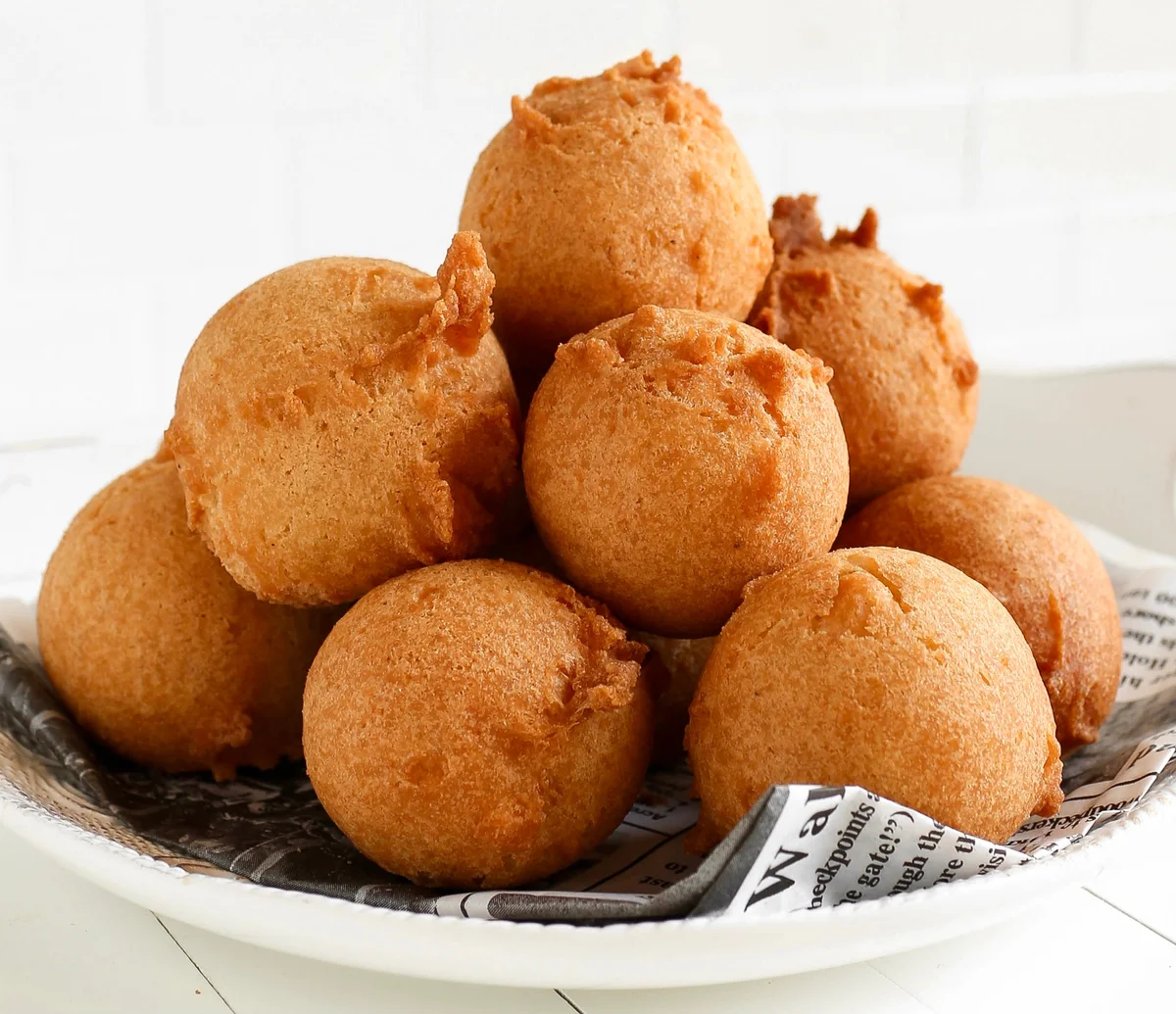
Nigerian buns are lightly spiced, deep-fried dough bites with a crisp outside and a tender centre. This simple batch is quick to mix and fry, and tastes best while still warm.
Ingredients
- 300 g (2 1/2 cups)plain flour
- 100 g (1/2 cup)sugar
- 8 g (2 tsp)baking powder
- 3 g (1/2 tsp)salt
- 0.5–1 g (1/4–1/2 tsp)grated nutmeg
- 28 g (2 tbsp)butter
- 45 ml (3 tbsp)evaporated milk, or whole milk
- 1 mediumegg
- 120 ml (1/2 cup); increase to 180 ml (3/4 cup) for a less crunchy resultwater
- As neededcanola oil, for frying
Instructions
- 1
Sift the flour
Sift the plain flour into a medium bowl.
- 2
Mix dry ingredients
Add the baking powder, salt, sugar and nutmeg, then mix them together.
- 3
Rub in butter
Add the room-temperature butter and crumble it into the flour mixture with your hands or a pastry blender. Set the bowl aside.
- 4
Mix wet ingredients
In a separate bowl, combine the evaporated milk, water and egg.
- 5
Combine the mixtures
Add the milk and egg mixture to the dry ingredients. Mix only until combined.
- 6
Scoop into oil
Carefully scoop portions of the mixture into the oil using your hands or an ice-cream scoop.
- 7
Fry until golden
Fry the buns until golden brown. Serve warm.
What are Nigerian buns?
Nigerian buns are small, sweet fried dough snacks, often seasoned with nutmeg. They are a familiar treat in Nigeria and across West Africa, with a crisp exterior and a soft, compact middle.
This version uses baking powder for lift and butter for richness. The amount of water also affects the finish: the stated 120 ml gives a crunchier result, while more makes the buns less crunchy.
Nutrition and macros by portion
The nutrition label shows one serving as written: 580 calories, 11g protein, 92g carbs, 17g fat.
| Portion | Adjustment | kcal | Protein | Carbs | Fat |
|---|---|---|---|---|---|
| Lighter | Use less frying oil | 406 kcal | 8g | 64g | 12g |
| This serving | As written | 580 kcal | 11g | 92g | 17g |
| Hungry | Serve a larger portion | 870 kcal | 17g | 138g | 26g |
Flour and sugar provide most of the carbohydrates, while butter and frying oil contribute much of the fat. The egg and milk add some protein, but this is mainly a carbohydrate-rich snack; pair a portion with yoghurt or fruit to make a more balanced plate.
Building the dough
Dry mix: Sifting the flour helps break up lumps, while mixing in the baking powder, salt, sugar and nutmeg spreads the flavour and raising agent through the batch.
Butter: Use it at room temperature so it crumbles readily into the flour. Work it in until the mixture looks evenly crumbly, rather than leaving large pieces.
Getting the consistency right
Liquid: Add the milk, egg and water mixture to the dry ingredients, then stop as soon as there are no dry patches. The method gives a choice of 120 ml or up to 180 ml water, depending on how crunchy you want the buns.
Handling: The mixture is soft enough to scoop, so use an ice-cream scoop or carefully portion it by hand. Keep portions manageable for easier, more even frying.
Frying for a golden finish
Oil: Take care when lowering each portion into the hot oil, and avoid dropping it from a height. Fry in batches if needed so the pieces have room to cook evenly.
Doneness: Look for a golden-brown surface before removing the buns. The recipe does not specify a frying temperature or time, so judge them by colour and make sure the centres are cooked through.
Choosing the milk
Evaporated milk: Its concentrated, creamy flavour gives the dough a little extra richness. Measure 45 ml for the batch.
Whole milk: It is listed as a substitute and can be used in the same amount. The buns will still have the sweetness and nutmeg flavour that define this recipe.
When to serve them
Freshly fried: These buns are most enjoyable warm, when the outside is crisp and the inside is soft. Let excess oil drain briefly before serving.
On the side: Serve them with tea or coffee for a snack, or alongside fresh fruit for a simple breakfast. Their sweetness makes them easy to enjoy without a dip.
Recipe notes & tips
- Measure the water carefully, as the amount changes how crunchy the buns turn out.
- Bring the butter to room temperature so it crumbles into the flour more easily.
- Mix only until the wet and dry ingredients come together to avoid making the dough tough.
- Use a scoop to make portions more consistent and help them cook at a similar rate.
- Fry in batches if the pan is crowded, allowing the buns room to brown.
- Serve the buns warm for the best contrast between their crisp outside and soft centre.
Variations
- More nutmeg: Use the upper end of the listed range for a more pronounced spice flavour.
- Less crunchy: Increase the water to 180 ml as suggested in the recipe.
- Whole-milk version: Swap the evaporated milk for the same amount of whole milk.
- Smaller buns: Scoop smaller portions for bite-sized snacks and watch them closely as they fry.
- Serve with fruit: Add fresh fruit on the side for a fresher contrast to the sweet fried dough.
Common mistakes to avoid
- Adding too much water: The buns may turn out less crunchy; begin with 120 ml and increase only if you want that texture.
- Overmixing the dough: It can become tougher; mix only until the ingredients are combined.
- Uneven portions: Different sizes cook at different rates; use a scoop to portion them consistently.
- Crowding the oil: The buns may not brown evenly; fry them in batches with space around each piece.
- Removing them too soon: A browned outside does not guarantee a cooked centre; check a bun before serving the batch.
How to store
Cool the buns completely, then store them in an airtight container at room temperature for up to 2 days. Reheat briefly in an oven or air fryer to help restore some crispness; they are best freshly fried.
Frequently asked questions
Can I use whole milk instead of evaporated milk?
Yes. The recipe lists whole milk as a substitute; use 45 ml.
How much water should I add?
Start with 120 ml for a crunchier result. You can increase it to 180 ml if you prefer the buns less crunchy.
How do I know when the buns are cooked?
Fry until the outside is golden brown, then check that a test bun is cooked through in the centre. The recipe does not give a specific frying time.
Can I make the mixture ahead?
The method is designed for mixing and frying straight away. For the best result, fry the buns soon after combining the wet and dry mixtures.
Can I bake these instead of frying?
This recipe is written for deep-frying, and baking would give a different texture. For its characteristic crisp outside, follow the frying method.
Cook it from the original
This recipe comes from kikifoodies.com. Their page has the author’s own photos, notes and tips — the best place to cook it from.
Open the recipe on kikifoodies.com