
Gazpacho
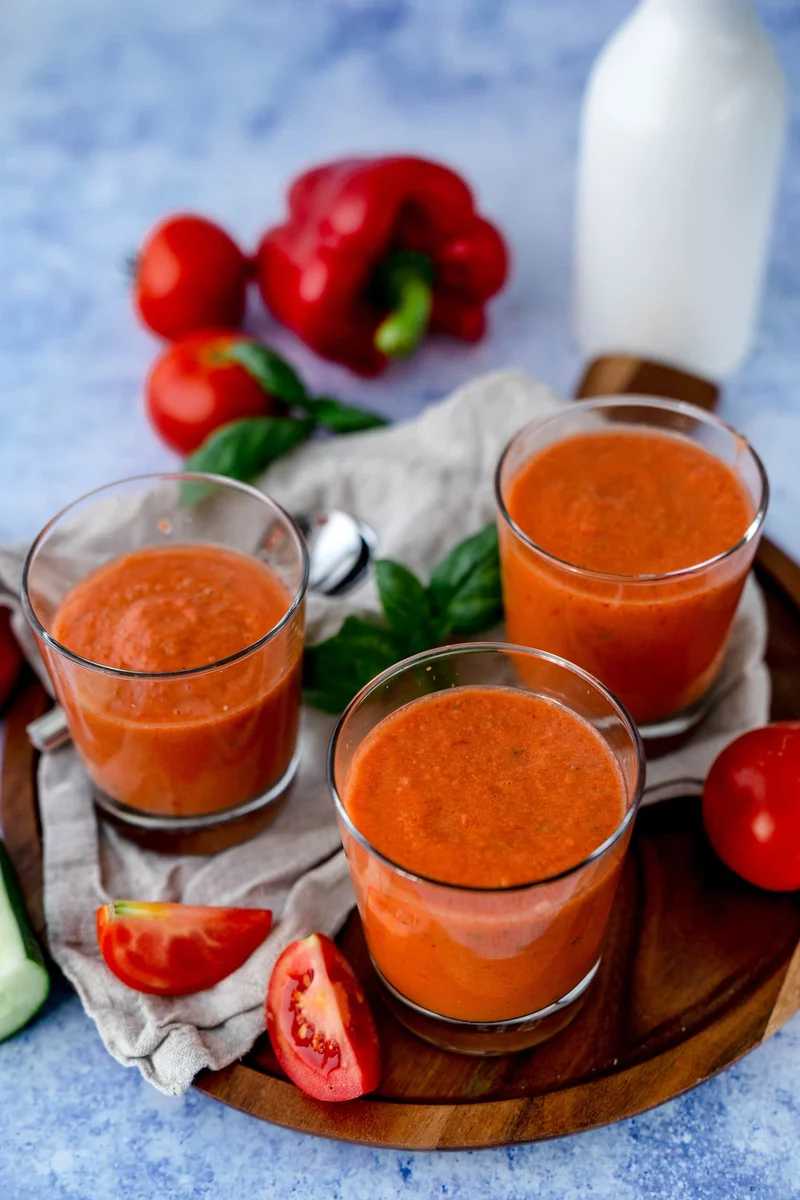
This quick Spanish gazpacho blends tomatoes, pepper and cucumber into a cool, savoury soup. With no extra frills, it is an easy choice when you want something refreshing with minimal preparation.
Ingredients
- 450 gtomatoes
- ¼red pepper
- 70 gcucumber
- 10 mlwhite wine vinegar
- 60 mlolive oil
- 1 pinchsugar
- to tastesalt
- to tasteblack pepper
Instructions
- 1
Prepare the vegetables
Trim and wash the vegetables as needed, then cut them into small pieces.
- 2
Blend the soup
Put all the ingredients in a blender and blend, or use a stick blender, until smooth.
- 3
Chill and season
Keep the gazpacho in the fridge until serving, then taste and adjust the salt and pepper.
What is gazpacho?
Gazpacho is a chilled vegetable soup associated with Spain, especially Andalusia. It is usually served cold and is valued for its fresh, lively flavour.
This pared-back version blends tomatoes with a little red pepper and cucumber, then uses olive oil and vinegar for richness and tang. It contains no bread, so the vegetables stay at the centre of the bowl.
Nutrition and macros by portion
The nutrition label shows one serving as written: 294 calories, 2g protein, 11g carbs, 28g fat.
| Portion | Adjustment | kcal | Protein | Carbs | Fat |
|---|---|---|---|---|---|
| Lighter | Use less olive oil | 206 kcal | 1g | 8g | 20g |
| This serving | As written | 294 kcal | 2g | 11g | 28g |
| Hungry | Serve with extra bread | 441 kcal | 3g | 17g | 42g |
The recipe’s stated nutrition per serving is 294 kcal, with 11 g carbohydrate, 28 g fat and 2 g protein. Tomatoes, pepper and cucumber contribute most of the carbohydrate, while olive oil supplies most of the fat; the vegetables provide only a small amount of protein. Serve it with a modest portion of bread or a more protein-rich side if you want a more substantial meal.
Choosing the ingredients
Tomatoes: ripe, flavourful tomatoes make the biggest difference, since they provide most of the soup’s body and taste. Remove any tough cores before chopping.
Olive oil: the generous pour gives the blended soup a smooth, rounded texture. Use an oil whose flavour you enjoy, as it remains noticeable in the finished dish.
Getting a smooth blend
Small pieces: cutting the vegetables before blending helps them break down evenly. Blend until the mixture looks uniform, stopping to scrape down the sides if needed.
Blender or stick blender: either works for this small batch. A jug blender may give a more even finish, while a stick blender is convenient in a tall container.
Balancing the flavour
Vinegar: white wine vinegar adds a sharp note that balances the tomato and olive oil. Taste after blending rather than adding extra automatically.
Seasoning: the pinch of sugar rounds out the acidity, while salt and pepper bring the flavours into focus. The final seasoning check is best done after chilling.
Chilling and serving
Cold rest: chill the soup before serving so it is properly refreshing. The recipe gives no fixed chilling time, so allow enough time for it to become cold.
To serve: stir or briefly blend the soup if it has separated in the fridge, then divide it between two bowls or glasses. It works well as a light starter or alongside bread.
Texture and consistency
This recipe makes a fully blended soup rather than a chunky one. For the smoothest result, blend thoroughly and check that no large pieces of pepper or cucumber remain.
The olive oil helps create a fuller mouthfeel, while the vegetables supply the liquid base. If the soup separates as it stands, a quick stir brings it back together.
Recipe notes & tips
- Choose ripe tomatoes for a fuller, sweeter tomato flavour.
- Cut the vegetables into small pieces before blending for a more even result.
- Chill the soup before serving rather than relying on ice, which would dilute it.
- Taste again after chilling and adjust the salt and pepper just before serving.
- Stir or briefly reblend the soup if the oil separates during storage.
Variations
- Add garlic: blend in a small amount for a more pungent flavour.
- Use sherry vinegar: swap it for the white wine vinegar for a different tang.
- Make it chunkier: reserve some finely diced vegetables and stir them in after blending.
- Add herbs: blend in a few basil leaves for a fresh herbal note.
Common mistakes to avoid
- Using bland tomatoes: choose ripe, aromatic tomatoes so the soup has a strong vegetable flavour.
- Leaving large pieces: cut the vegetables small and blend until the mixture is uniform.
- Skipping the chill: refrigerate before serving so the gazpacho is properly cold.
- Seasoning only before chilling: taste it again when cold and adjust the salt and pepper.
- Serving after separation: stir or briefly blend the soup to bring the oil and vegetables back together.
How to store
Keep the gazpacho covered in the fridge and use it within 2 days for the freshest flavour. Stir or briefly blend before serving; serve cold rather than reheating.
Frequently asked questions
Can I make gazpacho without a blender?
A stick blender works well, as does a standard jug blender. Without either, it is difficult to get the smooth texture intended by this method.
How long should I chill the gazpacho?
The recipe does not specify a set time; chill it until thoroughly cold. If you are short on time, use a cold container and allow as much fridge time as you can.
Can I make it ahead?
Yes. Blend it and keep it covered in the fridge, then taste and adjust the seasoning just before serving.
Why does the soup separate?
The olive oil can separate from the vegetable mixture as it stands. Stir or briefly reblend it before serving.
Is this gazpacho meant to be chunky?
No, the method blends all the ingredients together. Blend until smooth for the texture this recipe describes.
Cook it from the original
This recipe comes from gernekochen.de. Their page has the author’s own photos, notes and tips — the best place to cook it from.
Open the recipe on gernekochen.de