
Native jollof rice and peppered goat meat
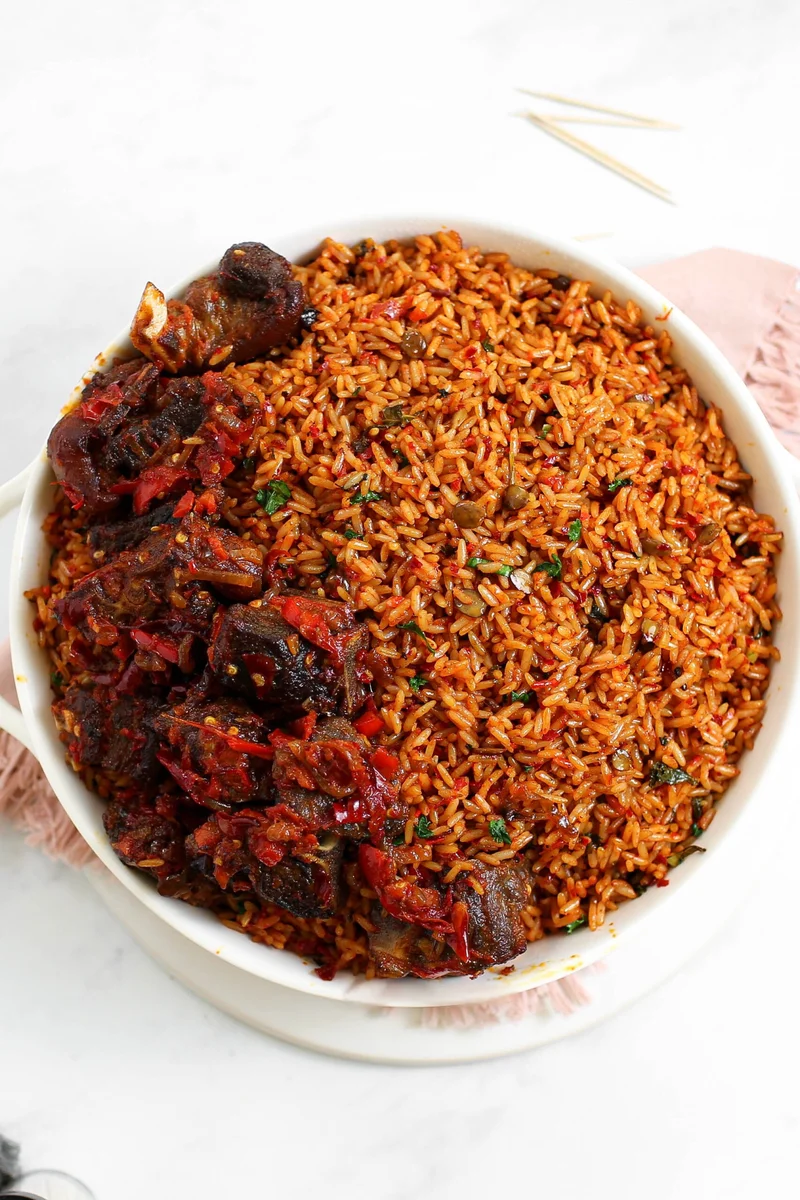
Native jollof rice is cooked in goat stock and finished with a savoury pepper mixture, smoked catfish, dried prawns and iru. Serve it with crisp, spicy peppered goat meat for a generous, layered meal.
Ingredients
- 2 kggoat meat
- 1/2 smallonion
- 1Knorr beef seasoning cube
- 1 teaspoonsalt
- 1 cup (240 ml)water
- 4 cups (about 720 g)washed rice
- 1 teaspoonsalt
- 1 cup (240 ml)meat stock
- 2 cups (480 ml)water
- 3bell peppers
- 4–5Scotch bonnet peppers (as much as you can handle)
- 1 smallonion
- for fryingoil
- 1/2 cup (120 ml)pepper mix (bell pepper, atarodo and onion)
- a pinchsalt
- 1/4 teaspoononion powder
- 1/4 teaspoonbeef seasoning
- 2 mediumdried smoked catfish
- 1/2 cup (about 60 g)dried prawns
- 1/4 cup (60 ml)palm oil
- 1/4 cup (about 40 g)iru
- 2 tablespoonscrayfish
- 1/2 teaspoonsalt
- 1/2 teaspoonKnorr beef bouillon cube
- 1/2 bunchkale
Instructions
- 1
Season the goat
Season the cleaned goat meat chunks with the chopped onion, bouillon cube and salt.
- 2
Steam the meat
Add a little water and mix well. Cover and steam over low heat for 15–20 minutes, or until the meat is tender.
- 3
Strain the stock
Add more water if needed. Strain the goat stock to remove any bones.
- 4
Add the rice
Add the washed rice to the goat stock.
- 5
Cook the rice
Add the salt and more water as needed, then mix well. Cover and cook for 20–25 minutes, until the rice is tender.
- 6
Fluff the rice
When cooked, fluff the rice with a fork to release steam, then set it aside.
- 7
Blend the peppers
Roughly blend the peppers and onions using a chopper, food processor or blender. Set the mixture aside.
- 8
Soak the catfish
Soak the smoked catfish in hot water for 20 minutes, keeping it fully submerged.
- 9
Rinse the prawns
Wash the dried prawns in hot water in a separate bowl, then drain and set aside.
- 10
Debone the fish
Discard the catfish soaking water and debone the fish thoroughly. If it is still hard, soak it in hot water for another 10–20 minutes, or until soft.
- 11
Heat the palm oil
Heat some red palm oil in a wide pan over medium heat.
- 12
Fry the aromatics
Add chopped onions, iru and crayfish powder. Fry for 2–3 minutes, until the onions are soft.
- 13
Add pepper mix
Add half of the prepared pepper mix and stir well. Season with salt and bouillon cubes.
- 14
Cook the pepper
Fry the mixture for 5–10 minutes, stirring occasionally, until it darkens slightly.
- 15
Add the seafood
Add the deboned catfish and prawns, then stir-fry for 1–2 minutes.
- 16
Cover and cook
Cover the pan and cook for 5 minutes over low-medium heat.
- 17
Toast the rice
Add the cooked rice and mix until well combined. Stir-fry for 5 minutes to toast it.
- 18
Add the vegetables
Add the sliced vegetables and mix thoroughly. Set the rice aside once combined.
- 19
Fry the goat
Heat some oil in a large pan over medium heat. Add the goat meat and fry until crisp.
- 20
Drain the meat
Transfer the fried goat meat to kitchen paper to drain off excess oil.
- 21
Fry remaining peppers
Reduce the oil in the pan, then add the remaining pepper mix. Add extra peppers if you want more heat.
- 22
Season the sauce
Season with salt, onion powder and a beef bouillon cube. Mix and fry for 3–4 minutes.
- 23
Steam the goat
Add the fried goat meat and stir until coated. Add a little water, cover and steam for 5 minutes.
- 24
Serve the meal
Serve the native jollof rice with the spicy peppered goat meat.
What is native jollof rice?
Jollof is a West African family of one-pot rice dishes, with versions and seasoning traditions that vary across the region. This native-style version builds its flavour around goat stock, palm oil, iru and seafood rather than relying on a tomato-only base.
Two preparations make the meal distinctive: savoury rice with catfish and prawns, alongside goat meat fried crisp and coated in a separate pepper mix.
Nutrition and macros by portion
The nutrition label shows one serving as written: 1450 calories, 92g protein, 139g carbs, 58g fat.
| Portion | Adjustment | kcal | Protein | Carbs | Fat |
|---|---|---|---|---|---|
| Lighter | Less oil, more kale | 1015 kcal | 64g | 97g | 41g |
| This serving | As written | 1450 kcal | 92g | 139g | 58g |
| Hungry | Larger rice and goat portion | 2175 kcal | 138g | 209g | 87g |
Rice supplies most of the carbohydrates, while goat meat and the catfish and prawns contribute protein. Palm oil and frying oil provide much of the fat; a side of fresh vegetables can add variety and balance the rich, filling portions.
Build flavour from the stock
Goat stock: cooking the rice in the meat’s strained stock gives it a savoury base. Straining matters because bones should not end up in the rice.
Rice: the method cooks the rice in stock and water before frying it with the pepper mixture. Add water as needed and check tenderness rather than assuming all rice absorbs liquid at the same rate.
Make the pepper mixture
Rough blend: pulse the peppers and onions until coarse, rather than turning them into a completely smooth purée. The recipe uses half for the rice and saves the rest for the goat.
Cook it down: fry the rice portion until it darkens slightly, stirring now and then. This gives the mixture time to cook before the seafood and rice go in.
Prepare the smoked fish
Soak: keep the catfish under hot water for the full 20 minutes. If it is still firm after deboning, soak it for another 10–20 minutes until soft.
Debone carefully: check the fish thoroughly before adding it to the pan. Rinse and drain the dried prawns separately, as directed.
Fry and finish the goat
Crisp the meat: fry the cooked goat until crisp, then drain it on kitchen paper. Work in batches if the pan is crowded, so the pieces have room to fry.
Coat and steam: fry the remaining pepper mix with its seasonings, then stir in the goat. A little water and a covered 5-minute steam help the pepper mixture cling to the meat.
Check the rice texture
Tender rice: cook it covered for 20–25 minutes, checking that the grains are tender before moving on. Fluffing it after cooking releases steam and helps keep the grains from packing together.
Final fry: once the rice is mixed with the pepper and seafood, stir-fry it for 5 minutes. The recipe then adds sliced vegetables; the listed vegetable is kale.
Plan the cooking order
Start with the goat and rice, since both need time to cook. While the rice cooks, prepare the pepper mixture and soak and debone the catfish.
Finish the rice and peppered goat separately, then serve them together. That keeps the goat’s pepper coating distinct from the seafood-seasoned rice.
What to serve alongside
The recipe is designed to be served as a substantial pairing of rice and goat meat. For a fresher contrast, serve it with a simple salad or extra vegetables on the side.
Because the pepper heat can be intense, keep any extra Scotch bonnet separate or serve it at the table for people who want more spice.
Recipe notes & tips
- Keep the catfish submerged during soaking so it softens evenly.
- Strain the goat stock carefully before adding the rice.
- Blend the pepper mixture roughly for a more textured finish.
- Stir the pepper mixture occasionally as it fries to help it cook evenly.
- Fry the goat in batches if needed to give the pieces space to crisp.
- Taste the pepper mixture before adding extra Scotch bonnet.
Variations
- Adjust the heat: use fewer Scotch bonnet peppers for a milder dish.
- Use extra kale: add more sliced kale for additional vegetables.
- Change the fish: use another smoked fish in place of the catfish.
- Add more prawns: increase the dried prawns for a stronger seafood flavour.
- Serve the components separately: keep the rice and peppered goat in separate dishes at the table.
Common mistakes to avoid
- Skipping the stock strain: remove bones from the goat stock before cooking the rice.
- Adding all the pepper mix at once: reserve half for coating the goat as the method directs.
- Leaving the catfish hard: soak it for another 10–20 minutes if needed before deboning.
- Crowding the frying pan: fry the goat in batches so it can crisp rather than steam.
- Overlooking the rice: check for tenderness during the 20–25-minute cook and add water as needed.
- Adding too much extra chilli: taste the pepper mix before increasing the heat.
How to store
Refrigerate leftover rice and goat separately in covered containers and use within 3 days. Reheat until steaming hot, adding a small splash of water to the rice if it has dried out.
Frequently asked questions
Can I make the pepper mix less spicy?
Yes. Use fewer Scotch bonnet peppers, then taste the mixture before deciding whether to add more. The recipe also suggests adding extra peppers only if you want more heat.
How do I know when the goat is tender?
Check it after steaming for 15–20 minutes; it should be tender before you strain the stock. Cooking time can vary with the size of the pieces.
What should I do if the catfish is still hard?
After the first 20-minute soak, soak it in hot water for another 10–20 minutes, or until soft. Debone it thoroughly before adding it to the pan.
Can I prepare parts of this recipe ahead?
You can cook the goat and rice ahead, then refrigerate them separately. Prepare and fry the pepper mixtures when you are ready to finish the dish.
Can I use a different leafy vegetable?
The ingredient list specifies kale, while the method says to add sliced vegetables. Another leafy vegetable may work, but the recipe does not give a substitution or a different cooking time.
Why is my rice wet after cooking?
The amount of water absorbed can vary. Add water gradually as needed while cooking, and fluff the rice once tender to let steam escape before the final fry.
Cook it from the original
This recipe comes from kikifoodies.com. Their page has the author’s own photos, notes and tips — the best place to cook it from.
Open the recipe on kikifoodies.com